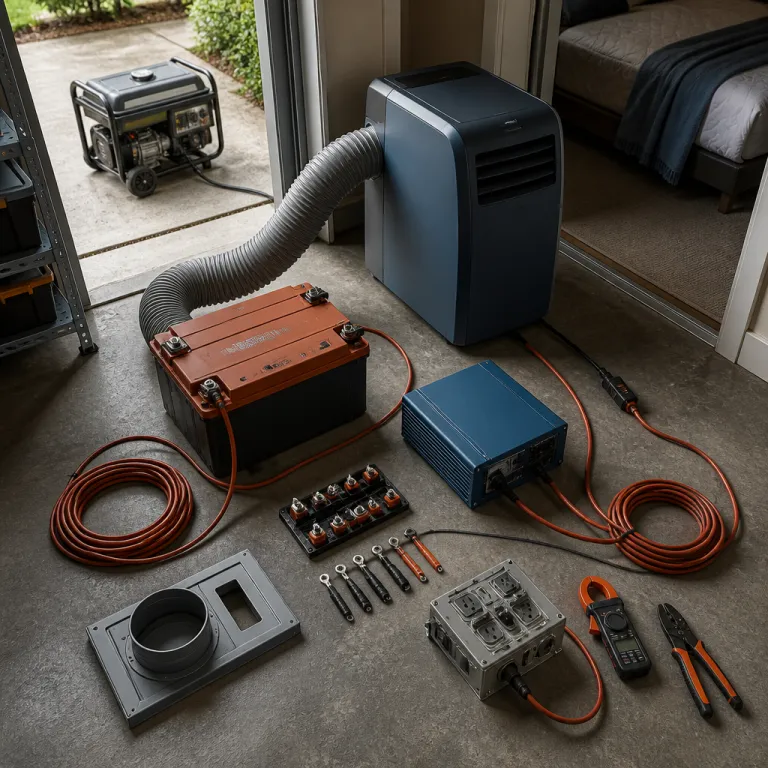
Why brownouts are brutal for portable air conditioners
A portable air conditioner is most stressed when the grid is weakest. During a heat wave, every compressor and fan fighting the hot air pushes local lines toward their limits. That is exactly when a portable air conditioner power outage generator battery strategy stops being a luxury and becomes basic survival.
Urban renters feel this first, because mid size apartments often share older circuits and panels. When voltage sags in a brownout, the compressor in your portable air conditioner still tries to pull the same power, which means more current, more heat, and a higher risk of permanent damage. Low voltage is silent, but it cooks windings and shortens the lifespan of both small and large air conditioners.
Think about the numbers before you think about gadgets. A typical 10 000 to 14 000 BTU portable air conditioner draws roughly 900 to 1 400 watts while running, but the startup surge can spike to two or three times that for a second. That surge is what trips breakers, stresses generators portable and power stations, and decides whether your backup plan actually keeps one room cold or just clicks off every ten minutes.
In practical terms, this means your wiring, surge protection, and any generator portable or portable power station must be sized for the worst second, not the average minute. If you live in a building where lights dim when the elevator starts, you are already seeing the kind of voltage sag that hurts compressors. For anyone thinking about grid living with backup, the first accessory is not a fancy smart plug, but a robust surge protector and voltage regulator between the wall and your portable air conditioner.
Surge protectors, voltage regulators, and smart control that actually matter
Every portable air conditioner should be plugged into a surge protector rated for high power appliances, not a flimsy power strip. The compressor’s startup surge is a short, violent hit of current, and a good protector with enough capacity output and joule rating absorbs spikes that would otherwise punch through delicate electronics. Think of it as a cheap insurance pack that stands between your portable air and the next grid hiccup.
Brownouts are different from surges, and they are often worse for the compressor in an air conditioner. When voltage drops but the unit still tries to deliver the same BTU cooling, the motor draws more current, overheats, and the insulation inside the windings starts to break down. A combined surge protector and automatic voltage regulator keeps station output within a safe band, so your portable air conditioners do not slowly cook themselves during every partial outage.
Smart plugs and remote controls add another layer of protection and comfort. A Wi Fi smart plug or wireless controller that can cut power when voltage falls outside a safe window prevents the compressor from trying to restart endlessly during a brownout. If you want an example of how a smart controller can manage temperature and energy use, look at a detailed test of a wireless air conditioner controller with automatic thermostat control.
For renters, the right smart plug also solves a practical problem during outages. You can schedule the portable air conditioner to pre cool the bedroom before a planned rolling blackout, then shut down gracefully when your portable power or generator backup is about to run out. That kind of control turns a basic portable air conditioner power outage generator battery setup into a precise tool instead of a noisy, unpredictable box on wheels.
Generator sizing for one cold room and one portable AC
When you match a generator to a portable air conditioner, you size for surge first and noise second. A typical inverter generator with a rated 2 000 watts and a 1 600 watt continuous output can run many 10 000 BTU portable air conditioners, but only if the startup surge stays within its short term max. The same unit may choke or overload on a 14 000 BTU model with a higher compressor draw, even though the running watts look similar on paper.
Think of the generator as a portable power station with a fuel tank instead of a lithium battery. The continuous station output rating tells you what it can handle for hours, while the surge or max rating tells you what it can tolerate for a second or two when the compressor kicks on. For most urban renters, a quiet inverter generator in the 2 000 to 2 400 watt class is the sweet spot for a single mid size portable air conditioner and a few low draw appliances.
Brand names like Jackery have trained people to think in watt hours and capacity, and that same logic applies to fuel powered generators. A mid size generator portable unit with a 2 000 watt continuous rating and a 2 400 watt max surge rating will usually handle a 1 200 watt portable air conditioner plus a fan or a router, but not a microwave at the same time. If you want to run multiple air conditioners or other heavy appliances, you move into larger generators portable with higher output capacity and more fuel use.
Safety and legality matter as much as watts and BTU numbers. In an apartment, you cannot run a fuel generator indoors, and even on a balcony, exhaust and noise can cause real problems with neighbors and building rules. The only safe way to integrate a fuel generator into home wiring is through a proper transfer switch installed by an electrician, but most renters will instead keep the generator isolated and run extension cords directly to the portable air conditioner and other essentials.
Battery backup, solar generators, and the real runtime math
Lithium power stations changed what a renter can do during a blackout. A modern portable power station with around 2 000 watt hours of capacity can keep a single room livable with a portable air conditioner for a short but crucial window. That is the core of any serious portable air conditioner power outage generator battery plan for an apartment where fuel generators are banned.
The math is simple, but the details matter. If your portable air conditioner draws 1 200 watts while running and you connect it to a 2 000 watt hour power station, you divide capacity by draw and get roughly 1,6 hours of runtime at full blast. In practice, inverter efficiency losses, fan cycling, and eco modes stretch or shrink that number, but you should plan on about 1,5 hours of solid cooling and treat anything more as a bonus.
Solar generators are just power stations paired with solar panels, and they help refill the battery between outages. A system like a Jackery Explorer or a similar pro grade unit with a lifepo battery chemistry can accept several hundred watts of solar input, but rooftop access and shading in dense cities limit real world output. For most renters, portable solar panels leaned in a sunny window or on a fire escape add some capacity output over a long day, but they will not fully recharge a large pack after running air conditioners hard.
Battery chemistry and station output ratings decide how far you can push this. Units built around LiFePO₄, often marketed as lifepo battery systems, tolerate more charge cycles and higher sustained station output without overheating, which matters when you are running near max watts in a heat wave. Think of the battery pack as a silent generator that trades fuel for time, and use it to bridge the worst two or three hours of a brownout rather than trying to power every appliance in the apartment.
Remote controls, smart plugs, and pre cooling tactics that actually help
Accessories matter when you are squeezing every minute of cooling from limited backup power. A good remote control or smart plug lets you manage a portable air conditioner from the couch or from work, which is not just about comfort but also about timing. If you know a rolling outage is scheduled, you can pre cool the bedroom aggressively, then shut the unit down to save battery or generator fuel.
Smart plugs that measure power and output capacity give you real data instead of guesses. You can see how many watts your portable air conditioner pulls in eco mode versus max cool, and you can match that to the capacity of your power station or solar generator. Over a few days, you will learn how long your specific combination of portable air, battery pack, and any solar panels can hold a target temperature in one room.
Remote controls also solve a practical problem in cramped apartments. When the portable air conditioner is wedged near a window with a short exhaust hose, reaching the panel is awkward, and people tend to leave the unit on longer than needed. A dedicated remote or a Wi Fi controller, like those discussed in this guide to enhancing your cooling experience with a remote control, makes it easy to cycle between fan only and cooling to stretch limited backup power.
Do not ignore the basics while you chase gadgets. Use thick curtains, seal gaps around the exhaust hose with a proper kit, and consider upgrading to a better hose if your current one leaks hot air, as explained in this overview of portable air conditioner exhaust hoses. In a brownout, the room that stays bearable is usually the one where someone cared about insulation, shading, and airflow as much as they cared about watts and BTU ratings.
Choosing the right portable power ecosystem for urban renters
For a city renter, the best backup cooling setup is usually a layered system, not a single oversized gadget. Start with a surge protector and voltage regulator to protect the portable air conditioner during minor grid wobbles, because those happen more often than full outages. Then add a mid size portable power station or solar generator that can handle the compressor surge and give you at least an hour of runtime at a realistic load.
When you compare power stations, look beyond the headline capacity number. Check the continuous station output in watts, the short term max surge rating, and whether the unit uses LiFePO₄ cells or older chemistries, because a lifepo battery will usually last more cycles and tolerate higher temperatures. If you plan to add solar panels later, make sure the input controller can accept enough solar panel wattage to matter, and that the connectors and cables are practical for a balcony or window setup.
Think of your apartment as a small off grid living lab during a blackout. You are not trying to run every appliance, only the essentials that keep one room safe and functional, like a portable air conditioner, a fan, a phone charger, and maybe a router. A compact ecosystem built around one or two power stations, a modest solar panel, and a carefully chosen size generator for emergencies will serve you better than an oversized generator that you cannot legally or safely run.
Accessories like smart plugs, remote controls, and even simple thermometers close the loop. They give you feedback on how much power you are using, how quickly the room heats up when the AC cycles off, and how different BTU settings affect runtime on battery or generator power. In the end, what matters is not the BTU on the box, but the temperature drop in your bedroom at three in the afternoon when the grid is groaning and your backup plan quietly keeps the air cool.
FAQ
How big should a generator be to run a portable air conditioner ?
For a single 10 000 to 14 000 BTU portable air conditioner, a quiet inverter generator with at least 2 000 watts of continuous output and around 2 400 watts of surge capacity is a practical minimum. That size generator usually handles the 900 to 1 400 watt running draw plus the short startup surge, as long as you are not running other heavy appliances at the same time. Always check the generator’s continuous and max ratings against your AC’s nameplate watts before buying.
How long can a battery power station run a portable AC ?
Runtime depends on both the battery capacity and the AC’s real power draw. A 2 000 watt hour portable power station running a 1 200 watt portable air conditioner will provide roughly 1,5 hours of continuous cooling, less once you factor in inverter losses. Using eco mode, raising the thermostat a few degrees, and cycling between fan and cooling can stretch that to two or more hours in a well sealed room.
Is it safe to run a portable AC on a smart plug or remote switch ?
It is generally safe if the smart plug is rated for high power appliances and matches or exceeds the AC’s maximum current draw. Look for models that support at least 15 amps and clearly state compatibility with air conditioners or similar loads. Avoid cheap, unbranded plugs, because a failed relay under high load can overheat and become a fire risk.
Do solar panels make sense for running a portable air conditioner ?
In dense urban settings, solar panels rarely provide enough real time power to run a portable air conditioner directly, but they can help recharge a battery between outages. A small balcony or window mounted solar panel array might add a few hundred watt hours over a sunny day, which is useful but not a full replacement for grid charging. Think of solar as a way to extend your battery pack’s autonomy, not as the primary source for heavy cooling loads.
What should I do if I cannot afford a generator or battery backup ?
If backup power is not feasible, focus on pre cooling and passive measures. Run the portable air conditioner hard before a scheduled outage, close doors to keep the cold air in one room, and use curtains or reflective film to block solar gain. During the outage, switch to fans, stay hydrated, and move to the coolest interior room until power returns.