Why your portable AC grows louder every summer
That rising hum from your portable air conditioner rarely means it is dying. As the portable air conditioner blower wheel cleaning noise problem grows, the real culprit is usually a filthy internal fan rather than a failing motor. A simple cleaning of the blower wheel can restore quiet airflow and cut several decibels from the sound profile.
Inside the unit, the blower wheel sits just behind the filter and front panel, pulling warm indoor air across the evaporator coil and pushing cooled air back into your living space. When dust, pet hair, and sticky debris accumulate on this wheel, the airflow system becomes unbalanced, turbulence increases, and the system runs louder while the motor works harder to maintain comfort. That extra strain reduces efficiency, wastes energy, and slowly turns a once quiet unit into a constant background roar.
Most manuals talk about filter cleaning but never mention blower wheel maintenance or wheel cleaning at all. Owners dutifully clean the filter yet ignore the dirty blower hidden deeper in the system, so the airflow degrades and the unit must work harder to move the same volume of air. Over time, this buildup inside the blower motor housing can drop cooling performance, raise energy bills, and quietly damage the hvac style components that keep your portable system work stable.
What the blower wheel does and how buildup creates noise
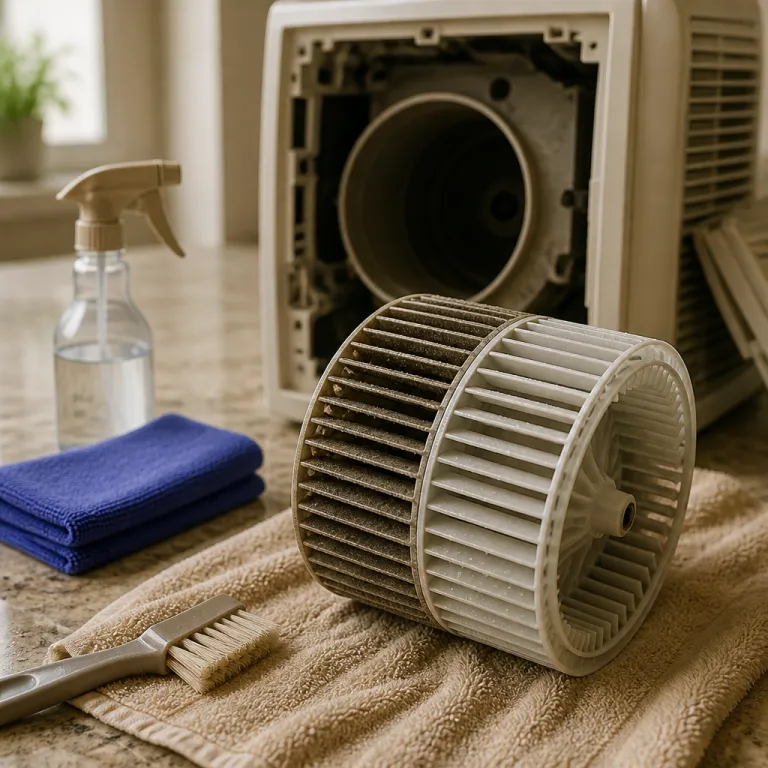
The blower wheel is a cylindrical fan, sometimes called a squirrel cage, that looks like a narrow drum with many thin blades. As it spins, it pulls indoor air through the filter, across the cold coil, and then pushes that conditioned air back into the room, forming the heart of the airflow system in any portable unit. When the wheel is clean, the system runs smoothly, airflow is even, and noise stays closer to the original specification.
Once dust and sticky debris start coating each blade, the wheel becomes aerodynamically rough and slightly unbalanced. That buildup forces the blower motor to work harder, which adds a higher pitched whine on top of the usual low fan noise and can raise the sound level by roughly 3 to 5 dB in a typical living space. You hear it as a harsher, more turbulent rush of air rather than the softer whoosh you had when the blower wheel was still a clean blower.
This same effect shows up in split systems and larger hvac equipment, where neglected blower wheels and coils can cut efficiency by a noticeable margin and undermine indoor air quality. In a compact portable unit, the impact is magnified because the housing is thin and sits close to you, so any extra vibration or airflow noise radiates straight into your indoor air environment. If you care about comfort, energy efficiency, and stable heating or cooling performance, treating blower wheel cleaning as core maintenance rather than an optional chore is non negotiable, and you can read more about quiet structural upgrades in this guide to a durable quiet wall air conditioner sleeve: durable quiet wall air conditioner sleeve.
Tools and safety rules before you start diy cleaning
Before tackling any portable air conditioner blower wheel cleaning noise issue, you need a short, specific tool list. A basic diy cleaning kit should include a Phillips screwdriver, a soft brush such as an old toothbrush, a small brush vacuum attachment, and either coil cleaner spray or a mild vinegar and water solution in a hand sprayer. With these tools, you can reach the blower wheel, remove dust buildup, and complete a performance clean without paying for professional cleaning every season.
Safety comes first, because this is still an electrical system with a blower motor, control board, and sometimes a heating element for heat pump style units. Always unplug the unit from the wall, wait a few minutes for capacitors to discharge, and never spray liquid directly onto electronics or wiring while you work on the front panel or internal components. Plan to let the unit dry for at least 30 minutes after the cleaning process so any remaining moisture in the airflow system can evaporate before the system runs again.
It also helps to clear a work area where you can lay the unit gently on its back without blocking the air intake or damaging the exhaust hose. Keep a small container for screws from the front panel so you do not lose them, and take a quick photo of the blower wheel area before you start wheel cleaning to guide reassembly. If you are curious about how other complex consumer devices are opened and tested, teardown style reviews of electronics such as a standard game console can be surprisingly instructive, as shown in this detailed console test article: detailed console test article.
Step by step blower wheel cleaning process to cut noise
Start by unplugging the unit, rolling it away from the wall, and removing the filter so you can reach the front panel screws. Most portable models use four to six screws around the panel edges, and once they are out you can gently lift the panel away to expose the blower wheel, blower motor, and evaporator coil. Take your brush vacuum and carefully remove loose dust and debris from the wheel, the surrounding housing, and any visible airflow system channels.
Next, spray a light mist of coil cleaner or diluted vinegar onto the blower wheel blades, avoiding direct contact with the motor or any control wiring. Use the soft brush to work along each blade, rotating the wheel slowly by hand so you can scrub away buildup on both the leading and trailing edges, which is where a dirty blower usually makes the most noise. Wipe away loosened grime with a cloth, then use the vacuum again to capture any remaining dust before the system work resumes.
Once the wheel looks visibly clean, check that the blower motor spins the wheel freely by hand without scraping or wobbling, because mechanical contact can also raise noise levels. Reinstall the front panel, making sure no wires are pinched, slide the filter back into place after a separate cleaning, and then plug the unit in after that 30 minute drying window. When the system runs again at the same fan speed as before, you should hear a smoother airflow sound, lower portable air conditioner blower wheel cleaning noise, and often a small but real improvement in air quality and comfort.
How often to clean and when to call a professional
For most homes, a full blower wheel cleaning once per cooling season is enough to keep portable air conditioner blower wheel cleaning noise under control. If you have multiple pets, live near a busy road, or notice visible dust on surfaces every few days, plan on diy cleaning the blower wheel twice per season because your indoor air carries more debris into the unit. In both cases, you should still rinse or vacuum the filter every two to three weeks so the airflow system does not choke the blower motor between deep cleanings.
There are clear signs that you have waited too long and the dirty blower is hurting both comfort and efficiency. If the system runs for longer cycles, the air coming out feels weaker, and your energy bills creep up even though your usage pattern has not changed, the blower wheel and coil likely have enough buildup to make the motor work harder and reduce overall efficiency. Persistent musty smells, visible dust streaks on the front panel, or rattling noises that do not improve after a careful cleaning process are all reasons to consider professional cleaning instead of another round of diy work.
A qualified hvac technician can remove the casing more completely, clean blower components you cannot reach, and check whether the blower motor bearings or fan shaft are worn. That kind of professional service costs more than a brush vacuum and soft brush, but it can extend the life of the unit and protect indoor air quality in a way casual maintenance cannot match. If you ever feel out of your depth or suspect a deeper system problem, it is worth consulting a specialist familiar with portable units, such as those highlighted in this guide to smart repair options for portable owners in Oregon: smart repair options for portable owners.
FAQ
Why does my portable air conditioner get louder over time ?
The most common reason is dust and debris accumulating on the blower wheel and around the blower motor. As buildup grows, the wheel becomes unbalanced, airflow turns more turbulent, and the system runs louder even at the same fan speed. Regular cleaning of the filter and periodic wheel cleaning keep the airflow system smooth and the overall noise closer to the original level.
How can I tell if the blower wheel needs cleaning ?
If you remove the front panel and see a gray, fuzzy layer on the wheel blades, you are looking at a dirty blower that needs attention. Other signs include weaker air output, a higher pitched whine, and more dust settling in your living space despite normal housekeeping. When those symptoms appear together, a careful cleaning process on the blower wheel is usually overdue.
Is diy cleaning safe for the blower motor and electronics ?
Diy cleaning is safe if you unplug the unit, avoid soaking electronics, and use only a soft brush and light spray on the wheel. Never force the wheel, never flood the motor area, and always let the unit dry for at least 30 minutes before restarting. If you see damaged wiring, loose parts, or signs of overheating, stop and schedule professional cleaning instead of pushing the system work any further.
Will cleaning the blower wheel really lower my energy bills ?
A clean blower wheel reduces resistance in the airflow system, so the motor does not need to work harder to move the same volume of air. That improvement in efficiency can shorten run times, which in turn trims energy use and stabilizes energy bills over a full cooling season. The exact savings vary by unit and usage, but the combination of better comfort, quieter operation, and improved air quality makes the effort worthwhile.
How often should I clean the blower wheel compared with the filter ?
The filter should be cleaned or replaced every two to three weeks during heavy use, because it catches most of the incoming dust before it reaches the blower wheel. The wheel itself usually needs a deep cleaning once per season, or twice if you have pets or a dusty environment that loads the indoor air with more particles. Keeping both components clean ensures performance clean operation, quieter portable air conditioner blower wheel cleaning noise, and more consistent comfort throughout the room.