Why a portable air conditioner for a garage workshop needs extra BTU
A portable air conditioner for garage workshop use has to fight brutal physics. A typical attached garage has bare concrete, thin doors, and a roof that bakes under August sun, so the cooling load on the space can be two or three times higher than the same floor area inside the house. That is why a cooling unit that feels oversized for a bedroom will barely keep garage air below about 30 °C (86 °F) when tools, cars, and people add more heat.
Start with the usual rule of thumb for a portable air conditioner in a normal room, then multiply the required BTU rating aggressively for a workshop. As a rough example, a 20 m² (about 215 ft²) insulated bedroom with R‑13 walls and a shaded window might be fine with a 7 000 BTU portable unit, but the same size garage with uninsulated walls around R‑3, a dark roof, and a west-facing door often needs at least a 14 000 BTU SACC-class conditioner to cool the air effectively. In hot climates where attic temperatures sit around 55–65 °C (131–149 °F) on summer afternoons, even that portable capacity can run at a high duty cycle without ever cycling off.
Think about every surface that touches outside air or attic air, because each one leaks heat back into the garage. Uninsulated walls (around R‑3), a thin metal overhead door, and a dark shingle roof can push the real load far beyond what any simple window unit sizing chart suggests, so the product box numbers often mislead buyers. In this context, a dual hose portable air conditioner behaves more like a small mini split system, while a single hose design constantly fights infiltration air that sneaks through every crack.
Many buyers compare air conditioners only by headline “ASHRAE BTU” window numbers, but that misses the point. Look instead at the SACC figure (Seasonally Adjusted Cooling Capacity), a rating defined by the U.S. Department of Energy using IEC-style test procedures that simulate real operating conditions with duct losses and hot exhaust. That SACC value reflects how the portable air conditioner for garage workshop use will perform once recirculated air and heat gain from the hose are included. A well chosen portable air conditioner with honest SACC data can keep a large-room-style double bay workable, while an overhyped model with inflated BTU claims just wastes energy.
When you treat the garage as a worst case shell, the math becomes clearer. You are not just cooling a room; you are cooling a concrete heat battery under a radiant roof, so the air conditioner must overcome stored heat as well as fresh heat gain. In owner reports from hot-summer regions, a 10 000 BTU SACC dual hose unit in a 20–25 m² (215–270 ft²) single bay with a typical 2.4–2.7 m (8–9 ft) ceiling often runs 70–90 % of the hour on peak days just to hold 26–27 °C (79–81 °F). That is why serious DIY owners often step up one or two sizes in BTU rating and accept the higher energy draw as the price of a usable shop.
Venting a portable unit when the garage has no real window
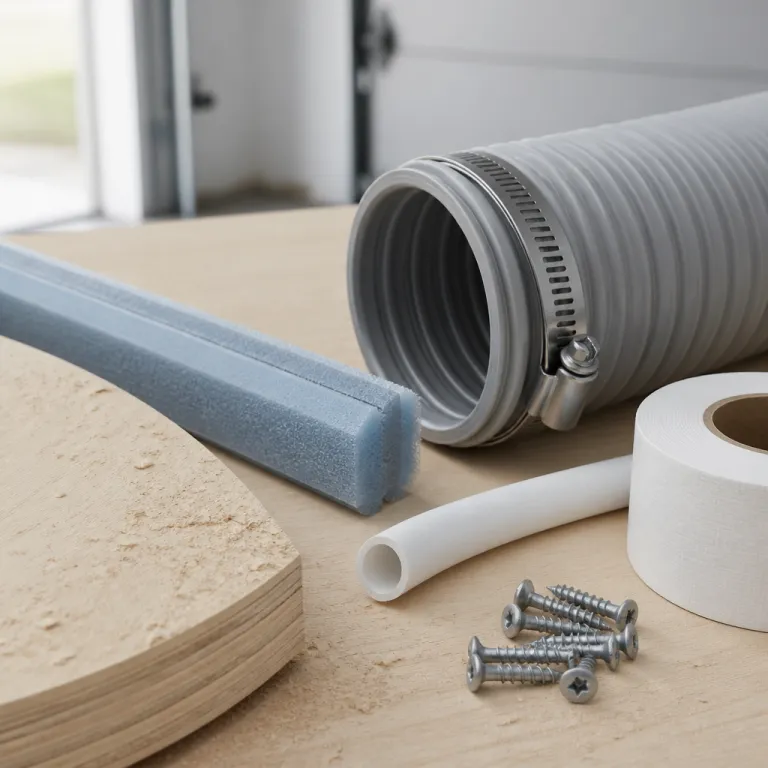
Most garages were never designed for a portable air conditioner, and many lack a proper window. That is where a simple foam board panel in the garage door becomes the trick that keeps a 38 °C (100 °F) bay workable, because it gives the portable air exhaust a tight path outside without leaving a gaping hole. For about 15 dollars in materials, you can outperform many flimsy window kits that ship with budget air conditioners.
Cut a rigid foam board to fit one garage door panel, then trace the hose adapter from your portable unit and cut a snug circle. For a standard 2.1 m (7 ft) tall sectional door, a single panel is often about 45–55 cm (18–22 in) high and the full door width, so measure that opening and trim the board to a friction fit. Seal the edges with tape so outside air cannot sneak back around the hose, and you have built a custom window-unit-style vent that preserves most of the door insulation. This approach works with both single hose and dual hose designs, but it especially helps a dual hose portable air conditioner for garage workshop setups that need two clean penetrations through the door skin.
Some owners try to vent a portable air conditioner through a half-open door, yet that method drags hot air back inside and creates strong negative pressure. A tight foam insert keeps the pressure balance closer to neutral, which means the air conditioner does not have to fight as much infiltration air from the attic or from gaps around the sill. In informal tests with a basic anemometer, users often see noticeably weaker hot drafts around the door frame once the foam panel is sealed properly.
Think about the dehumidifier function as well, because garages often feel clammy after rain. When the portable air conditioner runs in cooling mode, it already acts as a dehumidifier for the room, but only if the exhaust path stays sealed and the condensate drains correctly. A sloppy vent that leaks garage air back inside forces the unit to condense the same moisture repeatedly, which wastes energy and shortens compressor life.
If you sometimes roll the portable unit out for van projects or camping, a flexible vent strategy matters even more. High end models such as the EcoFlow Wave series, often marketed as a portable air solution for RVs and SUVs, still benefit from a well sealed panel when they serve as a garage air conditioner between trips. Whether you use a compact spot cooler or a full size air conditioner with remote control, the vent opening should be treated like a permanent window frame, not a casual gap.
Why dual hose beats single hose in a hot garage
On paper, a single hose portable air conditioner looks simpler and cheaper. In a sealed bedroom that sometimes works, but a garage workshop is a different battlefield where negative pressure punishes every shortcut. When a single hose unit blows hot exhaust outside, it sucks unconditioned air in through cracks, so the garage air never truly stabilizes.
A dual hose portable air conditioner for garage workshop duty uses one hose to pull outside air across the condenser and another hose to push that hot air back out. That design keeps the room closer to neutral pressure, which means the cool air that the unit produces actually stays in the room instead of being replaced by attic air or hot driveway air. In practice, a 10 000 BTU SACC dual hose model can outperform a 13 000 BTU single hose portable unit in the same large-room-style bay when both are vented through similar foam door panels.
Noise level matters too, because a garage shop often doubles as a place to think, not just grind metal. Dual hose conditioners sometimes run their fans a bit harder, yet the steadier temperature means the compressor cycles less frantically, which can make the overall sound profile easier to live with. Owner measurements with basic sound meters commonly show around 52–58 dB at about three metres (10 ft) with the door closed, which is comparable to a box fan on medium and acceptable for long sanding or finishing sessions.
There is also the question of energy efficiency, especially when the unit runs for hours. A dual hose portable unit wastes less cooled air, so the effective energy use per degree of temperature drop is lower than a comparable single hose design, even if the nameplate wattage looks similar. Over a full summer of garage air conditioning, that difference shows up on the energy bill as real money, not just a theoretical CEER number on a spec sheet.
If you want to compare specific dual hose models, look for independent tests rather than marketing claims. Resources that focus on high efficiency dual hose portable air conditioners often highlight SACC ratings, hose diameter, and real world duty cycles instead of just headline BTU figures. In a harsh garage environment, those details matter more than cosmetic features like a glossy Black Decker style finish or a fancy remote control with extra buttons.
Insulation shortcuts and duty cycle reality in a garage shop
Cooling a bare garage with a portable air conditioner is like trying to chill a leaky ice chest. The unit will run almost nonstop on high fan, because the concrete slab and uninsulated roof keep feeding heat back into the room. That near continuous duty cycle is tough on compressors, so anything you do to cut the heat load pays off quickly.
The fastest win is usually a reflective barrier stapled to the garage ceiling joists, which bounces radiant heat before it turns into hot garage air. Even a thin foil-faced product can drop the ceiling surface temperature by several degrees Celsius (a few degrees Fahrenheit), which means the portable air conditioner for garage workshop use no longer fights as much overhead heat. Pair that with weatherstripping around the door and you can sometimes downsize from a 14 000 BTU-class conditioner to a 10 000 BTU SACC model without sacrificing comfort.
Think about the garage as a system, not just a room with a machine in the corner. Every time you open the door, a large volume of cool air spills out and hot air rushes in, so the portable unit must work hard to pull the room back down to a workable temperature. If you schedule the hottest grinding or painting tasks for earlier in the day, the air conditioner does not have to claw back from a full 38 °C (100 °F) spike every afternoon.
Some owners consider a mini split instead of a portable unit, and in many garages that is the right long term move. A properly sized mini split with an outdoor condenser and indoor head avoids the whole window-unit-style venting problem and usually runs at a lower noise level, but it costs more upfront and needs professional installation. Until that upgrade fits the budget, a well maintained portable air conditioner with a tight dual hose setup and basic insulation can keep the shop usable.
Remember that a garage workshop is not just a storage bay; it is a place where each member of the household might weld, sand, or build furniture. When the air stays below about 27 °C (81 °F) and the humidity is under control, people work more safely and tools rust less, so the energy you spend on cooling protects both comfort and equipment. The real metric is not the BTU rating on the box, but the temperature drop you feel at three in the afternoon when the roof is glowing.
Maintenance, alternatives, and picking the right product for your bay
Once a portable air conditioner for garage workshop duty is installed, maintenance decides how long it stays effective. Filters clog quickly in a shop full of sawdust and metal filings, so cleaning the intake screens every few weeks keeps the air moving and protects the evaporator coil. If you see ice on that coil or notice weak cool air, a dirty filter or blocked exhaust hose is often the first culprit.
Water management matters as much as airflow, especially when the unit doubles as a dehumidifier for the garage. Many air conditioners have a self-evaporating mode, but in a humid climate or a large-room-sized bay, the internal tank can still fill and trigger an error code or shutoff, so routing a drain hose to a safe spot prevents surprise puddles. When you read about models that integrate cooling, dehumidifier, and fan functions with Wi‑Fi and a remote control, check how they handle condensate before trusting the marketing.
There are cases where a portable air conditioner is not the best match for a garage. In very dry regions, an evaporative cooler can make the room feel cooler with far less energy, though it adds humidity and works poorly in already muggy climates. For people who only need spot cooling at a workbench, a compact portable air unit aimed directly at the user can feel better than trying to cool the entire garage air volume.
When you compare specific products, look past the brand name and focus on SACC, hose design, and real owner reports about noise level and reliability. A well known member of any online community will often mention whether their air conditioners survived more than a couple of summers in a dusty shop, which tells you more than a glossy brochure. Detailed reviews of an 8 000 BTU-class portable air conditioner with Wi‑Fi app control and dual window kits, for example, can reveal how a window-unit-style exhaust behaves when adapted to a garage door panel.
Think of the portable air conditioner as one tool among many in your shop, not a magic fix. You would not buy a drill without checking torque and chuck size, so do not buy a garage air conditioner without checking SACC, hose configuration, and how it will vent through your specific door or wall. In the end, the right product is the one that keeps your bay workable in August while still letting you hear the radio over the fan.
FAQ
How many BTU do I really need for a single bay garage workshop?
For a typical single bay garage of about 20 to 25 m² (215–270 ft²) with poor insulation and a standard 2.1 m (7 ft) metal door, most people need at least 10 000 BTU SACC from a portable air conditioner. That often corresponds to a headline BTU rating of 12 000 to 14 000 on the product box, especially for dual hose units tested under DOE/IEC-style conditions. If the garage faces west or has a dark roof, stepping up one size helps the room stay cool during late afternoon heat.
Can I vent a portable air conditioner through the main garage door safely?
Yes, venting through the main door works well if you use a rigid foam panel cut to fit one door section. You then install the exhaust collar from the portable unit into that panel, sealing around it so outside air cannot leak back in. This creates a window-unit-style opening that preserves security while giving the hot air a clean exit path.
Is a dual hose portable air conditioner always better than a single hose model in a garage?
In most garages, a dual hose design performs better because it avoids the negative pressure that single hose units create. By pulling condenser air from outside and sending it back out, dual hose conditioners keep more of the cooled indoor air inside the room. The result is a lower duty cycle, less wasted energy, and a more stable temperature during long work sessions.
Should I consider a mini split instead of a portable unit for long term use?
If you use the garage workshop daily and own the property, a mini split often makes sense. It offers higher efficiency, quieter operation, and no need for a window or door vent, though it costs more upfront and requires professional installation. Many people start with a portable air conditioner, then upgrade to a mini split once they know exactly how they use the space.
Why does my portable air conditioner struggle to dehumidify the garage?
Garages often have high air leakage and large concrete surfaces that release stored moisture, so the dehumidifier effect of a portable unit can feel weak. If the exhaust vent leaks or the door opens frequently, the air conditioner keeps treating new humid air instead of drying a stable volume. Improving seals, routing a continuous drain, and running the unit longer at a moderate temperature setpoint usually improves humidity control.