What does MERV mean when you use a portable air conditioner
Most people first ask what does MERV mean when they start comparing portable air conditioner filters. The term MERV stands for Minimum Efficiency Reporting Value, and it is a standardized rating scale from ASHRAE Standard 52.2 that measures how effectively a filter captures particles in the air, which directly affects the air quality you breathe around a portable unit. When you understand how this rating works, you can match the right air filter or multiple filters to your room, your health needs, and your specific portable cooling system.
The MERV rating runs on a numerical scale that typically goes from 1 to 16 in residential and light commercial use, and each step on this scale corresponds to a greater ability to trap smaller airborne particles and other contaminants. A low MERV rating on a basic merv filter means the filtration focuses on large particles such as household dust and fibers, while a higher MERV rating on advanced merv filters can capture smaller particles such as fine dust, pollen, pet dander, and some smoke. For a portable air conditioner that already has limited airflow, choosing the correct filter MERV level is essential because a higher merv filter can restrict airflow too much and reduce cooling efficiency.
Portable air conditioners rely on a compact hvac system design that moves air through a short path, so any change in filters MERV performance has an immediate impact on comfort. When you fit a portable unit with a high MERV air cleaner or a dense hepa filter, you improve indoor air quality but you also increase resistance inside the system, which can make the fan work harder and raise noise. Balancing the MERV ratings of your air filters with the airflow needs of the hvac system inside the portable unit is the key to keeping both cooling performance and filtration efficiency at a high level.
How the MERV scale works for portable AC filters and particles
To answer what does MERV mean in practical terms, you need to look closely at the MERV scale and the particle size ranges it covers. Each step on the merv rating scale corresponds to a specific range of microns, which is the unit used to describe the size of airborne dust, dust pollen, pet dander, and smoke in the air. A particle that measures 10 microns is relatively large and easy for most air filters to catch, while particles below 1 micron are much harder to trap and require higher MERV or hepa filter technology.
For portable air conditioner owners, the most relevant MERV ratings usually fall between 6 and 13, because this range balances airflow and filtration efficiency for a compact hvac system. A MERV filter in the 6 to 8 range will capture larger particles such as coarse dust and dust mites, which helps keep the coils cleaner and maintains the system efficiency over time. When you move to higher MERV filters in the 11 to 13 range, the filtration improves for smaller particles such as fine dust pollen, pet dander, and some smoke, which significantly improves indoor air quality but can also restrict airflow if the fan is weak.
Before upgrading any air filter on a portable unit, check the manufacturer guidance and maintenance advice, then compare it with independent resources such as the essential tips for maintaining your portable air conditioner guide, which explains how filters interact with the overall system. Many portable models are engineered for a specific filter MERV range, and pushing beyond that range with very dense filters MERV can overload the hvac system fan and reduce cooling capacity. When you understand the relationship between the MERV scale, particle size in microns, and the airflow limits of your portable air conditioner, you can choose air filters that protect both your lungs and your equipment.
Choosing between standard, MERV, and HEPA filters for portable units
When you stand in front of a shelf full of air filters and ask what does MERV mean for your portable air conditioner, you are really choosing between different filtration strategies. Basic mesh filters that ship with many portable units have a very low MERV rating and mainly stop large particles such as dust, hair, and lint to protect the coils rather than to improve indoor air quality. Upgrading to a dedicated merv filter or a set of merv filters designed for your model can significantly raise filtration efficiency without turning the unit into a full hepa filter air cleaner.
HEPA technology is often marketed aggressively, but a true hepa filter is tested to capture at least 99.97 percent of particles around 0.3 microns, which is far beyond most MERV ratings used in portable systems and, in extended rating charts that go beyond the standard 1 to 16 range, is roughly comparable to very high MERV values. Some portable air conditioners use a hybrid design where a moderate MERV air filter handles larger particles dust and dust pollen, while a smaller HEPA style cartridge targets smaller particles and smoke, but this can restrict airflow if not carefully engineered. Because the internal hvac system of a portable unit is compact, adding very dense filters MERV or HEPA cartridges without manufacturer approval can cause the fan to strain, reduce cooling, and even lead to ice buildup on the coils.
Odor control is another factor, especially if your portable unit has started to smell musty or smoky, and in that case you might combine a MERV filter with activated carbon media. Before you blame the filter alone, it is worth reading a detailed explanation such as understanding the unpleasant odor from your Insignia portable AC, which shows how moisture, dust mites, and particles dust trapped inside the system can create persistent smells. The best strategy is usually to choose a higher MERV filter that your hvac system can handle, pair it with periodic cleaning, and only add HEPA or carbon stages when the manufacturer confirms that the airflow and system pressure will remain within safe limits.
Cleaning and maintaining MERV filters in portable air conditioners
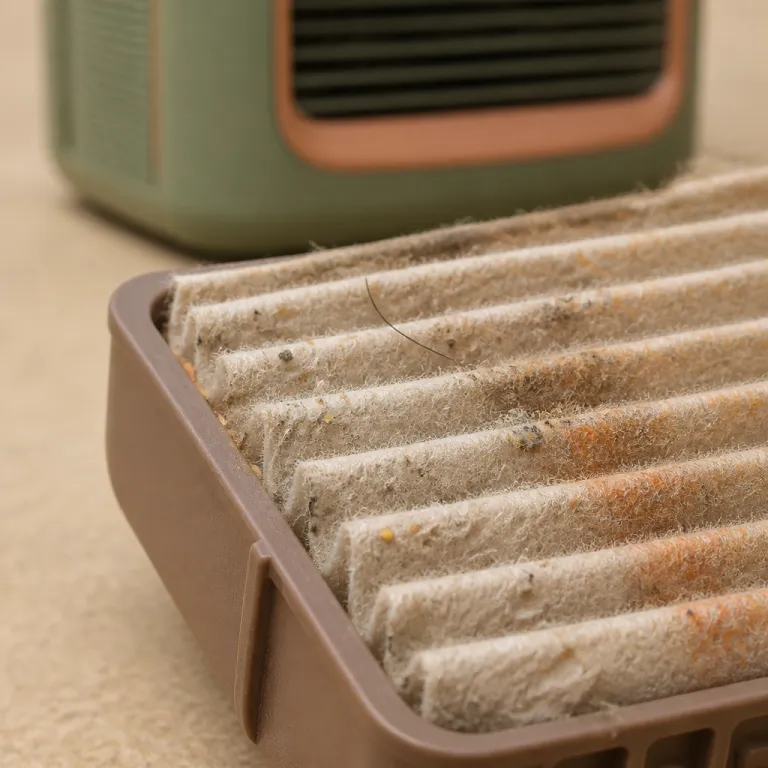
Once you know what does MERV mean and you have selected the right merv rating for your portable air conditioner, the next challenge is maintenance. A filter that looks clean on the surface can still be loaded with particles dust, dust pollen, and pet dander deep in the fibers, which quietly reduces airflow and forces the hvac system to work harder. Over time, this hidden buildup lowers cooling efficiency, increases noise, and can even allow some particles to bypass the filtration layer and re enter the indoor air.
Most portable units use reusable pre filters with a low MERV rating combined with replaceable higher MERV filters, and each part needs a different cleaning schedule. The pre filter that catches large particles dust and hair should be rinsed or vacuumed every two to four weeks, while the finer merv filter or hepa filter usually needs replacement every three to six months depending on air quality and usage hours. In homes with heavy smoke, many pets, or visible dust mites and particles dust on surfaces, you may need to replace air filters more often to maintain both filtration efficiency and stable airflow through the hvac system.
When you clean or replace any air filter, always power off the portable unit and remove the filter gently to avoid shaking loose particles back into the air. Check the frame for signs of warping, moisture damage, or mold, because a damaged merv filter can leak around the edges and reduce the effective MERV ratings of your filtration setup. If you notice that a new higher MERV filter immediately seems to restrict airflow or the fan noise rises sharply, step back to a slightly lower filter MERV level that still improves indoor air quality but respects the design limits of your portable cooling system.
Balancing MERV ratings, airflow, and cooling performance
People often assume that a higher MERV rating is always better, but what does MERV mean for a small portable air conditioner that already struggles with airflow. In a central hvac system with a powerful blower, the fan can usually handle higher MERV filters without a dramatic loss of airflow, yet a compact portable unit has far less margin. When you install a very dense merv filter or multiple merv filters in a portable device, you may notice cooler air at the outlet but a reduced volume of air overall, which means the room cools more slowly.
The relationship between filtration and airflow is simple physics, because every layer of filtration adds resistance that the fan must overcome. A higher merv filter with finer fibers and smaller pores captures smaller particles such as dust pollen, pet dander, and smoke, but it also tends to restrict airflow more than a coarse air filter with a lower rating. If the fan cannot maintain adequate airflow across the evaporator coil, the system efficiency drops, energy use rises, and in extreme cases the coil can freeze, which stops cooling entirely until the ice melts.
To find the right balance, start by checking the manufacturer recommended MERV ratings and then consider your specific indoor air quality needs, such as allergies, pets, or nearby traffic smoke. If you are sensitive to smaller particles and need greater filtration, choose the highest MERV filter that does not noticeably restrict airflow or raise noise after several hours of operation. For more insight into how airflow, fan speed, and system design interact in portable units, you can read about portable AC noise at night and the decibel reading that matters, which indirectly shows how fan load changes when filters MERV levels are altered.
Using MERV knowledge to improve indoor air quality around portable ACs
Understanding what does MERV mean gives you a practical tool for managing indoor air quality when you rely on a portable air conditioner. The filter inside the unit is only one part of a broader air cleaner strategy that includes room layout, ventilation, and regular housekeeping to control particles dust, dust mites, and pet dander. When you combine the right merv filter with good cleaning habits, you reduce the overall load of particles in the air, which allows the hvac system to maintain both efficiency and comfort.
Start by assessing the main sources of contamination in your space, such as nearby roads that contribute smoke and fine particles, pets that shed hair and dander, or open windows that let in dust pollen during certain seasons. If your main concern is large particles dust and visible debris, a moderate MERV rating on your air filter will usually be enough, especially when paired with frequent vacuuming and damp dusting to remove particles dust from surfaces. When allergies or asthma are a priority, aim for higher MERV filters that capture smaller particles in the 1 to 3 microns range, but always verify that your portable unit can handle the added filtration without excessive strain.
Remember that no single merv filter or hepa filter can solve every air quality problem if the rest of the room is neglected or if moisture issues encourage mold and dust mites. Use your understanding of MERV ratings and filter MERV levels as a framework for choosing air filters that match your health needs, your climate, and the capabilities of your hvac system. By treating the portable air conditioner as one component in a larger indoor air management plan, you can achieve greater comfort, cleaner air, and longer equipment life without sacrificing cooling performance.
Key statistics about MERV ratings, filters, and indoor air
- Studies based on ASHRAE Standard 52.2 report that filters with a MERV rating between 7 and 13 can remove up to about 90 percent of particles between 3 and 10 microns, which covers most dust pollen and many particles dust that affect comfort in homes using portable air conditioners. This range is often cited in technical summaries of ASHRAE 52.2 performance data.
- Research summarized by the United States Environmental Protection Agency (EPA) shows that indoor air can contain roughly two to five times more pollutants than outdoor air, which highlights why choosing an appropriate merv filter and maintaining air filters in portable units significantly improves indoor air quality. The EPA’s guidance on residential air cleaners and ventilation frequently references this indoor to outdoor pollution ratio.
- Field tests on residential hvac system performance indicate that severely clogged filters can reduce airflow by more than 30 percent, and this loss of airflow directly reduces cooling efficiency while increasing energy consumption, especially in small portable systems with limited fan capacity. These findings are consistent with laboratory studies that measure pressure drop and airflow decline across dirty filters.
- Health data from allergy and asthma organizations suggest that using higher MERV filters in the 11 to 13 range can reduce airborne concentrations of pet dander and fine dust by roughly 30 to 50 percent in controlled environments, which translates into fewer symptoms for sensitive occupants when the filters are replaced on schedule.
FAQ about MERV ratings and portable air conditioners
What MERV rating is best for a typical portable air conditioner
Most portable air conditioners perform well with a MERV rating between 6 and 11, because this range improves filtration of particles dust and dust pollen without placing excessive strain on the small internal fan. If you have allergies or pets, moving toward the upper end of that range can help, provided the manufacturer confirms that the hvac system can handle the added resistance. Always monitor airflow and noise after changing to a higher MERV filter to ensure the unit still cools the room effectively.
Can I install a HEPA filter in my portable air conditioner
Some portable models are designed to accept a dedicated HEPA filter, but many are not, because true HEPA media is very dense and can restrict airflow too much. If your unit does not explicitly support HEPA, it is safer to use a high MERV filter and add a separate HEPA air cleaner in the same room. This combination improves indoor air quality while allowing the portable hvac system to maintain proper airflow and cooling performance.
How often should I replace or clean MERV filters in a portable unit
Reusable pre filters that catch large particles dust and hair usually need cleaning every two to four weeks, especially during heavy cooling seasons. Replaceable merv filters or fine air filters typically last three to six months, but homes with smoke, pets, or high dust levels may require more frequent changes. The best indicator is a visible layer of particles dust on the filter surface or a noticeable drop in airflow and cooling efficiency.
Does a higher MERV rating always mean better air quality
A higher MERV rating usually means better filtration of smaller particles, but it does not automatically guarantee better overall air quality if the filter chokes airflow or is not replaced on time. In a portable air conditioner, an excessively high MERV filter can reduce system efficiency and leave some parts of the room under cooled, which indirectly affects comfort and perceived air quality. The ideal approach is to choose the highest MERV level that your hvac system can handle comfortably and then maintain it regularly.
Will using a high MERV filter damage my portable air conditioner
A properly selected higher MERV filter that matches the manufacturer recommendations will not damage the unit and can even protect internal components from particles dust and dust mites. Problems arise only when filters MERV levels exceed what the fan and coil design can handle, which can restrict airflow, cause coil icing, and shorten component life. Always consult the manual or technical support before moving to a significantly higher MERV rating in a portable system.