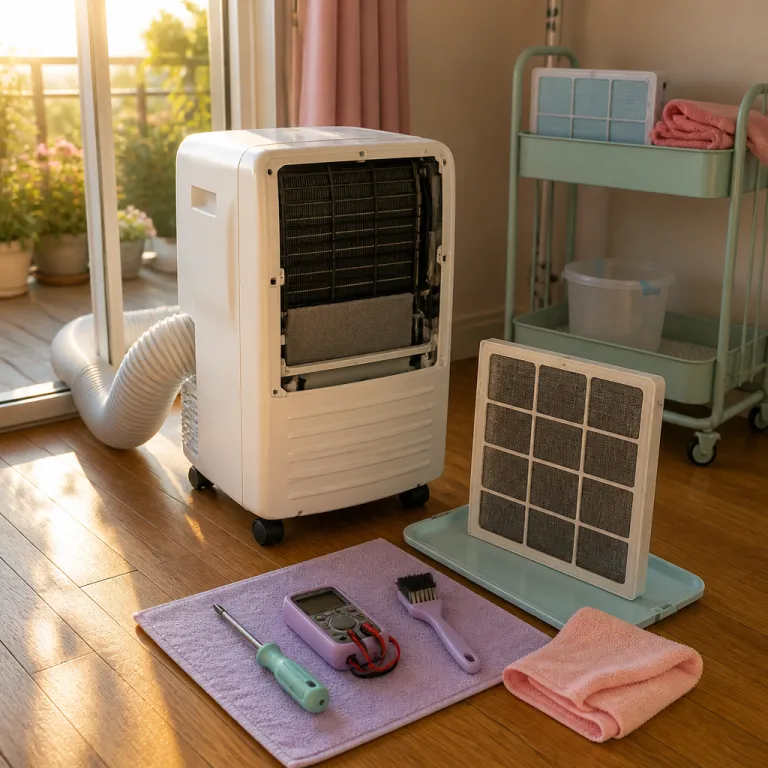
Why mid summer maintenance makes your portable AC feel new again
By mid season, a portable air conditioner often feels weaker. After six to eight weeks of daily air conditioning, dust, heat and humidity quietly erode its real cooling power. The result is a hotter room, more fan noise and a higher temperature than you remember from early summer.
This is exactly when a focused mid season tune up pays off. Filter buildup alone can cut airflow through the portable unit by 20 to 30 percent, which means less cool air reaching bedrooms and home offices and more hot air pooling near the ceiling. That figure lines up with manufacturer guidance for many room air conditioners and AHAM lab testing on dirty filters (for example, AHAM AC-1 performance tests and airflow data in Midea and Whynter portable AC spec sheets). A quick 15 minute check restores most of that lost conditioning performance without touching the thermostat or buying a bigger unit.
Think of your portable air conditioning system as two machines in one. One side handles sensible cooling, which drops the air temperature you feel on your skin, while the other side manages latent cooling by pulling humidity out of the room. When coils and filters clog, both sides suffer, so even the best portable air conditioners like a Midea Duo MAP12S1TBL or a Whynter ARC-14S model start to feel undersized for the same room size.
Mid summer is also when installation weak points show up. Window unit style seals around a portable air exhaust hose expand and contract with heat, opening gaps that leak hot air back inside. That small leak forces the air conditioner to run more hours at higher fan speeds, which raises noise and lowers efficiency even on smart conditioners with advanced inverter IVSM or dual inverter compressors.
Step 1 to 3: filter, coils and drainage in a 15 minute mid season reset
Quick mid season checklist (about 15 minutes total):
- Unplug the portable AC and put on light work gloves.
- Rinse the air filter (3–5 minutes including drying setup).
- Vacuum the rear grille and coils with a soft brush (5 minutes).
- Drain and flush the pan and hose with diluted vinegar (5 minutes).
Start your portable AC checkup with the filter, because airflow is everything. Always unplug the unit before you open any panel. Pop out the mesh filter and rinse it under lukewarm water for two to three minutes, then let it air dry completely before sliding it back in. That simple step often brings back a strong cool air stream, especially on compact air conditioners used in small bedrooms or offices where dust builds quickly.
Next, give the rear grille and condenser coils some attention. Use a vacuum with a soft brush attachment to clean the air intake area, moving slowly so you do not bend the fins that move heat from the hot air side to the outside. If your manual allows, you can also use a fin comb and gentle hand pressure to straighten any crushed areas. This coil cleaning improves heat transfer, which means the air conditioner can drop the room temperature faster and cycle its fan off sooner, saving both energy and wear on the portable system.
Step three tackles the drain pan and line, which quietly collect minerals and biofilm over many hours of operation. Pull the lower drain plug, empty any standing water into a shallow tray, then flush the pan with a mix of one part white vinegar to three parts clean room temperature tap water. If your model has a gravity drain hose, briefly disconnect that hose and run the same diluted solution through it to clear slow drainage that can cause puddles under the unit.
Owners who plan ahead also think about off season care while doing this mid summer reset. If you already know you will store the air conditioner after the heat breaks, read a detailed guide on how to protect your portable AC during winter storage and align your cleaning steps now. That way the same portable air maintenance routine that keeps July cooling strong also prevents moldy smells and corrosion when the conditioner rests for months.
Step 4 to 5: seal, hose and airflow checks that stop hot air sneaking back
Once the inside of the portable unit is clean, shift your mid season maintenance to the window. Inspect the window kit panel and foam strips where the hose passes through, pressing gently along the edges to feel for moving air. Any gap that leaks hot air from outside or lets conditioned air escape will raise the room temperature and force longer cooling cycles.
If you feel drafts, replace or double up the weatherstripping around the window unit style panel. Many owners underestimate how much heat can sneak in around a loose hose collar, especially on tall sliding windows where the panel can flex during hours of fan vibration. Resealing this area with fresh foam tape is one of the cheapest ways to keep the best portable conditioners performing like they did in May, even during a late summer heat wave.
Now check both ends of the exhaust hose for looseness or discoloration. A crushed or kinked hose chokes airflow, raises back pressure on the air conditioning system and can even trip safety sensors on models like the Whynter ARC series or the Serenelife SLPAC line. Wipe any condensation from the fittings, straighten the hose into a gentle curve and keep it as short as possible to protect cooling power.
This is also a good moment to think about filtration and indoor air quality. If you are curious how a higher grade filter can change both cooling and comfort, a detailed explainer on how a MERV 13 filter transforms portable AC comfort shows why clean air and efficient conditioning go together. Combine that knowledge with a regular mid summer service routine and your room will feel cooler, drier and quieter at the same thermostat setting.
Model specific tips: getting the most from Midea, Whynter, Black Decker and others
Not every air conditioner behaves the same during portable air conditioner mid summer maintenance, so it helps to know your platform. Dual hose designs like the Midea Duo and the Whynter ARC series pull outside air for cooling the condenser, which reduces infiltration air and keeps more cool air inside the room. Single hose designs, including many Black Decker and Serenelife SLPAC units, are simpler but more sensitive to window leaks and hose restrictions.
Smart features also change how you maintain and monitor your portable air conditioners. A Midea Duo with a Duo MAP or MAP TBL model code can use its smart app to show operating hours, target temperature and sometimes error codes that hint at airflow or drainage issues. When you see the fan running constantly without much cooling, that is your cue to repeat the filter and coil steps rather than blaming the heat alone.
Some inverter IVSM and dual inverter portable air conditioners ramp their compressors gently, which hides performance loss until the hottest week of the season. If your smart portable unit suddenly struggles in large bedrooms or offices, check whether the hose has sagged, the window seal has shifted or the filter has darkened with dust. A quick reset often restores the best portable performance without touching the thermostat or assuming the unit is undersized.
For a deeper seasonal plan that goes beyond this mid summer routine, look at a broader checklist of essential tips for maintaining a portable air conditioner. Combine that annual schedule with this 15 minute July check and you will keep your air conditioning stable, your room temperature predictable and your cooling power close to factory fresh for many summers. In the end, what matters is not the BTU number on the box but the real temperature drop you feel at three in the afternoon when the heat peaks.
FAQ
How often should I perform portable air conditioner mid summer maintenance ?
For daily use during a long heat wave, aim for a quick mid season maintenance style check every four to six weeks. That means rinsing the filter, vacuuming the coils and inspecting the hose and window seal for leaks. In dusty homes or small bedrooms or offices, repeating the filter step every two weeks keeps airflow and cooling power more consistent.
Why is my portable AC running for hours but not cooling the room ?
When a portable unit runs for many hours with weak cooling, restricted airflow or hot air leaks are usually to blame. A clogged filter, a kinked hose or gaps around the window unit panel let heat and humidity creep back in, so the air conditioner never reaches its set temperature. Work through the five step routine, then check that doors and blinds are closed to reduce extra heat load.
Do dual hose models like Midea Duo and Whynter ARC really cool better ?
Dual hose designs such as the Midea Duo series and many Whynter ARC conditioners usually handle heat better in sealed rooms. They use one hose to pull outside air across the condenser and another to exhaust hot air, which reduces negative pressure and keeps more conditioned air inside. Single hose portable air conditioners can still perform well, but they are more sensitive to window leaks and need especially careful mid summer maintenance.
What should I check first if I see water around my portable air conditioner ?
Water on the floor near a portable air conditioner often points to a drainage issue. Start by unplugging the unit, removing the lower drain plug and emptying the pan, then inspect any attached drain hose for clogs or kinks. Flushing the pan and hose with diluted vinegar during your mid season service usually clears mineral buildup and prevents repeat leaks.
Can smart features and an app really help with maintenance ?
Smart features on modern portable air conditioners, including models with a dedicated app, make maintenance easier to time. Usage logs, temperature graphs and error alerts show when the fan or compressor is working harder than usual, which often signals a dirty filter or blocked hose. Use that data to trigger your 15 minute mid season routine instead of waiting until the room feels uncomfortably warm.