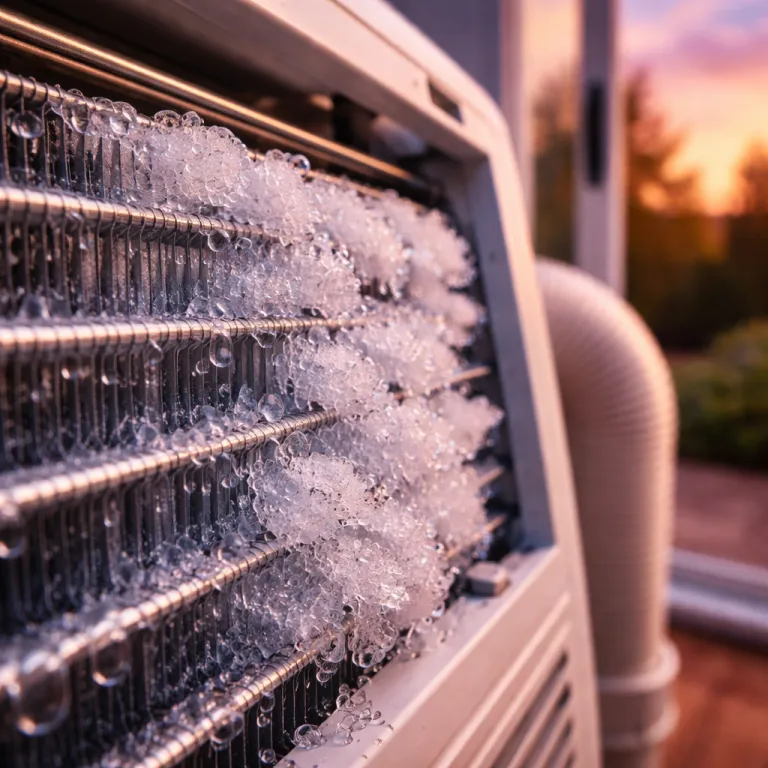
Why portable air conditioner ice on coils keeps coming back
When a portable air conditioner builds ice on coils, it is not random or harmless. The evaporator coil inside the unit drops below 0 °C, moisture in the air freezes, and that ice slowly chokes airflow until the cooling system can barely breathe. Left running in this frozen state, the compressor works harder, refrigerant temperatures swing wildly, and the whole air conditioner system risks long‑term damage.
Think of the evaporator as the cold heart of the portable air cooling system. Warm indoor air passes over the evaporator coil, the refrigerant inside absorbs heat, and the air leaving the unit feels cooler while condensation drips into the drain pan instead of becoming ice. In normal operation, manufacturer service manuals and HVAC training texts typically show evaporator surface temperatures sitting roughly between 2 °C and 7 °C, just above freezing, so water can drain away. When airflow falls or refrigerant levels drift out of spec, that same evaporator coil can dip well below freezing, so the first thin glaze of ice on the coils becomes a thick frozen coil that makes the unit freeze again and again.
Most owners blame dirty air filters and stop there, but that is only the first step. In year two and beyond, the real culprits are usually dust‑packed evaporator coils, thermostat settings that drive temperature drops too aggressively, or a slow refrigerant leak that starves the evaporator of heat. If your portable air conditioner has ice on coils even after you clean or replace the air filter, you are almost certainly dealing with one of these deeper airflow or refrigerant problems rather than a simple maintenance oversight.

How the icing cycle works inside a portable cooling system
Inside every portable air conditioner, the refrigerant circuit and the fan system create a delicate balance. The compressor pumps refrigerant through the evaporator coil, the indoor fan pulls warm room air across those evaporator coils, and the outdoor unit section with the condenser coil and exhaust hose dumps heat outside. When that balance holds, you get steady cooling without freezing, and the unit can run for hours without any sign of ice.
Once airflow drops or refrigerant levels fall, the evaporator temperature plunges and the icing cycle begins. The first temperature drops below 0 °C turn normal condensation into a thin film of ice on the coil, that ice blocks some fins, and the reduced airflow makes the remaining exposed evaporator coil surfaces even colder. Within an hour you can have a fully frozen coil, a struggling compressor, and a portable air conditioner that sounds like it is running hard but barely moves any cool air.
This is why technicians treat ice on coils as a system symptom, not just a cosmetic issue. A healthy portable air cooling system should never let the evaporator sit frozen solid while the unit runs in cool mode, even when the outdoor temperature is high and the room is humid. If you repeatedly see your unit freeze, especially on a relatively mild outdoor day, you should suspect either serious airflow restriction or a developing refrigerant leak rather than just blaming the air filter again. Standard HVAC troubleshooting guides also look for a low suction pressure reading on the gauge set and a supply‑to‑return air temperature difference above roughly 12–14 °C as supporting evidence of a freezing problem.

Three root causes of frozen coils and how to diagnose them
When you see portable air conditioner ice on coils, start with airflow before anything else. Power the unit off, turn the unit to fan mode only for ten minutes to warm the evaporator coil slightly, then unplug it and open the front panel so you can inspect both the air filter and the evaporator coils behind it. If the air filters look grey, matted, or clogged, clean or replace the air filter first, but do not stop there if the evaporator fins themselves look dusty or the coil surface appears unevenly frozen.
Restricted airflow from a dirty evaporator coil is the most common year‑two failure. Even when owners clean or replace the air filters regularly, fine dust still sneaks through and packs into the evaporator coils, especially on compact portable air units that run for long hours in small rooms. Use a soft brush and a vacuum to lift debris from the coil fins, then consider a cheap fin comb to straighten bent fins that pinch airflow, because this simple step often restores normal cooling and stops the unit freeze cycle entirely.
If the coil is clean and the fan is running freely, look at how you use the thermostat and the room itself. In a small, well‑insulated bedroom, setting the conditioner to 16 °C with a low fan speed can drive temperature drops so fast that the evaporator coil never gets enough warm air, which encourages freezing even when refrigerant levels are normal. Raise the set point to around 23 °C, bump the fan one step higher, and see whether the air conditioner can now run for several hours without forming ice on the coils. As a quick rule of thumb, if the unit can hold the room within about 2–3 °C of the set temperature for an hour with no visible frost, your airflow and thermostat settings are probably in a safe range.
Step by step thawing, cleaning and drainage checks
Once you notice ice on the evaporator coil, resist the urge to keep the portable air conditioner running. Turn the unit off completely, unplug it, and let the frozen coil thaw naturally while you place towels or a shallow tray under the drain area to catch extra water. If the ice melts in under thirty minutes and you see a sudden surge of water into the drain pan, that quick thaw strongly suggests an airflow problem rather than a refrigerant issue.
Use this thawing window as a structured checklist. First, run fan mode only for 20 minutes to move warmer air across the evaporator and speed up melting without adding more cooling. Second, remove the air filters and either clean or replace them, then use a soft brush and a vacuum to clear dust from the evaporator coils, the fan blades, and any intake grilles that feed air into the cooling system. Third, pay attention to the drain pan and any drain hose, because a drainage surge after a unit freeze can overflow onto the floor and create the classic puddle that many owners mistakenly blame on a cracked portable air conditioner unit.
After cleaning, reassemble the conditioner and run it in fan mode only for at least twenty minutes. This fan‑only step helps dry the evaporator coil surface, restores even airflow across the fins, and lets you listen for any unusual fan noise that might hint at obstructions or a failing motor. If the air feels strong and even across the outlet, you have likely solved the airflow side of the problem, and the next test is to see whether the unit can cool the room without the coils freezing again. Many HVAC field manuals suggest that if the coil stays clear of frost for at least 60–90 minutes of continuous cooling after a thorough cleaning, the system is behaving normally.
When refrigerant problems and outdoor conditions are to blame
If your portable air conditioner still forms ice on coils after a full cleaning, you need to think about refrigerant and operating conditions. Run the unit in cool mode, watch the evaporator coil through the grille if possible, and time how long it takes for ice to build and then melt once you turn the unit off. When it takes more than an hour for a frozen coil to thaw and the air never feels truly cold, those are classic signs that refrigerant levels may be low or that a refrigerant leak has slowly developed inside the sealed system.
Portable air conditioners are usually not economical to repair once a refrigerant leak appears. Industry surveys and service price lists commonly show that sealed‑system work on small room air conditioners can cost between 50 % and 100 % of the price of a new unit, because the cooling circuit is compact and difficult to access. If your three‑year‑old portable air unit repeatedly ices up, shows weak cooling even with strong airflow, and a technician confirms low refrigerant or abnormally low suction pressure on their gauges, replacement is almost always the rational step rather than chasing a short‑lived recharge.
Outdoor temperature and room humidity can still tip a marginal system into freezing, so adjust how you run the unit. On very humid days, avoid setting the thermostat too low, keep the fan speed at least medium, and ensure the outdoor unit exhaust hose is straight and unobstructed so hot air leaves the space efficiently. With these habits, plus ten minutes of fin and coil maintenance at the start of every summer, you dramatically reduce the risk that your portable air conditioner will end another heatwave with ice on coils and a warm, uncomfortable room. Any work that involves opening the sealed refrigeration circuit, adding refrigerant, or recovering old refrigerant should be left to a certified HVAC technician, in line with EPA and industry refrigerant‑handling rules.
FAQ
Why does my portable air conditioner keep freezing up at night ?
Nighttime freezing usually combines lower outdoor temperature, reduced indoor heat load, and aggressive thermostat settings. The evaporator coil can drop below 0 °C when the room cools faster than expected, especially if the fan speed is low and airflow is restricted by dust or partially blocked air filters. Raise the set point slightly, run the fan one step higher, and clean or replace the air filter to reduce the chance of a unit freeze overnight.
Is it safe to run a portable air conditioner with ice on the coils ?
Running a portable air conditioner while the evaporator coil is frozen is not recommended. Ice on the coils blocks airflow, forces the compressor to run hotter, and can cause refrigerant temperatures and pressures to move outside their normal range. Over time this stress can shorten the life of the cooling system and increase the risk of a refrigerant leak or permanent compressor damage.
How often should I clean the evaporator coils on a portable unit ?
For most homes, cleaning the evaporator coils once a year before the main cooling season is a good baseline. If you use the unit heavily, have pets, or live in a dusty environment, checking the evaporator coils and air filters every few months helps prevent airflow problems and frozen coil episodes. A quick visual inspection and light vacuuming of the coil fins can keep the air conditioner running efficiently for many summers.
Can low refrigerant cause ice on a portable air conditioner coil ?
Low refrigerant can absolutely cause ice to form on the evaporator coil in a portable air conditioner. When refrigerant levels drop, the pressure in the evaporator falls, the coil temperature sinks below freezing, and normal condensation turns into ice that blocks airflow. If cleaning and airflow fixes do not stop the freezing, a professional check of refrigerant levels is the next logical step, although repairing a leak in a portable unit is often not cost effective.
What is the fastest way to thaw a frozen portable air conditioner ?
The safest way to thaw a frozen portable air conditioner is to turn the unit off and let the ice melt naturally with good room ventilation. You can speed the process slightly by running the fan mode only, which moves warmer room air across the evaporator coil without adding more cooling. Avoid using sharp tools or very hot air on the coils, because damaging the delicate fins or tubing can ruin the entire cooling system.
