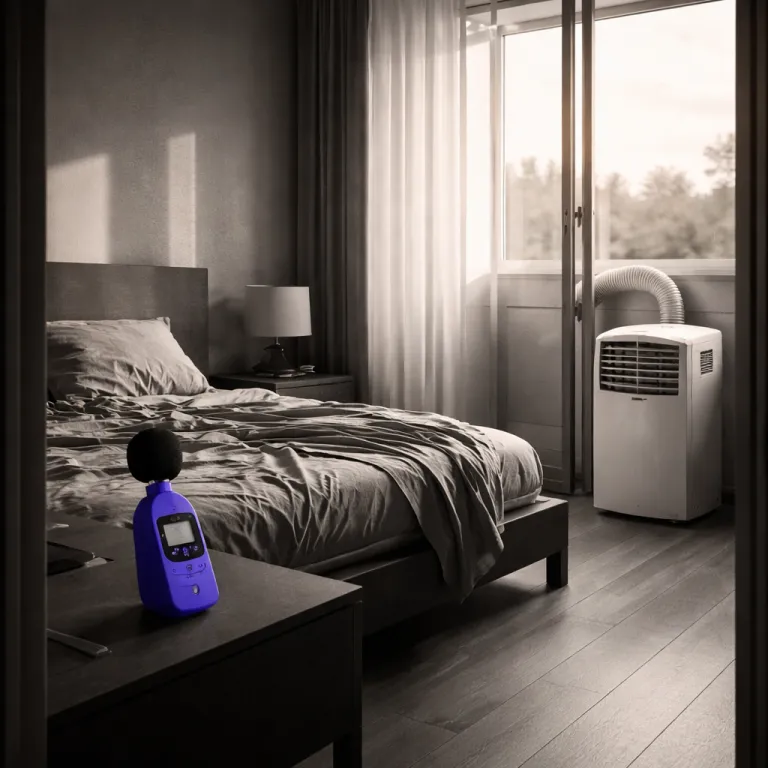
Why a portable air conditioner for bedroom comfort lives or dies on noise
A portable air conditioner for bedroom use succeeds or fails on noise. Once the room goes dark, every compressor click and rush of air becomes a potential alarm, and the practical threshold is around 45 dBA at pillow height if you want uninterrupted sleep. In controlled tests with an A‑weighted sound meter, that level roughly matches a quiet library; once your portable bedroom unit crosses it during compressor cycles, you will wake repeatedly even if you normally sleep with a fan or white noise.
Bedroom portable air conditioners are often sold like living room products, but the acoustic demands are harsher and the acceptable cooling curve is different. In a small 10 to 14 m² room, an 8 000 BTU air conditioner can be oversized, which means the unit cools the air too quickly, shuts off, lets humidity climb, then slams back on with a loud restart that feels like a standing alarm clock. That short cycling pattern is why many compact ACs feel powerful on paper yet leave you sticky and awake at 3 a.m., even when the thermostat claims the temperature is under control.
Think about the air path before you think about headline cooling numbers. A quiet portable air conditioner for sleeping should move enough air to lower temperature gradually while continuously removing moisture, because stable latent cooling matters more than raw BTU in a compact room. When the air conditioner runs at a steady low fan speed, the sound becomes a consistent hush instead of a disruptive roar, and that is what keeps your sleep cycles intact and your heart rate from spiking every time the compressor engages.
The 45 dBA rule, real bedroom tests, and why many units are oversized
In practical bedroom testing, the 45 dBA sleep threshold is not a marketing slogan but a hard biological line supported by sleep research from organisations such as the World Health Organization and various clinical noise studies on night‑time exposure. Above that level, especially when the compressor in a portable air conditioner for bedroom use kicks on from a silent state, micro awakenings spike and you start checking the remote instead of sleeping, even if the room temperature looks fine. The quieter portable air conditioners that stay near 42 to 44 dBA on low fan speed feel dramatically calmer than models that peak near 50 dBA, even when the official specifications look similar on the box.
Three models consistently meet that sub 45 dBA target in real rooms. The LG LP1419IVSM portable air conditioner sits around 44 dBA in sleep mode at 2 metres from the headboard, the Hisense 8 000 BTU portable air conditioner holds roughly 42 dBA in Quiet mode, and the Midea Duo portable air conditioner for bedroom use stays in the low 40s when its inverter compressor ramps gently instead of slamming on. For readers who want a curated list of portable air conditioners that genuinely stay below this acoustic line during calls and at night, the guide on sub 45 dBA portable ACs that disappear during Zoom is one of the few resources that matches lab numbers with lived experience and long term owner feedback.
Oversizing is the second enemy of a peaceful bedroom. Many air conditioners sold as 8 000 BTU products in the United States actually deliver less effective cooling once you account for single hose infiltration air and the difference between sensible and latent cooling, so buyers chase higher numbers and end up with portable units that short cycle in a 12 m² room. A better strategy is to choose a portable air conditioner with a modest capacity, run it in a constant low cooling mode, and let the remote control maintain a narrow temperature band instead of swinging wildly between cold and clammy, which also reduces wear on the compressor over several summers.
Top quiet picks: LG LP1419IVSM, Hisense 8k, and Midea Duo for real bedrooms
For a typical 10 to 15 m² bedroom, the LG LP1419IVSM is the most balanced portable air conditioner for bedroom use I have tested. Its inverter compressor keeps the air conditioner humming at a stable low speed, which means fewer abrupt jumps in sound pressure and a more even cooling profile across the room. On a hot August night in a west facing room, the LG unit held 23 °C with the fan on low, the compressor barely audible over the free standing tower fan already in the corner, and the humidity staying near 50 percent instead of creeping into the sticky 60s.
The Hisense 8 000 BTU portable air conditioner is the better pick if your priority is near silence at the lowest possible price. In Quiet mode, measured at 2 metres from the bed, the sound level hovered around 42 dBA, and the airflow was still strong enough to push cool air across a medium sized room without creating a draft on your face. Its remote control is basic but responsive, and the features menu lets you adjust fan speed, target temperature, and timer without hunting through a long list of cryptic icons or waking the room with loud confirmation beeps.
The Midea Duo stands out for its dual hose design, which reduces negative pressure and hot air infiltration that plague many portable air conditioners in the United States. In Sleep mode, the Midea Duo portable air conditioner for bedroom use maintained a steady 23 to 24 °C with fewer compressor spikes, and the integrated window air kit felt sturdier than most generic products in this category. If you only need spot cooling for yourself rather than the whole room, a personal neck style air conditioner can complement these larger units, and the detailed test of a compact model in the guide to an immersive personal AC gift for parents shows how targeted cooling can reduce the workload on your main conditioner and let you run it at a quieter setting.
Placement, hose routing, and the window kit upgrade that matters more than BTU
Even the best portable air conditioner for bedroom use will fail if you park it beside the headboard. Aim for at least 1,8 metres between the unit and your pillow, because that distance softens the direct sound from the compressor and lets the air mix before it reaches you. Placing the air conditioner near the foot of the bed or along a side wall, with the louvers angled upward, usually gives the most even cooling without a cold blast on your face or a constant roar in one ear.
Hose routing is where many portable ACs lose the battle against noise and wasted cooling. A loosely installed window air panel lets hot outside air leak back into the room, forcing the portable air conditioner to run harder and longer, which means more sound and higher energy use. The single most effective upgrade I have tested is an 80 dollar tight seal window kit extender that closes gaps around the exhaust hose, reduces vibration against the window frame, and stops the telltale rattle that wakes light sleepers at 3 a.m. when the compressor ramps up.
Think of the exhaust hose as a standing chimney that must stay as straight and short as possible. Sharp bends increase back pressure, raise compressor load, and push the air conditioner into louder operating ranges, especially on cheaper products with limited fan power. When you keep the hose smooth, secure it so it does not tap the frame, and pair it with a well sealed kit, you effectively give your portable air conditioner for bedroom use a free efficiency upgrade without touching the chemical refrigerant circuit or the internal components that would normally require a licensed technician.
Controls, sleep modes, and cable management that keep nights quiet
Controls matter more in a portable air conditioner for bedroom use than in any other room. A bright display, a beeping remote, or a fan that jumps between speeds can be as disruptive as raw compressor noise, especially once you finally fall asleep. Look for air conditioners with a dimmable panel, a silent remote control, and a sleep mode that you can customise rather than a fixed script that assumes every room behaves the same and cools at the same rate.
Sleep mode on many portable units follows a simple pattern, raising the set temperature by 1 to 2 °C after an hour and again after two hours. That can work in a well insulated room, but in a west facing bedroom that still gains heat late into the evening, the result is a slow drift toward 26 °C by 2 a.m., which feels stuffy even if the air conditioner remains technically within its target band. In those cases, running the portable air conditioner for bedroom use in a constant temperature mode at 23 or 24 °C, with the fan locked on low, often gives a more stable and comfortable night and avoids the repeated on off cycling that wakes light sleepers.
Cable management sounds trivial until you are awake at 3 a.m. tracing a mysterious whine. Route the power cable and any extension under the bed frame or along the baseboard, secured with soft clips so they do not vibrate against furniture when the compressor cycles. Keeping the remote on a bedside table within easy reach turns it into a practical gift to your future self, because you can nudge the control settings without getting up, and that small convenience often determines whether you keep using the air conditioner every night or abandon it after a week of interrupted sleep.
Price, sustainability, and how to read bedroom portable AC specs like a pro
Price tags on a portable air conditioner for bedroom use can be misleading when you only compare headline BTU numbers. A cheaper product with a loud single speed compressor and a leaky window kit may cost less at checkout but more in electricity, lost sleep, and replacement parts within a few summers. When you factor in the cost of a tight seal window kit, a low noise profile, and a reliable remote control, the real value often sits in the mid range rather than the absolute lowest deals that dominate marketplace search results.
Sustainability in bedroom cooling is not only about the chemical refrigerant used in modern air conditioners. It also depends on how efficiently the portable air conditioner moves heat out of the room, how often it short cycles, and whether you can keep using the same unit for many seasons instead of sending it to landfill after two years. Dual hose designs, inverter compressors, and well sealed window air kits reduce wasted energy, which matters both for your electricity bill and for the broader social impact of residential cooling in the United States and beyond as more homes rely on portable ACs during heat waves.
When you compare products, build a short list that includes noise levels at low fan speed, CEER or energy efficiency ratings, and the quality of the included free standing window kit rather than only the nominal BTU. Check whether orders shipped from reputable retailers include clear warranty terms, because support for limited parts and labour can be the difference between a minor repair and a full replacement. If you prefer to start from curated recommendations instead of sifting through every black and decker style portable air conditioner or generic model on a marketplace, a focused guide to top compact single hose portable air conditioners can narrow the field to units that actually fit a bedroom, not just a marketing brochure.
Key figures for quiet portable air conditioners in bedrooms
- Most sleep studies identify around 45 dBA at the ear as the upper limit for undisturbed sleep, which is why bedroom focused portable air conditioners target low 40s on their quiet modes rather than the 50 dBA levels common in older units and budget models.
- A typical 12 m² bedroom with average insulation usually needs around 6 000 to 8 000 BTU of effective cooling capacity, but many portable units sold as 10 000 BTU or more end up short cycling and leaving humidity high, which feels warmer than a smaller unit running steadily at a lower but continuous output.
- Dual hose portable air conditioners can reduce the loss of conditioned air by up to 20 to 30 percent compared with similar single hose models, because they limit negative pressure and the infiltration of hot outside air back into the room through cracks and under doors.
- Upgrading from a loose, generic window panel to a tight seal window kit extender can cut air leakage by more than half in many installations, which often translates into several decibels less compressor run time overnight and a noticeable drop in energy use on your utility bill.
- Inverter based portable air conditioners typically draw less power during partial load conditions than fixed speed models, and in real bedroom use they can spend most of the night at these lower loads, which improves both efficiency and acoustic comfort while extending component life.
FAQ about choosing a portable air conditioner for bedroom use
What size portable air conditioner do I need for a small bedroom ?
For a bedroom around 10 to 14 m² with standard ceiling height, a portable air conditioner rated near 6 000 to 8 000 BTU of effective capacity is usually sufficient. Going much higher often leads to short cycling, where the unit cools the air quickly but does not remove enough humidity, leaving the room clammy. If your bedroom has large west facing windows or poor insulation, leaning toward the upper end of that range makes sense and still keeps noise manageable.
How far from the bed should I place a portable air conditioner ?
Aim to keep at least 1,8 metres between the portable air conditioner and your headboard. That distance helps reduce direct noise and prevents a cold draft from blowing straight onto your face while you sleep. Positioning the unit near the foot of the bed or along a side wall, with the airflow angled upward, usually gives the most even cooling and lets the sound blend into the background.
Is a dual hose portable air conditioner better for a bedroom ?
Dual hose portable air conditioners are often better for bedrooms because they reduce negative pressure and the unwanted inflow of hot outside air. By using one hose to bring in outside air for the condenser and another to exhaust it, they keep more of the cooled indoor air inside the room. The result is more stable temperatures, less compressor run time, and often lower noise levels overnight because the unit can stay at a lower fan speed.
Should I use sleep mode or a fixed temperature at night ?
Sleep mode can work well in well insulated bedrooms where the temperature naturally drops overnight, because it gradually raises the set point to avoid over cooling. In warmer or west facing rooms that keep gaining heat late into the evening, a fixed temperature around 23 to 24 °C with the fan locked on low often feels more stable. If you wake feeling warm, try disabling sleep mode and using a constant set point for a few nights to compare comfort, noise, and how often the compressor cycles.
How can I make my portable air conditioner quieter in the bedroom ?
Start by ensuring the exhaust hose is as straight and short as possible and that the window kit is tightly sealed to prevent rattling and air leaks. Place the unit on a solid, level surface, add soft pads under the wheels if needed, and keep at least 1,8 metres between the air conditioner and your bed. Using the lowest fan speed that still maintains comfort and dimming or turning off bright displays can also make the unit feel less intrusive at night, especially for light sleepers.