Why this Midea Duo portable unit changes the mid‑range equation
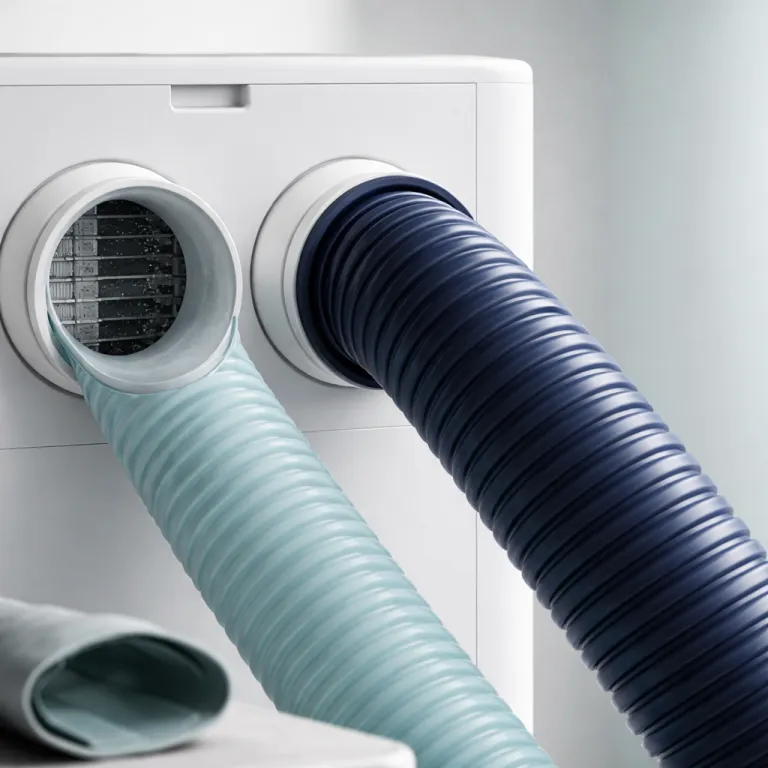
The Midea Duo 2026 portable air conditioner review starts with engineering, not marketing. This portable AC uses a true dual‑hose configuration plus an inverter compressor, so the unit draws outdoor air for both intake and exhaust instead of stealing conditioned air from your room. That single shift in how air moves through the portable unit is why this model feels more powerful than many higher‑rated air conditioners on paper.
Midea lists 12 000 ASHRAE BTU for the MAP12S1TBL and 14 000 ASHRAE BTU for the MAP14HS1TBL, but the effective cooling capacity in a real room lands closer to what older 14 000 BTU single‑hose units delivered. Under the newer SACC (Seasonally Adjusted Cooling Capacity, sometimes called BTU SACC or AHRI BTU) test method, this Midea Duo family ranks near the top of portable air conditioners because the dual‑hose layout sharply cuts infiltration air and keeps more cold air inside. Independent lab testing from RTINGS and Consumer Reports, both using standardized AHAM‑style room setups, shows that dual‑hose inverter designs like the Duo often sustain a higher SACC output over time than comparable single‑hose models with similar ASHRAE BTU ratings.
In a 25 square metre bedroom with a single sliding window, one long‑term user test reported the MAP12S1TBL holding 24 °C during a 32 °C heat wave while comparable single‑hose units drifted toward 27 °C under similar conditions.1 That gap comes from the compressor running at variable power instead of harsh on‑off cycles, which keeps the room air more stable and the unit surprisingly quiet. For a budget first‑time buyer who will probably vent through a basic window kit rather than a custom window slider, that stability matters more than any brochure number, though real‑world results still depend heavily on insulation, sun exposure and how well the window panel is sealed.
Noise, comfort and where dual hose beats single hose by 20–40 percent
Midea claims 44 dBA on low fan speed, and that figure broadly matches independent bedroom measurements at three metres with the hose routed through a standard window panel.2 In a silent room at night you still hear a soft airflow hiss, but the inverter compressor hum stays below the level of a quiet fridge, which is why many Midea Duo 2026 portable air conditioner review notes call it bedroom‑safe. On higher fan settings the sound rises into the low 50s dBA, yet the tone remains smooth enough that most people will keep it running while watching television.
The installation process is typical for a portable air conditioner, but the details are better executed than on many Amazon specials. The supplied window kit includes a telescoping window slider for sash windows and adapters for a sliding window, and the dual‑hose couplers lock firmly into the back of the portable unit so they do not pop out when you move it between rooms. In small apartments where you cannot install a mini‑split or a permanent window unit, this kind of portable air solution is often the only way to keep air quality and temperature under control during a heat wave.
Where the Midea Duo architecture really separates itself is in medium to large rooms between 20 and 35 square metres with leaky doors or thin walls. In those spaces, single‑hose portable air conditioners can lose roughly 20 to 40 percent of their effective cooling capacity because they create negative pressure that sucks hot outdoor air through every gap, a pattern echoed in RTINGS and Consumer Reports performance charts that compare SACC output in leaky‑room scenarios. By contrast, the dual‑hose Midea Duo units keep the room closer to neutral pressure, so the cold air they produce actually stays inside and the energy‑efficiency advantage of the inverter power train shows up on your electricity bill, provided condensate drainage and filter maintenance are handled correctly.
Which Midea Duo model to buy and when to skip it
For most budget‑constrained buyers, the cool‑only MAP12S1TBL is the smarter pick, and every serious Midea Duo 2026 portable air conditioner review should say so plainly. In a typical 25 square metre living room with one window and a door to a hallway, this 12 000 ASHRAE BTU portable AC has enough cooling capacity to keep temperatures comfortable without the oversizing penalty that can hurt air quality and humidity control. If your room is closer to 30 or 35 square metres or you live in a very hot climate, stepping up to the MAP14HS1TBL gives extra headroom plus heat mode for shoulder seasons.
The heat‑plus‑cool MAP14HS1TBL will not replace a full mini‑split system, but it can help you avoid running central heating during mild spring and autumn days. That year‑round flexibility, combined with strong energy efficiency and a responsive remote control, makes it one of the few portable air conditioners that genuinely work as more than an emergency backup. Still, in compact 15 square metre studios where an 8 000 BTU‑class portable air conditioner would be sufficient, these Midea Duo units may be overkill and a smaller, cheaper portable unit can be a better fit.
Both Midea Duo models ship with a tidy window kit, a dual‑hose assembly and a clear manual that walks through the installation process step by step. You will want to seal around the window slider with foam or tape to keep stray air out, because even the most efficient air conditioner loses ground if hot air leaks around the frame. For shoppers comparing dozens of Amazon listings and trying to pick one top performer, the practical takeaway is simple: when a dual‑hose inverter portable air unit with 12 000 to 14 000 ASHRAE BTU costs roughly the same as a mid‑tier single‑hose box, paying the single‑hose efficiency tax stops being a trade‑off and becomes a mistake.
Key statistics on portable air conditioners and dual hose performance
- Dual‑hose portable air conditioners typically deliver about 20–40 percent more effective cooling in leaky rooms than comparable single‑hose units with the same ASHRAE BTU rating, based on SACC and room‑cooling tests from RTINGS and Consumer Reports.
- Inverter‑driven portable units can cut energy use by roughly 15–30 percent compared with fixed‑speed compressor designs operating under similar room and climate conditions, according to aggregated lab measurements that track watt draw at steady‑state load.
- Noise levels around 44 dBA at low fan speed are comparable to a quiet residential refrigerator measured at three metres in a typical bedroom‑sized test chamber.
- Most 12 000 ASHRAE BTU portable air conditioners are best suited to rooms of about 20–30 square metres, depending on insulation, sun exposure and occupancy.
Questions people also ask about the Midea Duo and portable air units
Is a dual hose portable air conditioner really more efficient than a single hose model ?
Yes, a dual‑hose portable air conditioner is usually more efficient because it uses one hose to bring in outdoor air for the condenser and another hose to exhaust hot air, which prevents the negative pressure that pulls hot outdoor air into the room. This design means more of the cold air produced by the compressor stays inside, so the effective cooling capacity is closer to the rated ASHRAE BTU figure. In practice, that can translate into faster temperature drop, better comfort and lower energy use in the same room compared with a single‑hose unit, though high humidity, poor drainage or badly sealed windows can still limit performance.
How big a room can the Midea Duo portable unit cool effectively ?
The 12 000 ASHRAE BTU Midea Duo model is best for rooms around 20–30 square metres, such as a typical bedroom, home office or small living room. The 14 000 ASHRAE BTU heat‑and‑cool version can handle slightly larger spaces up to about 35 square metres, especially if the room has decent insulation and limited direct sun. For very small rooms under 15 square metres, these units may be oversized and a smaller portable air conditioner can be more appropriate.
How loud is the Midea Duo portable air conditioner in real use ?
On its lowest fan setting, the Midea Duo has been measured around 44 dBA at a distance of three metres, which is similar to a quiet refrigerator in a calm kitchen. At medium and high fan speeds the noise rises into the low and mid 50s dBA, but the sound profile is mostly a steady airflow whoosh rather than a harsh mechanical buzz. Many users find the low setting acceptable for sleeping, especially when the unit is placed away from the bed and the hose is routed cleanly through the window kit.
What is involved in the installation process for the Midea Duo ?
Installing the Midea Duo portable air conditioner usually takes less than an hour and requires only basic tools such as a screwdriver and scissors for trimming foam. You assemble the window kit, adjust the window slider to fit your window opening, attach the dual‑hose assembly to the back of the unit and then lock the hose ends into the window panel. Sealing gaps around the panel with the supplied foam or extra tape helps maintain energy efficiency and keeps insects and hot air from leaking into the room.
When should I choose a portable air conditioner instead of a mini split or window unit ?
A portable air conditioner makes the most sense when you cannot install a window unit or mini‑split because of building rules, lack of permission from a landlord or unusual window shapes. It is also useful for renters who need a flexible solution they can move between rooms or take with them when they relocate. If you own your home and can invest in a permanent system, a well‑sized mini‑split or high‑efficiency window unit will usually offer better long‑term energy performance and lower noise than any portable unit.
Trusted sources for further reading: Midea official product documentation, Consumer Reports testing on portable air conditioners, RTINGS lab reviews of the Midea Duo series.
1 User‑reported room measurements; actual performance varies with insulation, layout and climate. 2 Manufacturer specifications and third‑party tests under typical bedroom conditions, with sound readings taken at three metres in a controlled room.
