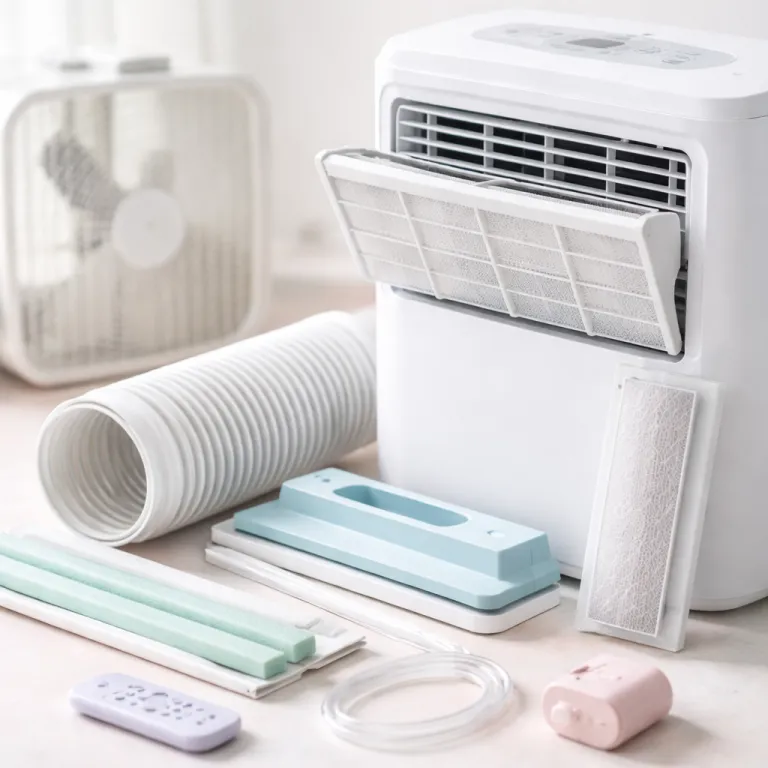
The one hour decision tree for a portable air conditioner same day buy emergency
Heat hits 32 °C, your bedroom feels like a sauna, and you need a same day portable air conditioner plan. In that moment you are not shopping for the perfect gadget, you are buying back sleep and sanity for a specific room air volume. Think of every mobile AC unit as a temporary wall in the flow of hot air, not as magic cold mist.
Start by measuring the room where you want to cool space, because a 12 m² office and a 28 m² living room need very different cooling air capacity. For a typical bedroom in small spaces up to about 18 m², a real 8 000 to 10 000 BTU portable unit (measured by the ASHRAE standard) is the practical floor, while larger rooms in the 20 to 30 m² range usually need 12 000 BTU or more. When you compare the BTU numbers on boxes, remember that many air conditioners list older ASHRAE ratings that overstate performance; the U.S. Department of Energy’s newer SACC/CEER metrics are lower but closer to real world output, so treat those figures as the more realistic guide (see DOE consumer guidance on portable AC ratings).
During a rush purchase on a hot day, most big box locations stock mainly single hose portable units between 8 000 and 10 000 BTU, often from brands like BLACK+DECKER and similar mid tier conditioners. These units can absolutely cool a bedroom or office, but they struggle in open plan spaces because they pull infiltration air from under doors and through cracks. If you see both single hose and dual hose air conditioners on the shelf, the dual hose design usually gives more effective cooling air for the same BTU rating, especially when outside temperatures stay high late into the night.
Price is your next hard filter in this emergency decision tree, especially if your budget tops out around 300 to 400 dollars. Below roughly 200 dollars, what you often get is a noisy cooler that behaves like a fan with a compressor that may not survive a second summer of continuous heating cooling stress. In this range, focus on a portable air conditioner that has at least basic self evaporation, a solid customer rating above four stars reviews, and a clear warranty from a brand that will still exist next year.
Noise matters more than you think during a heat wave, because a portable unit that roars at 65 decibels will keep you awake even while it cools. Independent tests of popular models such as the BLACK+DECKER BPACT10WT show around 55 to 58 dB at low to medium fan speeds measured one to two metres away, which many people find acceptable for sleep (see manufacturer specifications and third party sound meter tests). When you compare models in store, ask to plug in a floor sample and cycle through fan speeds, listening from two or three metres away as if you were in bed. If you are a light sleeper, prioritise units that advertise a sleep mode or lower night time fan speeds, and later you can read deeper guides to quiet models such as independent rankings of top portable air conditioners with sleep mode.
Control and usability also separate a tolerable emergency grab from a daily annoyance. A simple remote control that lets you change temperature, fan speeds, and mode without leaving bed is not a luxury when the room air feels heavy at 3 a.m. Look for clear buttons, a readable display, and a timer function so the conditioner can shut off automatically once the worst of the heat passes.
Finally, think about where the portable air conditioner will sit and how you will route the exhaust hose to a window. The portable air hose is usually about 12 to 15 centimetres in diameter, and every extra bend or stretch reduces effective cooling air performance. In a same day purchase scenario, you do not have time for elaborate carpentry, so choose a unit whose window kit obviously matches your window style before you leave the aisle.
Quick BTU sizing reference (approximate)
- Up to 12 m² (small bedroom, office): ~8 000 BTU
- 12–18 m² (typical bedroom): 8 000–10 000 BTU
- 20–30 m² (living room, studio): 12 000 BTU or higher
- Size up one step for top floors, strong sun, poor insulation, or many occupants (based on Energy Star room AC sizing guidance).
What is actually on the shelf during a heat wave and how to compare it fast
Walk into Home Depot or a similar chain on the first 90 degree weekend and you will see a wall of boxes that all promise fast delivery of icy comfort. In reality the range is narrower than it looks, because most of those boxes hide very similar single hose portable air conditioners with 8 000 to 10 000 BTU ratings and modest features portable extras. Your job is to compare those near identical units quickly and pick the one that best fits your room and schedule.
Start by checking the BTU label and the ASHRAE rating, then mentally downsize your expectations by about 20 to 30 percent for real world performance. A 10 000 BTU portable unit in marketing terms often behaves more like a 7 000 BTU cooler once you account for duct losses, infiltration air, and humid climates. If your room is on the top floor, has big west facing windows, or shares walls with a hot attic, treat it as one size larger when you compare BTU needs.
Brand matters in this emergency context because you cannot afford a failure during the hottest week. You will often see a BLACK+DECKER portable air conditioner in both black and white finishes, along with a few other familiar names and some no label boxes stacked on the side. When you compare BLACK+DECKER units with those anonymous conditioners, the extra cost usually buys more reliable compressors, better seals, and clearer documentation for installation and maintenance.
Look closely at the feature list on each air conditioner, because small differences change daily comfort. Some units offer both cooling and conditioner heat modes, effectively giving you heating cooling in one appliance for shoulder seasons, while others only cool and fan. If you know you will move the portable air conditioner between locations in your home, prioritise models with sturdy wheels, side handles, and a compact footprint that fits through narrow hallways.
Control options deserve a quick but focused check, especially if you plan to run the unit overnight. A backlit remote control with clear icons lets you adjust temperature and fan speeds without turning on a bright lamp or walking across a hot room. If you are sensitive to noise while sleeping, it is worth taking a moment later to read a specialised guide to portable air conditioners with sleep mode, because some models manage night time operation far more gracefully than others.
Do not ignore the humble customer rating and stars reviews on the shelf tags or online listings, even in a rush. Patterns in complaints about leaking, weak cooling air, or early compressor failure are red flags that matter more than a small price difference. When several portable units in the same price band have similar ratings, choose the one with clearer support information and a warranty that spells out what terms apply if you need service.
Colour and finish are the last thing to think about, but they can still matter in tight small spaces. A black portable air conditioner looks sleek in a modern living room but may show dust more than a white unit, while a compact white box can visually disappear against a pale wall. In a last minute portable AC purchase, aesthetics come after performance, yet you will live with this appliance for several summers, so pick something you will not hate seeing every day.
Sample same day portable AC comparison (specs may vary by retailer)
| Model | Type | ASHRAE BTU | Approx. SACC* | Noise (dB, low) | Typical price |
|---|---|---|---|---|---|
| BLACK+DECKER BPACT10WT | Single hose | 10 000 | ~6 000–7 000 | ~55–58 | Mid $300s |
| BLACK+DECKER BPACT08WT | Single hose | 8 000 | ~5 000–5 500 | ~55–58 | Low $300s |
| Typical store brand 10k BTU | Single hose | 10 000 | ~6 000 | ~58–62 | Mid $200s |
*SACC estimates based on U.S. Department of Energy portable AC test procedure summaries and manufacturer data; check current product labels for exact ratings.
The window kit trap and why some buyers should wait for delivery
The fastest way to waste money in a portable cooling emergency is to grab a unit that simply cannot vent through your window. Every portable air conditioner needs to send hot air outside through a hose and window kit, and those kits are designed mainly for sliding or sash windows that move up and down. If you have tilt and turn, awning, or casement windows that swing open like doors, you must slow down and plan before you buy.
In store, open the box flap or read the diagram that shows the included window kit, then compare it carefully with your actual window shape and opening direction. A standard kit uses a flat plastic panel that sits in the lower part of a vertical window or along the side of a horizontal slider, with a round cut out for the exhaust hose. If your window opens outward from the bottom or side, that panel will not seal properly, and you will end up with hot air pouring back into the room around the gaps.
Casement window owners face the hardest choices during a heat wave, because very few portable units include a kit that works with their hardware. You can improvise with foam board, plexiglass, or custom cut panels, but that takes tools, time, and patience that many people do not have during a same day cooling scramble. In that situation, it is often smarter to order a portable air conditioner with a dedicated casement window kit through fast delivery rather than forcing a bad fit from the store shelf.
When you are not sure, use your phone to check specialised guides to portable air conditioners with window kits that show photos of different installations. Those visual examples help you compare your own window with real world setups and avoid buying a unit that will never seal correctly. A well sealed window kit is not just about neatness, it directly affects how much cooling air stays inside instead of being wasted.
Hose length and routing also matter more than most marketing materials admit, because every extra metre of hot hose radiates heat back into the room. Keep the portable unit as close to the window as practical, avoid sharp bends, and do not extend the hose beyond the manufacturer’s recommended range. If you need to cross a long distance or go around furniture, that is another sign you might be better off waiting for a different model via delivery that suits your layout.
Remember that a portable air conditioner is only as good as its weakest seal, whether that is the window panel, the hose connection, or the gap under a door. Poor sealing forces the unit to run longer, wastes electricity, and can leave you with a room that feels merely less hot instead of genuinely cool space. When you compare options, a model with a slightly lower BTU rating but a tight, well designed window kit can outperform a higher rated but poorly sealed competitor.
If you decide to wait for a better suited model, use that time wisely by calculating your real BTU needs with an honest sizing tool that accounts for sun exposure, insulation, and occupancy. Resources such as an in depth portable AC BTU calculator that explains the corrections nobody tells you about can draw on guidance from Energy Star and the U.S. Department of Energy to prevent you from repeating the same mistakes in your next purchase. A few minutes of math now can save you from another last minute portable air conditioner rush when the next heat wave arrives.
Single hose now or dual hose later: when patience beats panic
On a 32 °C afternoon with no breeze, the temptation is strong to grab the first portable air conditioner you see and wheel it to the checkout. Most of those emergency shelf units are single hose designs that exhaust hot air but also pull unconditioned air from hallways and cracks, which reduces net cooling air in the room. Dual hose units, which use one hose for intake and one for exhaust, usually cool more efficiently but are often sold out in store and available only by delivery.
The trade off is simple but uncomfortable when you are already sweating. A single hose portable unit bought today might drop your bedroom from 32 °C to 27 °C by late evening, while a well sized dual hose model arriving by fast delivery in two days could hold that same room closer to 24 °C under similar conditions. Consumer Reports testing has found that higher capacity dual hose units can pull room temperatures down by 6 to 8 °C over a few hours in a closed test room, which lines up with what careful buyers report at home (see Consumer Reports portable AC test summaries for specific models and conditions).
Budget complicates this choice, especially for first time buyers with a hard ceiling around 300 to 400 dollars. Many dual hose air conditioners sit at the top of that range or slightly above, while the cheapest single hose coolers cluster around the 250 dollar mark. Below 200 dollars, you are usually looking at underpowered units with optimistic BTU labels, thin plastic housings, and compressors that may not handle continuous heating cooling cycles for more than one intense summer.
When you compare BLACK+DECKER style single hose models with more advanced dual hose conditioners, focus on real performance rather than marketing adjectives. Look for independent tests that measure temperature drop over several hours in a defined room air volume, not just the headline BTU portable rating. A unit that quietly holds 25 °C in a 20 m² bedroom during a heat wave is more valuable than a louder competitor that cycles constantly and never quite catches up.
Energy efficiency also enters the picture, because portable air conditioners already sit at a disadvantage compared with window units. Dual hose designs reduce the amount of conditioned air they expel, which can translate into lower running costs and less strain on the compressor over time. If you expect to run the portable air conditioner for many hours each day across the whole season, that efficiency gain can offset the higher upfront price within a couple of summers.
Noise is another area where better engineered units often justify a short wait. Some dual hose models operate in the low 50 decibel range at their middle fan speeds, which feels like a steady hum rather than a harsh roar in small spaces. When you read customer rating comments, pay attention to how people describe sleeping next to the unit, not just their overall stars reviews, because night time comfort is where many cheaper units fail.
In the end, the right move in a portable air conditioner same day buy emergency depends on your immediate risk and your flexibility. If you have vulnerable people at home or no access to a cooler location, a decent single hose portable air conditioner from a reputable brand is worth buying today, even if it is not perfect. If you can manage with fans for forty eight hours, waiting for a dual hose unit with stronger features portable options, better sealing, and a more honest BTU rating is often the smarter long term play, because what really matters is not the BTU on the box but the temperature drop at three in the afternoon in August.
One page emergency checklist
- Room area & BTU: measure m², match to the quick BTU sizing reference, then size up for top floors, sun, or poor insulation.
- Window kit fit: confirm your window is sash or slider; if casement or tilt, plan a dedicated kit or delivery model.
- Hose routing: keep hose short, with gentle bends, and within the manufacturer’s length limit.
- Noise level: aim for mid 50 dB at sleep settings; test a floor model if possible.
- Controls: remote, timer, multiple fan speeds, and a clear display for night use.
- Reliability: check customer reviews for cooling performance, leaks, and compressor failures.
FAQ
How many BTU do I actually need for my room
For a typical bedroom of about 12 to 18 m², a portable air conditioner with a real 8 000 to 10 000 BTU rating usually provides adequate cooling air under most conditions. Larger living rooms in the 20 to 30 m² range often need 12 000 BTU or more, especially on upper floors or in rooms with strong sun exposure. If your space has poor insulation, big windows, or many occupants, size up one step or use a detailed BTU calculator to refine the estimate (following Energy Star room AC sizing guidance).
Is a portable air conditioner under 200 dollars worth buying
Units below roughly 200 dollars often cut corners on compressor quality, build materials, and noise control, which can lead to failures after a single intense season. Many of these cheaper coolers also have optimistic BTU labels that do not match real world performance in small spaces or larger rooms. If your budget allows, stepping up to the 250 to 350 dollar range usually brings more reliable components, better sealing, and features portable options like self evaporation and useful remote control functions.
Can a portable air conditioner work with casement or tilt windows
Most off the shelf window kits are designed for vertical sash or horizontal sliding windows, not for casement or tilt and turn designs. You can sometimes adapt a portable unit to these windows using custom panels or third party kits, but that requires extra time and materials beyond a simple same day installation. If all your windows are casement style, it is often better to order a model with a dedicated casement kit through fast delivery rather than forcing a poor seal that wastes cooling air.
Are dual hose portable air conditioners always better than single hose models
Dual hose portable air conditioners usually cool more efficiently because they separate intake and exhaust air, reducing the amount of conditioned room air they expel. This design often leads to faster temperature drops and lower energy use, especially in tightly sealed rooms or during long heat waves. However, a well built single hose portable unit from a reputable brand can still perform acceptably in smaller rooms, so the best choice depends on your room size, budget, and willingness to wait for delivery.
What features matter most in a portable air conditioner for emergency use
In an emergency, the most important features are adequate BTU capacity for your room, a window kit that actually fits your window type, and a noise level you can tolerate while sleeping. Secondary but still valuable features include a reliable remote control, multiple fan speeds, a timer, and self evaporation to reduce manual draining. When you compare options quickly, prioritise solid customer rating patterns and clear warranty terms apply over cosmetic extras or rarely used heating modes.
Sources
Energy Star room air conditioner sizing guidance; U.S. Department of Energy information on portable AC SACC and CEER metrics; Consumer Reports portable air conditioner test summaries; manufacturer specification sheets and independent sound level measurements for models such as the BLACK+DECKER BPACT10WT.