When a home AC is not blowing cold air in one room
When the main air conditioner stops delivering cool air to a single room, many homeowners roll in a portable AC as an emergency backup. That compact unit can restore comfort quickly, but it still follows the same basic air conditioning principles as a central system. If your portable air conditioner is blowing warm instead of truly cold air, approach it like an HVAC technician and work through a simple troubleshooting sequence.
Begin with the thermostat settings on both the central system and the portable unit, because an incorrect mode or temperature often explains why the room never cools down. The control must be in cooling mode, the set point should be several degrees below the current indoor temperature, and the fan setting usually belongs on auto rather than constant on. When the thermostat is misconfigured, the air conditioner may keep circulating air, but that airflow will feel like room temperature or only slightly cool instead of genuinely chilled.
Next, look at how the portable air conditioner moves air through the space, since weak circulation makes any system seem underpowered. Confirm that furniture, curtains, or boxes do not block the front grille where the unit pulls in indoor air and where the air filter sits. If the air filters are clogged, the evaporator coil inside the air handler section can freeze, and the unit will start blowing lukewarm air even while the fan sounds normal.
Finally, compare the performance of the portable unit with the central air conditioning system to decide whether you face a local room problem or a whole home cooling issue. If the portable conditioner cools well but the main air conditioner fails to produce cold supply air, the fault may lie in the outdoor unit, the condenser fan, or low refrigerant in the larger HVAC system. When both the portable unit and the central system struggle to provide comfortable temperatures, you may be dealing with extreme outdoor heat, poor insulation, or broader electrical problems that justify a call to an HVAC professional.
Airflow, filters, and coils when cold air disappears
When a home AC is not blowing cold air, airflow restrictions are among the most common culprits in both portable and whole home systems. Every air conditioner relies on a clean air filter and unobstructed evaporator coils to move heat out of the indoor air and send cooled air back into the room. If either the filter or the coil is dirty, the unit keeps running but the discharge feels warm and the conditioner runs longer, wasting energy.
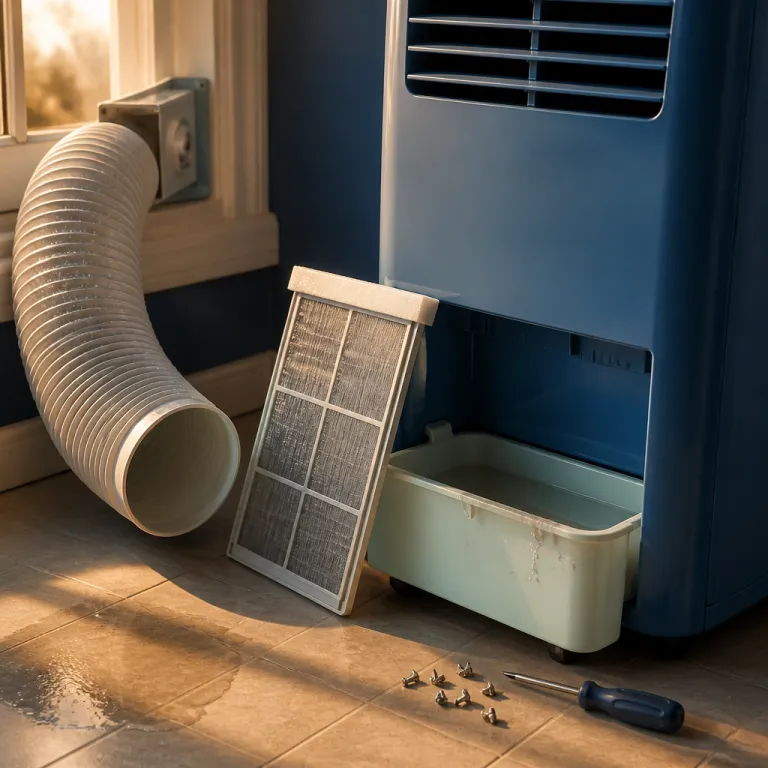
Start by removing and inspecting the air filter on your portable air conditioner, because a blocked filter can turn crisp cold air into barely cool air within hours. Many portable units use reusable mesh air filters that you can rinse under lukewarm water, dry completely, and reinstall, while some higher end models use finer filters that must be replaced on schedule. When air filters are neglected, dust coats the evaporator coil and the evaporator coils cannot absorb heat efficiently, which makes the system blow warmer air even though the thermostat continues to call for cooling.
Look closely at the evaporator coil fins behind the filter, since bent or dirty fins reduce airflow and cooling capacity. Use a soft brush or a vacuum with a gentle attachment to remove surface dust, taking care not to crush the coil fins on the unit. If you see ice on the evaporator coils, turn the conditioner to fan only so the air can melt the frost, then address the root cause such as a clogged air filter, very low refrigerant in the sealed system, or running the unit with windows open.
For portable units that run many hours each day, seasonal maintenance is essential to avoid the familiar complaint that the home AC is not blowing cold air anymore. A detailed guide to a portable AC spring tune up, including filter cleaning, coil care, drain line checks, and window seal inspection, is available in this in depth resource on long term portable AC maintenance. Following such a routine keeps the air handler section clean, protects the evaporator coil, and helps the condenser unit in the outdoor exhaust section reject heat efficiently so the conditioner can keep delivering cold air during the hottest weeks.
Refrigerant, heat exchange, and why the unit starts blowing warm
When a home AC is not blowing cold air even after filter cleaning and airflow checks, attention turns to the refrigerant circuit and heat exchange process inside the unit. Every air conditioner, from a compact portable model to a large heat pump system, uses refrigerant to absorb heat at the evaporator coil and release it at the condenser unit. If that refrigerant charge is incorrect or if airflow across either coil is poor, the conditioner will keep blowing air but that air will feel like warm air instead of cool air.
Portable air conditioners are factory sealed, so a low refrigerant level usually signals a refrigerant leak that requires professional repair rather than a simple top up. Signs of low refrigerant include the unit running continuously without reaching the thermostat set point, the evaporator coils icing over, and the outdoor unit style exhaust hose feeling less hot than usual. In such cases, a qualified HVAC technician or HVAC professional must locate the refrigerant leak, recover the remaining refrigerant, repair the system, and recharge it to the correct level.
Heat exchange problems also arise when the condenser unit cannot reject heat effectively to the outdoor air, which is a frequent issue with portable units vented through a window kit. If the exhaust hose is kinked, too long, or leaking, hot air can spill back into the home and make the air conditioning feel weak, so the unit seems to be blowing warm instead of blowing cold. Ensuring a tight window seal, a short straight hose, and adequate clearance around the outdoor unit exhaust path helps the system move heat out efficiently and restore cold air at the supply grille.
Modern portable air conditioners often display error codes when refrigerant or sensor issues occur, and these codes are essential clues when a home AC is not blowing cold air. A detailed portable AC error code playbook for brands such as Midea, LG, and Honeywell explains what common codes like E1, E4, or FL mean and how they relate to cooling issues. For example, many LG portable models use an FL code to indicate a full condensate tank, which shuts down compressor cooling until the water is drained. When you see repeated error codes about sensors, condensate, or compressor faults, it is time to call an HVAC professional for deeper diagnostics rather than forcing the conditioner to run while it keeps blowing warm air.
Thermostats, controls, and matching capacity to the room
Sometimes a home AC is not blowing cold air simply because the controls are misused or the unit is undersized for the space. Portable air conditioners rely on a built in thermostat and control board that must be set correctly for the system to deliver sustained cool air. If the thermostat sensor reads the wrong temperature or the unit is too small for the room volume, the conditioner may run constantly while still blowing warm air around the home.
Check that the thermostat on the portable unit is not exposed to direct sunlight, heat from electronics, or drafts from windows, because these factors distort the indoor air reading. When the thermostat senses artificial heat, it may keep the compressor running longer than necessary, which can cause icing on the evaporator coil and eventually lead to the complaint that the home AC is not blowing cold air anymore. Conversely, if the sensor sits too close to the cool air discharge, it may shut the compressor off early and leave the rest of the room with only mildly cool air instead of consistent cold air.
Capacity matters as much as controls, since a small unit cannot overcome high heat loads in a large room or open plan home. If a portable air conditioner with modest cooling capacity is placed in a sun exposed loft, the system will struggle, the air handler will keep blowing, and the user will feel mostly warm air even though the air conditioning is technically operating. In such cases, the best repair is often an upgrade to a larger unit or a supplemental heat pump or mini split system rather than repeated service calls.
Control modes also influence how the unit behaves when the home AC is not blowing cold air as expected, especially in fan only or dehumidify settings. In fan mode, the air conditioner will keep blowing air without any refrigerant based cooling, which can confuse users who expect cold air but only receive room temperature airflow. Always verify that the mode is set to cool, the fan speed matches the room size, and the timer or sleep functions are not turning the compressor off prematurely while the fan keeps circulating air that feels warmer than expected.
Portable AC versus central HVAC when only some spaces feel cool
When a home AC is not blowing cold air in certain rooms but a portable unit seems to work elsewhere, the contrast reveals a lot about the overall HVAC system. Central air conditioning relies on a network of ducts, an air handler, and a powerful outdoor unit, while a portable air conditioner cools only the immediate space where it sits. If the central conditioner delivers cool air to some vents but only warm air to others, duct issues or zoning problems may be at play rather than a failing refrigerant circuit.
Use the portable unit as a diagnostic tool by moving it between rooms and observing how quickly it can lower the indoor air temperature in each space. If the portable air conditioner can produce cold air in one bedroom but struggles in another, the second room may suffer from higher heat gain, poor insulation, or restricted airflow that would also affect the main system. When both the portable unit and the central air conditioning fail to provide cool air in the same area, you may be facing structural heat issues that no simple repair can fully overcome.
Central HVAC systems also depend on clean air filters, clear return grilles, and unobstructed supply vents, just like portable conditioners. If the main air filter is clogged, the air handler cannot move enough air across the evaporator coil, and the system may start blowing warm air throughout the home while the outdoor unit runs continuously. In such cases, replacing the air filters, checking the evaporator coils for dirt, and verifying that the condenser unit fan spins freely can restore cold air without an expensive refrigerant repair.
For households that rely heavily on portable air conditioners, upgrading to higher efficiency filters can improve indoor air quality and protect the coils from dust. A detailed guide on how a MERV 13 filter transforms portable air conditioner comfort explains how better filtration reduces coil fouling and helps maintain stable cooling performance. When both portable units and central HVAC equipment are maintained with appropriate filters, the risk that the home AC is not blowing cold air during peak heat waves drops significantly.
When to call for professional help and what to expect
There comes a point when a home AC is not blowing cold air despite basic cleaning, and that is when professional help becomes essential. Portable air conditioners share many components with larger HVAC systems, including compressors, refrigerant circuits, evaporator coils, and condenser units, and these parts require specialized tools for safe repair. Trying to fix a suspected refrigerant leak or compressor failure without training can damage the unit and expose you to unnecessary risk.
Call an HVAC technician or HVAC professional when you notice repeated tripping of breakers, loud compressor noises, persistent ice on the evaporator coil, or signs of a refrigerant leak such as oily residue on tubing. A qualified technician will measure refrigerant pressures, check superheat and subcooling, inspect the air handler and outdoor unit sections, and verify that the thermostat and control system operate correctly. This level of diagnosis goes far beyond simple filter cleaning and is the only reliable way to resolve complex issues where the air conditioner keeps blowing warm air instead of cold air.
During a service visit, expect the professional to evaluate both the portable unit and any connected central air conditioning or heat pump equipment in the home. They may recommend coil cleaning, fan motor repair, drain line clearing, or in some cases replacement of an aging conditioner that no longer delivers efficient cool air. When the cost of repair approaches half the price of a new unit, many experts advise replacement, especially if the system uses older refrigerant types that are being phased out.
Preventive maintenance plans can also be worthwhile for households that depend on multiple portable air conditioners to keep indoor air comfortable during long heat waves. Regular visits allow an HVAC professional to catch minor issues before they cause the familiar complaint that the home AC is not blowing cold air at the worst possible moment. By combining routine filter care, coil inspections, and timely service calls, you extend the life of each unit and maintain reliable cool air throughout the home.
Key statistics on portable air conditioners and cooling performance
- According to the United States Department of Energy (DOE), air conditioning accounts for about 12 percent of total home energy expenditures on average, which means that a home AC not blowing cold air wastes a significant share of household energy without delivering comfort (see DOE Residential Energy Consumption Survey highlights).
- Laboratory tests by the Lawrence Berkeley National Laboratory (LBNL) have shown that a clogged air filter can reduce an air conditioner airflow by up to 30 percent, and this drop in airflow often turns previously cold air into warm air at the vents (summarized in LBNL residential HVAC performance studies).
- Field studies on residential HVAC systems indicate that low refrigerant charge can cut cooling capacity by 5 to 20 percent, which explains why a system with a refrigerant leak may keep blowing but never reach the thermostat set point (reported in multiple DOE and utility sponsored tune up programs).
- Research from the American Society of Heating, Refrigerating and Air Conditioning Engineers (ASHRAE) reports that regular coil cleaning can improve heat transfer efficiency by 10 to 25 percent, helping both portable units and central systems maintain stable cold air output (see ASHRAE guidance on coil fouling and maintenance).
- Consumer surveys from major appliance retailers show that improper sizing is a leading cause of dissatisfaction with portable air conditioners, with many users reporting that undersized units run constantly while blowing warm air in larger rooms (summarized in retailer and manufacturer buyer guides).
FAQ: when a home AC is not blowing cold air
Why is my portable air conditioner blowing warm instead of cold air
A portable air conditioner usually blows warm air when airflow is restricted, the air filter is dirty, or the evaporator coil is iced over. Cleaning or replacing the filter, checking for ice, and ensuring the exhaust hose is not kinked often restores cool air. If these steps fail, low refrigerant or a compressor fault may require professional repair.
Can low refrigerant cause both central and portable units to stop blowing cold air
Central HVAC systems can definitely lose cooling capacity when low refrigerant reduces heat transfer at the evaporator coil. Portable units are factory sealed, so a refrigerant leak is less common but still possible, and it usually means the unit needs professional service or replacement. When both systems struggle at the same time, you should also check for extreme heat, poor insulation, or electrical issues.
How often should I clean the air filter on a portable air conditioner
Most manufacturers recommend cleaning or checking the air filter every two to four weeks during heavy use. In dusty homes or spaces with pets, more frequent cleaning keeps airflow high and prevents the complaint that the home AC is not blowing cold air. Always let the filter dry completely before reinstalling it to protect the evaporator coils.
When should I call an HVAC technician for a portable air conditioner problem
You should call an HVAC technician when the unit trips breakers, shows repeated error codes, leaks water, or keeps blowing warm air after basic maintenance. Professional tools are needed to diagnose refrigerant leaks, compressor failures, and control board faults safely. A timely service call can prevent further damage and help you decide whether repair or replacement offers better value.
Is a portable air conditioner enough if my central system is not blowing cold air
A portable air conditioner can provide temporary cool air in one or two rooms while you arrange repair for the central system. However, it cannot replace a full HVAC system for whole home comfort, especially during prolonged heat waves. Use portable units as a bridge solution while an HVAC professional restores proper cold air from the main air conditioning system.
Quick troubleshooting checklist when a home AC is not blowing cold air
- Confirm the mode is set to cool, the temperature is several degrees below room level, and the fan is on auto.
- Inspect and clean the air filter; if it is damaged or very dirty, replace it according to the manufacturer instructions.
- Check for blocked grilles, kinked exhaust hoses, or closed supply vents that restrict airflow through the system.
- Look for ice on the evaporator coil and switch to fan only until the frost melts before restarting cooling.
- Scan the display for error codes such as E1, E4, or FL and consult the owner manual for brand specific meanings.
- If breakers trip, refrigerant leaks are suspected, or warm air persists after these steps, schedule a visit with a licensed HVAC professional.