Why your portable AC is leaking water on the floor
A portable air conditioner leaking water on floor looks dramatic but rarely means the unit is finished. In most apartments the portable air conditioners are simply overwhelmed by humid air, so the internal water tank fills faster than the system can evaporate or drain it. That is why the first step is to check for a tank full warning light or a quiet float switch click near the rear of the portable unit.
Every portable air conditioner pulls warm air across a cold evaporator coil, where water condenses and drips into a condensate tank or shallow pan. In a small bedroom of about 15 square metres, that can mean roughly one to four pints of water collect every hour, and any drainage issues quickly turn into water leaking from seams or the rear drain port.[1] ASHRAE psychrometric data and DOE residential cooling guidance both show that at indoor conditions of 26–27 °C and 50–70 % relative humidity, typical room air conditioners remove condensate at rates within this range for a 5,000–10,000 Btu/h unit.[2] When that condensate has nowhere to go, you see leaking water on the floor and assume a major leak, but the fix is often a thirty second drain and reset.
Think of the internal water tank as a safety buffer that protects your floors from leaks. Once the tank is full, the air conditioner should shut down its compressor, yet many units keep their fan running and quietly push humid air around while water leakage seeps past a loose plug. If your portable air conditioner is leaking water near the back corner, slide the unit gently forward, unplug it, and check the lower drain hose connection and rubber plug before you panic about repair costs.


Cause 1 – full internal tank and bad drainage setup
The most common reason for a portable air conditioner leaking water on floor is brutally simple. The condensate tank is full, the float switch has stopped the compressor, but the user keeps running the portable air fan mode and water leaking slowly escapes around the drain. When the tank full light is ignored for a weekend, even a small leak can soak floorboards or swell laminate.
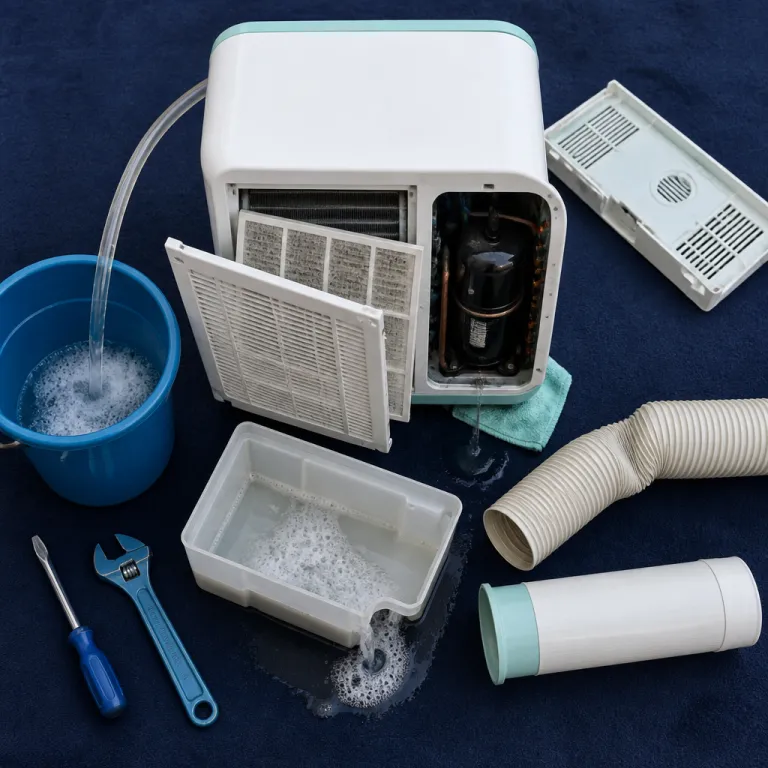
Start by powering the unit off, then roll it to a spot where a little water collecting will not matter, such as a bathroom with a floor drain. Pull the lower drain plug, aim the drain hose into a shallow tray, and let the condensate tank empty completely until no more water collects and drips from the system. Once the water tank is empty, wipe the threads, reseat the plug firmly, and ensure proper alignment of any continuous drain kit you use.
Self evaporating portable air conditioners still rely on this same condensate drainage path, especially in very humid air where the internal pan overflows quickly.[2] If you see repeated leaks after emptying the tank, check whether the unit is level, because a tilted portable air conditioner can send water leakage toward a corner seam instead of the official drain. This is also the moment to clean the air filter and secondary air filters, since clogged filters reduce airflow and make the conditioner work harder, which increases both condensate and long term costs.
Coil freezing can complicate this picture, because ice on the evaporator melts later and refills the condensate tank unexpectedly. For a deeper dive into why iced coils cause surprise leaks, read this guide on evaporator coil icing in portable units. Once you understand how coil freezing interacts with poor drainage, you can prevent the same water leaking pattern from returning every heatwave.

Cause 2 – loose drain plug, bad hose, and weak support
When the tank is not actually full, a portable air conditioner leaking water on floor usually points to a mechanical path for the leak. The rear drain plug, the short drain hose, or the plastic threads on the condensate tank outlet often loosen after a few seasons of moving the unit between rooms. A quarter turn of misalignment is enough for slow leaks that only appear as a faint ring of water on the floor each morning.
Unplug the air conditioner, then use a torch to check the lower rear panel where the drain hose connects. Gently twist the plug out, inspect the rubber for cracks, and run your finger around the condensate tank opening to feel for chips that could channel water leakage sideways. If the hose looks kinked or brittle, replace it with a similar diameter tube, because a crushed hose can back up water and make the unit leak from higher seams.
Some portable air conditioners ship with flimsy plastic support brackets for their continuous drain setups. When those supports sag, the hose droops below the drain outlet and creates a trap where water collects instead of flowing away. To ensure proper drainage, route the hose downhill all the way, avoid sharp bends, and secure it to a stable support so the system can move condensate using gravity rather than fighting against it.
While you are back there, check refrigerant lines only visually, looking for oily residue that might signal deeper issues. You are not trying to fix the sealed system yourself, but you want to rule out a refrigerant related water leaking pattern before spending money on parts. For context on how a modern R‑410A air conditioning system handles both heat and moisture, this overview of a R‑410A based portable cooling design explains why a healthy unit should not leave puddles under normal use.

Cause 3 – coil icing, dirty filters, and misused modes
A portable air conditioner leaking water on floor right after you shut it off often signals coil freezing rather than a simple tank full problem. When the evaporator coil ices over, the system temporarily stores water as ice, then dumps it all at once into the condensate tank when the compressor stops. That sudden surge can overwhelm the drainage path and send water leaking out of seams that never dripped before.
Coil freezing almost always starts with restricted air, either from clogged air filters or from pushing the unit into a tight alcove where it cannot breathe. Pull the portable air conditioner at least twenty centimetres from the wall, remove the main air filter, and rinse it under lukewarm water until the dust sheet disappears. If your model has secondary air filters on the condenser side, clean those too, because blocked hot air exhaust can chill the evaporator more than intended and trigger icing.
Mode selection matters as well, especially in small rooms with very humid air. Running the unit on maximum cool with a very low fan speed encourages coil freezing, while a higher fan speed keeps air moving and spreads condensate production more evenly into the water tank. If you notice leaks only after long overnight runs, try a medium fan setting and see whether the condensate tank fills more predictably without sudden water leakage.
Some owners accidentally set their units to dehumidify mode without attaching a continuous drain hose, which guarantees that water collected will exceed the tank capacity.[3] In that mode the system focuses on latent cooling, pulling moisture from the air faster than it can self evaporate, so you must either connect a drain or empty the condensate tank frequently. Misused modes do not break the unit immediately, but they do raise operating costs and make every small leak feel like a design flaw rather than a maintenance oversight.

Cause 4 and 5 – cracked pans, refrigerant leaks, and when to walk away
If your portable air conditioner leaking water on floor keeps returning after you have checked the tank, the drain, and the filters, it is time to look deeper. A cracked drain pan or condensate tank can send water leaking straight onto the base of the unit, where it eventually escapes through screw holes or plastic seams. Shine a flashlight into the lower cavity while a helper gently tilts the air conditioner, and watch where the water actually starts to collect.
Small hairline cracks near the drain outlet sometimes accept an epoxy patch, but the repair rarely lasts more than a season under constant humid air exposure. Replacement pans for older portable air conditioners can be hard to source, and labour costs to strip the unit down often exceed half the price of a new system. When the crack sits under a coil or along a structural rib, the most rational move is to retire the unit and avoid chasing recurring water leakage with temporary fixes.
The final and most expensive scenario is a refrigerant leak that changes how the system handles both heat and moisture. Low refrigerant can cause uneven coil temperatures, patchy coil freezing, and erratic condensate production that overwhelms the water tank at random times. If you see oily residue near the sealed lines, hear hissing when the compressor stops, and notice weaker cooling alongside leaks, a professional will usually advise replacement rather than a recharge.
Portable air conditioners are relatively low cost appliances compared with split systems, and sealed system repairs rarely make financial sense.[2] Before you pay for diagnostics, weigh the age of the unit, the frequency of leaks, and the rising energy costs of running a struggling air conditioner. When a technician confirms a refrigerant issue, treat that as a sign to upgrade rather than to support a failing system that will keep turning condensate into floor damage.

Five minute inspection routine and long term leak prevention
Most people can diagnose a portable air conditioner leaking water on floor with a simple five minute inspection. Work from the outside in, starting with the obvious tank full light, then the rear drain plug, then the air filters, and finally the condensate path under the unit. By the time you have checked those four points, you will have ruled out the cheap fixes and can decide whether deeper issues justify repair costs.
For ongoing use, build a quick maintenance habit around the way your portable air conditioner handles water and air. Empty or verify the water tank weekly during peak humid air seasons, clean the main air filter every month, and inspect the drain hose routing whenever you roll the unit between rooms. If you use a continuous drain setup into a nearby shower or floor drain, ensure proper slope and physical support so the hose never sags into a loop where water can stagnate and collect.
End of season care matters just as much as mid summer troubleshooting. Before storage, run the unit in fan only mode for thirty minutes to dry the coil, then drain the condensate tank completely so no hidden water leakage appears in your closet. A structured routine like the one outlined in this guide to end of season portable AC storage can easily add extra years to your system and keep future leaks from starting in the dark.

FAQ – portable AC leaking water on the floor
Why is my portable AC suddenly leaking water on the floor ?
A sudden puddle usually means the internal water tank is full or the drain plug has loosened. Empty the tank, reseat the plug, and check the drain hose for kinks or blockages. If the problem continues, inspect the condensate pan for cracks and look for signs of coil freezing.
Is water leaking from my portable air conditioner dangerous ?
The water itself is just condensate from humid air, but it can damage flooring and nearby electronics. Prolonged water leakage can also encourage mould growth around the base of the unit. Address leaks quickly and dry the area thoroughly to avoid long term problems.
How often should I drain the water tank on a portable AC ?
In a humid flat you may need to drain the water tank daily, especially if you run the unit for many hours. Check the tank full indicator regularly during the first week to learn how fast water collects in your specific room. Once you know the pattern, set a simple schedule or use a continuous drain hose where possible.
Can a refrigerant leak cause my portable AC to leak water ?
Yes, a refrigerant leak can change coil temperatures and create uneven condensation that overwhelms the condensate tank. You might notice weaker cooling, strange hissing sounds, and oily residue near the sealed lines. In that situation, professional repair often costs more than replacing the entire unit.
Will cleaning the air filter stop my portable AC from leaking ?
Cleaning the air filter will not fix a cracked pan or loose drain plug, but it can prevent coil freezing that leads to sudden water dumps. A clean air filter keeps airflow stable, which helps the system manage condensate more predictably. Make filter cleaning part of your regular maintenance to reduce both leaks and energy costs.
Sources
Energy Star – Portable air conditioner guidance and efficiency considerations, including recommended use of continuous drainage in dehumidify mode.[3]
ASHRAE – Fundamentals of air conditioning, condensate management, and psychrometrics, particularly the 2017 ASHRAE Handbook: Fundamentals, Chapter 1 (Psychrometrics) and Chapter 17 (Residential Cooling Load Calculations).[1]
U.S. Department of Energy – Residential cooling equipment and operating cost information, including typical moisture removal rates for room air conditioners in the 5,000–10,000 Btu/h range under standard test conditions.[2]