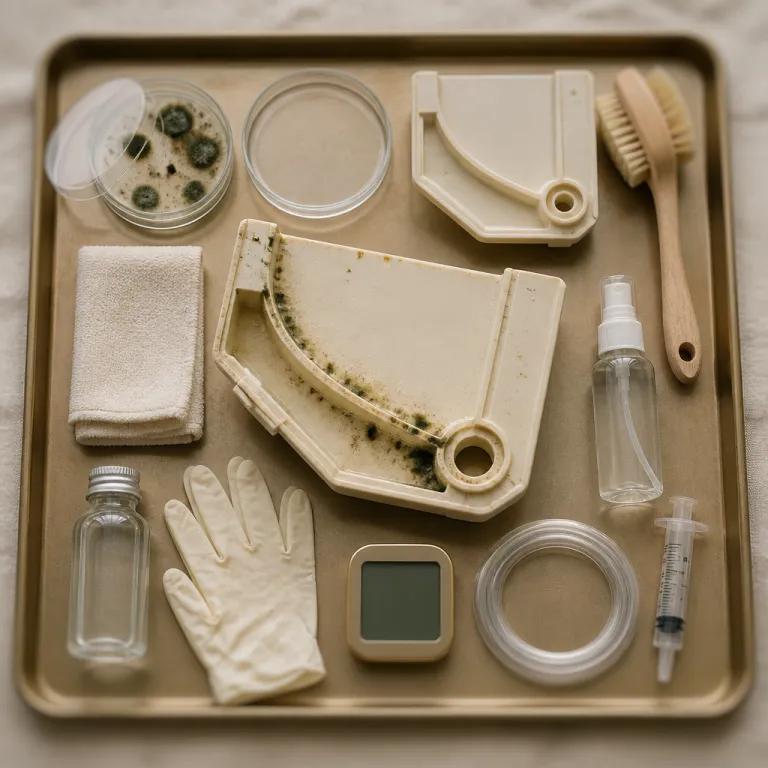
Why portable ACs turn condensation into a mold factory
A portable air conditioner cools your room by pulling warm indoor air across cold evaporator coils. Those coils condense moisture from the air into liquid water, which then drips into a shallow drain pan hidden inside the unit. When that water sits warm and stagnant, mold spores in the room air finally find the perfect place to land and start mold growth.
Depending on humidity and capacity, a typical portable air conditioner can produce well over half a litre of condensate per hour, so the drain pan can become a miniature pond if the water tank or drain line is neglected. In that damp space, mold growing on plastic surfaces, foam insulation and even metal screws can quickly turn into visible black mold patches that stain the chassis and contaminate the air you breathe. This is why portable air conditioner mold prevention is less about fancy features and more about how fast you remove water and keep the interior dry.
Past safety notices and recalls for window units after reports of mold growth show that condensation management is a safety issue, not a minor annoyance. Portable units share the same physics, because every conditioner that cools humid air must deal with moisture and spores together in a confined shell. If the manufacturer routes ducts poorly or undersizes the drain, the unit will trap water, and that trapped water will eventually feed mold unit colonies that are hard to clean and even harder to fully remove. Guidance from public health agencies such as the U.S. Environmental Protection Agency (EPA) and Centers for Disease Control and Prevention (CDC) emphasises that any appliance which allows chronic dampness can become a source of indoor mold contamination.
Inside a typical portable air conditioner, the air path runs from the room, through intake grilles and clean filters, across the evaporator, then back into the house as cooled air. Any dust that bypasses those filters sticks to the wet coil and drain pan, giving mold spores a food source and a rough surface where mold can grow. Once mold growing on those surfaces matures, it releases more spores into the airflow, turning a single neglected unit into a mold air generator that spreads contamination across nearby rooms.
Self evaporating conditioners promise less hassle by spraying condensate onto the hot condenser coil and venting some water out with the exhaust air. That feature reduces how often you empty the water tank, but it does not prevent mold because residue, biofilm and fine dust still accumulate in the pan and internal ducts. Portable air conditioner mold prevention therefore starts with accepting that every design, from budget window units to premium dual hose conditioners, will eventually need hands on mold removal and regular cleaning to stay safe. For heavy contamination, EPA and CDC guidance on mold remediation recommend using registered disinfectants or qualified professionals rather than relying only on household products.
How to smell, see and feel early mold problems in your portable AC
Most people first notice mold in a portable air conditioner as a musty smell that appears within 30 seconds of startup. If the air from the unit smells like a damp basement or old towel, you are likely inhaling a mix of mold spores, bacterial byproducts and volatile compounds from mold growing on internal plastic. That smell is your early warning that portable air conditioner mold prevention has already slipped and you now need targeted mold removal rather than just routine cleaning.
Visual inspection helps you confirm what your nose suspects, so unplug the conditioner, remove the front grille and shine a bright torch onto the evaporator coil and drain pan. Look for grey fuzz, green patches or black mold spots on the fins, plastic frame and any visible ducts that carry air through the unit, because these are the surfaces where mold grow fastest when moisture lingers. If you see streaks of black along the plastic near the water tank or around the fan housing, that usually means unit mold has been present for weeks, not days.
Your body can also flag problems before you see obvious mold growth, especially if you are sensitive to indoor air quality. New or worsening coughing, sneezing, itchy eyes or other allergic reactions that appear only when the air conditioner runs suggest that mold spores or fragments are riding the airflow. People with asthma or existing respiratory conditions face higher health risks from mold air exposure, so any pattern of symptoms that tracks with AC use is a strong sign that you must clean mold thoroughly or stop using the unit until you can remove mold safely.
Noise and performance changes sometimes hint at hidden moisture and mold unit buildup inside the chassis. A fan that rattles, a blower that whines or a sudden drop in cooling power can mean that wet dust and mold growing on the blower wheel have thrown it off balance or partially blocked airflow. When airflow drops, the coil stays colder and wetter, which traps even more moisture and spores, so portable air conditioner mold prevention is also about keeping the mechanical parts clean enough to move air freely.
If you want a deeper dive into diagnosing strange odors, guides that explain the unpleasant smell from a portable AC can help you separate mold issues from burnt dust or refrigerant leaks. Understanding exactly why the smell changes when the unit switches from cool to fan mode will make you more confident when deciding whether a simple cleaning will help or whether the conditioner has crossed into unsafe territory. That confidence matters, because the sooner you act on these early signs, the easier it is to prevent mold from colonising every hidden corner of the machine.
The monthly protocol that actually stops mold spores from taking over
Portable air conditioner mold prevention hinges on a repeatable cleaning protocol, not a one time deep scrub. Think of your unit as a dehumidifier plus fan plus mini fridge, all sharing the same cramped shell where water, dust and warm air constantly collide. Your job is to keep that shell as dry, clean and well ventilated as possible so mold spores never get the stable moisture they need to turn into visible mold growth.
Before any cleaning, unplug the unit and put on basic protective gear: disposable gloves, eye protection and a well fitting mask or respirator rated for fine particles, so you are not breathing in disturbed mold spores. Once a month during the cooling season, roll the conditioner to a tiled area and drain the water tank completely into a bucket or floor drain. Mix a solution of three parts clean water to one part white vinegar, then pour it slowly into the pan through the drain opening while gently tilting the unit so the liquid flushes the entire base, because this acidic rinse helps remove mold film and discourages new colonies. Let the solution sit for ten minutes, then drain again and follow with a final flush of plain water to rinse away loosened debris and any lingering vinegar smell.
While the pan dries, remove the intake grilles and wash the clean filters under warm running water, using a mild detergent if they feel greasy. Clean filters reduce dust load on the coil, which in turn starves mold growing on wet metal surfaces and keeps the air you breathe clearer of particles that can carry mold spores deeper into your lungs. Make sure the filters are completely dry before reinstalling them, because sliding damp filters back into the frame simply moves the moisture problem from the pan to the air path.
Next, wipe accessible plastic surfaces and ducts with a cloth lightly dampened in the same vinegar solution, paying special attention to corners where water can pool and unit mold tends to hide. Avoid soaking electrical components or the fan motor, and never use bleach inside the conditioner, because fumes can corrode metal and irritate your lungs when the air conditioner runs again. Public health agencies such as the CDC and EPA generally recommend registered disinfectants for significant mold contamination, so if you are dealing with heavy growth or health concerns, consider an EPA listed mold cleaner and follow the label exactly, or hire a professional.
To keep this routine realistic, treat it as a short checklist: unplug and gear up (2 minutes), drain tank fully (5 minutes), flush pan with vinegar and water and let it soak (15 minutes), wash and dry filters (15 minutes), wipe interior plastics and accessible ducts (10 minutes), then reassemble and run fan only to finish drying (30 minutes). For spare parts like new filters, drain caps or fan wheels that keep this routine effective, a guide to essential parts for maintaining your portable air conditioner can be a useful reference when you plan seasonal maintenance.
Daily habits that keep your portable AC dry, quiet and safer to breathe
Even the best monthly cleaning will fail if your daily habits keep the interior of the conditioner perpetually wet. Portable air conditioner mold prevention works best when you manage room humidity, drainage and runtime together so the unit spends more hours dry than soaked. That balance is what stops mold spores from turning every cooling session into another opportunity for mold growing inside the chassis.
Start with drainage, because trapped water is the direct fuel for mold growth in any air conditioner. If your model has a continuous drain option, connect a short hose that slopes downward into a nearby floor drain or shower, and check weekly that the hose is not kinked or blocked, since a hidden kink can quietly refill the water tank and flood the pan. For units without continuous drain, empty the tank whenever the room has felt humid for several hours, rather than waiting for the full indicator, because less standing water means fewer places where black mold can anchor and spread.
Room conditions matter just as much as what happens inside the unit, especially in a small home office where you spend long hours. Keep windows and doors closed while the air conditioner runs so it is not constantly pulling in hot, wet air that overwhelms its ability to keep the interior dry. If your house is in a very humid climate, pairing the portable unit with a separate dehumidifier can lower overall moisture, reduce condensation on the coil and cut the health risks from mold air exposure throughout the space.
Airflow around the conditioner also shapes how quickly its internals dry between cycles. Position the unit at least 20 to 30 centimetres from walls or furniture so the intake and exhaust ducts are not choked, and avoid tucking it into tight corners where the same warm air recirculates and keeps the shell damp. For window units and portable models alike, good clearance means cooler components, less condensation and fewer pockets where mold unit colonies can hide from your cleaning cloth.
Finally, pay attention to how the unit sounds and smells at different fan speeds, because subtle changes can warn you before allergic reactions start. If a low speed setting produces a stronger musty smell than a higher speed, that often means the slower airflow is not drying the coil fully, so you may need to run fan only mode longer after each cooling session. For more detailed airflow strategies, especially in compact spaces, guides on optimising a portable AC for a studio apartment can show how smart placement and hose routing improve both cooling and indoor air breathe quality.
When cleaning is not enough and it is time to retire the unit
There comes a point when portable air conditioner mold prevention shifts from cleaning to risk management. If repeated vinegar flushes, clean filters and careful drying still leave a persistent musty smell or visible black mold deep inside the chassis, you must weigh the cost of replacement against the ongoing health risks. For a home office where you inhale that air eight hours a day, the threshold for retiring a contaminated unit should be much lower than for a rarely used guest room.
Some locations inside an air conditioner are almost impossible to clean thoroughly without full disassembly, especially the blower wheel housing and tight ducts behind the evaporator. When mold growing on the blower blades or inside narrow ducts has been present for months, spores embed in porous foam and plastic, so even aggressive mold removal leaves behind fragments that can still trigger allergic reactions. If a technician confirms mold unit contamination in these hidden areas, replacing the conditioner is usually safer and often cheaper than paying for repeated deep cleanings that never fully remove mold from every surface.
Structural damage is another red flag that cleaning will not solve, because cracks and warping create new pockets where water and spores can hide. A warped drain pan that no longer slopes correctly will always leave a puddle of water, no matter how often you flush it, and that puddle will keep feeding mold growth under the coil. Similarly, brittle plastic around the water tank opening or drain port can leak into insulation or the outer shell, creating unseen reservoirs of moisture that defeat even the most careful portable air conditioner mold prevention routine.
Health should be the final deciding factor, especially if anyone in the house has asthma, chronic lung disease or a history of severe allergic reactions. If symptoms reliably improve when the air conditioner is off for several days and worsen within minutes of turning it back on, that pattern strongly suggests that mold spores or fragments from the unit are driving those health risks. In that situation, continuing to run the conditioner while hoping that another round of cleaning will fix the problem is not a responsible choice.
When you do replace a contaminated unit, treat the old conditioner as potentially hazardous waste and follow local guidance for disposal so you do not spread mold air contamination during transport. Choose the new model with drainage, access panels and filter design in mind, prioritising units that let you reach the drain pan and ducts without special tools, because easy access makes future mold removal and cleaning far more realistic. Remember that the safest portable air conditioners are not the ones that promise to be maintenance free, but the ones whose design makes regular maintenance simple enough that you will actually do it.
FAQ
How fast can mold grow inside a portable air conditioner drain pan ?
In warm, humid conditions, mold can colonise a stagnant drain pan in as little as 24 to 48 hours. The combination of standing water, dust and limited airflow creates ideal conditions for mold spores to settle and start mold growth on plastic and metal surfaces. This is why emptying the water tank frequently and flushing the pan monthly are central to portable air conditioner mold prevention.
Is vinegar enough to remove mold from my portable AC ?
A solution of three parts water to one part white vinegar is effective for routine cleaning and for removing light mold films on accessible surfaces. It helps break down biofilm and discourages new mold growing, especially when combined with thorough drying using fan only mode. However, if you see extensive black mold deep inside ducts or the blower housing, vinegar alone will not reach all contaminated areas and replacement may be safer. For larger or persistent mold problems, EPA and CDC resources recommend following formal mold remediation guidance or consulting a qualified professional.
Can running fan only mode really help prevent mold inside the unit ?
Yes, running fan only mode for about 30 minutes after cooling helps push relatively dry air through the coil, pan and ducts. This airflow speeds up evaporation of residual moisture, which otherwise would sit in the drain pan and on metal fins feeding mold grow cycles. Over a season, this simple habit significantly reduces the time surfaces stay wet and therefore lowers the risk of mold spores establishing colonies.
Are self evaporating portable air conditioners less likely to develop mold ?
Self evaporating air conditioners reduce how often you need to empty the water tank by reusing some condensate on the hot coil, but they still have a drain pan and internal surfaces that stay wet. Dust and organic residue accumulate in those areas, giving mold spores a place to feed and grow if you do not clean them. These units still require regular pan flushing, filter washing and drying cycles for effective portable air conditioner mold prevention.
When should I replace a moldy portable air conditioner instead of cleaning it ?
You should consider replacement when mold is visible deep inside the blower wheel housing or inaccessible ducts, when the musty smell returns immediately after thorough cleaning, or when household members experience recurring allergic reactions linked to the unit’s use. Structural issues like a warped drain pan or cracked water channels that trap moisture also justify retiring the conditioner. In such cases, ongoing health risks from mold air exposure outweigh the cost of a new, easier to clean unit.