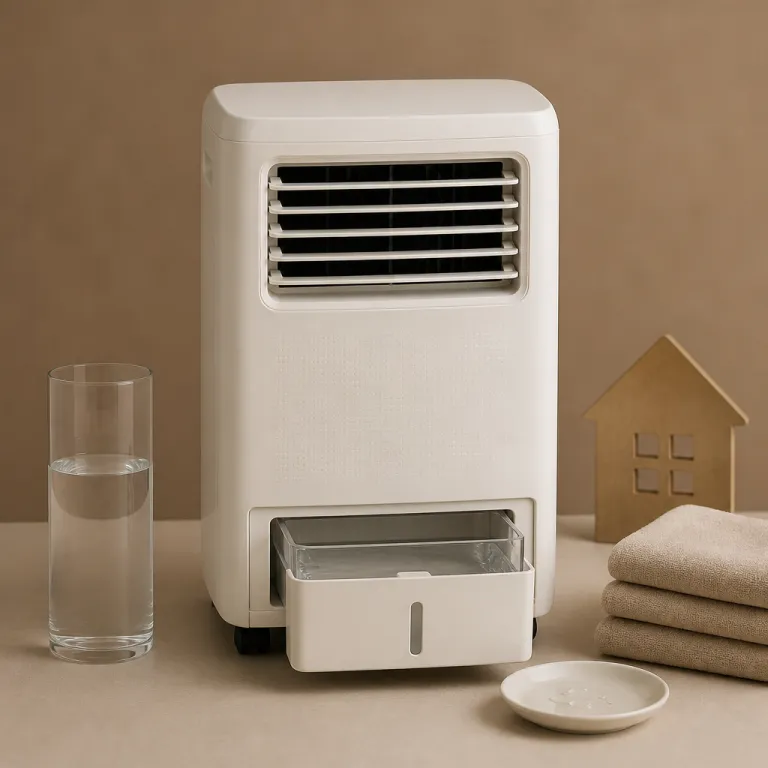
How dehumidifier mode really works inside a portable air conditioner
Most owners never get a clear explanation of how dehumidifier mode behaves. Inside a typical portable air conditioner, the same compressor and refrigerant circuit that cools the air also handles the job of removing moisture from the room. The difference is how the unit routes that heat and what the mode actually does with the air before it blows it back into your home.
In standard cool mode, the portable air conditioner pulls warm, moist air from the room and passes it over a very cold evaporator coil. The air cools down, moisture condenses on the coil, and the unit then vents most of the captured heat outdoors through the hose while sending cooler air back into your rooms. This is classic air conditioning, where the main goal is to drop both temperature and indoor humidity levels at the same time.
In dehumidifier mode, sometimes labeled “dry” or simply “mode dry,” the same refrigeration circuit runs but the unit manages the heat differently. The air still passes over the cold coil, so the built-in dehumidifier function continues to remove moisture and dry the air. Then the system routes some of the heat back into the airflow, so the air feels drier but not dramatically cooler when it reenters the room.
That is why a portable air conditioner in dehumidifier mode can make the air feel more comfortable without a big change on the thermometer. You are trading less cooling for more moisture removal, which is ideal when humidity levels are high but the actual air temperature is only mildly warm. Think of this setting as a dedicated dehumidifier that happens to live inside your portable AC, rather than a full-time cooling mode.
Because the compressor still runs, dehumidifier mode is not free, but it usually draws less power than full cool mode. The portable air system does not have to push as much heat out the window, and fan speeds are often lower, which reduces both energy use and noise in a home office. Used correctly, this drying mode can be a smart way to manage indoor humidity while keeping your electricity bill under control.
The 60 percent humidity threshold: when dry air matters more than cool air
The question of when to use a portable air conditioner’s dehumidifier mode really comes down to one number. Once indoor humidity levels climb above roughly 60 percent relative humidity, your body struggles to cool itself because sweat does not evaporate efficiently. At that point, the air feels several degrees warmer than the actual temperature, and a room at 26 °C can feel closer to 30 °C or more.
In that high humidity band, a portable air conditioner running in dry mode can punch above its weight. By aggressively pulling moisture from the air, the unit lowers indoor humidity and makes the air feel lighter on your skin. You might still see the same temperature reading, but the perceived cooling can rival what you get from dropping the thermostat a couple of degrees in standard air conditioning mode.
For a home office in a coastal city or a basement room in the Midwest, this humidity threshold is not theoretical. On shoulder-season days with mild humidity and outdoor temperatures around 22 to 27 °C, cool mode can overshoot and leave you chilled while still battling clammy air. Switching the unit to dehumidify at those times lets the compressor focus on moisture removal instead of brute-force cooling.
Below about 55 to 60 percent indoor humidity, the benefit of dehumidifier mode shrinks fast. Your portable air conditioner is already operating in a range where the air feels reasonably comfortable, so extra drying brings diminishing returns. In that scenario, running the unit in cool mode at a slightly higher set point often gives better overall comfort and more efficient cooling for your rooms.
Above 60 percent, though, the equation flips and the decision becomes very clear. If the room temperature is under about 29 °C but the humidity level is high, prioritize drying the air first. Once the humidity drops into the 50s, you can reassess whether more cooling or more drying will give the best balance of comfort and energy use.
Think of the 60 percent mark as the main decision line for your air conditioners. On one side, temperature control is king, and your portable air unit should stay in cool mode most of the time. On the other side, moisture control rules, and the dry setting becomes your most powerful tool for keeping rooms comfortable without overworking the compressor.
When dehumidifier mode saves money and when it wastes electricity
Energy-wise, dehumidifier mode usually draws about 30 to 50 percent less power than full cooling mode on the same unit, according to ranges commonly published in manufacturer specification sheets. The compressor cycles differently, fan speeds are lower, and the system does not have to push as much heat out through the exhaust hose. For a portable air conditioner running several hours a day in a single room, that difference can add up over a long humid season.
Dehumidifier mode saves money when the air temperature is moderate but humidity is high. Think of a 24 °C day with 70 percent indoor humidity, where the air feels sticky but not truly hot. In that case, using the dehumidifying function instead of cool mode lets you remove moisture without overcooling the room and without paying for unnecessary air conditioning.
Where people waste electricity is leaving dehumidifier mode on when the room is already dry or when the heat is extreme. If your indoor humidity level is under 50 percent, the unit has to work harder to find moisture to condense, and the comfort gain is tiny. You are running the compressor mainly to chase a number, not to make the room feel better.
The other big waste happens on very hot days above about 29 to 30 °C indoors. In that range, you need real cooling, not just drier air, because the room temperature itself is the main problem. Misusing a portable air conditioner’s drying mode in that situation can leave you with a hot, slightly drier room and a high power bill, which is the worst of both worlds.
For a west-facing home office that bakes in the afternoon, the smart move is clear. Use cool mode during the peak heat window to pull both heat and moisture out, then shift to dry mode in the evening as temperatures drop but humidity levels stay elevated. That hybrid strategy keeps the air feeling comfortable while trimming the number of hours your compressor runs at full tilt.
If you notice your portable air unit cycling constantly in dehumidifier mode with little change in comfort, reassess your settings. Check the actual indoor humidity with a simple meter, and only run dry mode when the reading justifies it. That habit alone can prevent you from turning an efficient feature into a silent energy leak in your home.
Hybrid strategies: combining cool and dry modes for maximum comfort
The most efficient way to use a portable air conditioner is rarely to pick one mode and forget it. A smarter approach is to treat cool mode and dehumidifier mode as complementary tools that you switch between as conditions in the room change. This is especially true for a home office where you need stable cooling and low noise during long workdays.
Start with cool mode when the room is both hot and humid, such as 28 °C with 65 percent indoor humidity. In that situation, the best time to rely on the dehumidifier setting is later, after the first heavy lifting is done. Let the unit run in standard air conditioning mode until the room temperature drops to a comfortable level, usually around 24 to 25 °C for most people.
Once the temperature is under control, check how the air feels and what your humidity meter shows. If the humidity level is still above 55 to 60 percent, switch the unit to dry mode or the dedicated dehumidifier setting if your model has one. The compressor will keep working to remove moisture, but the system will use less power than it did in full cool mode while maintaining a stable room temperature.
This hybrid pattern works especially well in small rooms where portable air conditioners can easily overshoot the set temperature. A 10,000 BTU unit in a 15 square metre room can cool the air quickly but leave you with lingering moisture. By shifting to dehumidify mode after the initial cooling, you avoid the cycle of freezing, shutting off, then feeling clammy again as humidity rebounds.
Noise-sensitive users also benefit from this strategy. Many portable air units run their fans and compressors more gently in dehumidifier mode, which can shave a few decibels off the background sound during calls. You still get meaningful moisture removal, but the air feels calmer and the room stays quiet enough for focused work.
For even better comfort, pair your portable air conditioner with supporting tools like fans or evaporative coolers in adjacent spaces. Moving air between rooms can even out temperature and humidity levels so the cooled, dried air from your portable unit does not stay trapped in one corner. Used together, these strategies let you run the compressor less often while keeping both heat and humidity in check.
Dehumidifier mode versus a dedicated dehumidifier or mini split system
Every portable air conditioner with a dehumidifier mode is a compromise between cooling and drying. A dedicated dehumidifier is built with one main purpose, which is to remove moisture from the air as efficiently as possible. A mini split system, by contrast, focuses on quiet, efficient cooling with some dehumidifying as a side effect of its air conditioning cycle.
In pure litres of water removed per hour, a mid-range dedicated dehumidifier usually beats a similar-sized portable air unit in dehumidifier mode. The compressor and coils are optimized for moisture removal rather than for pushing heat out a window. If your home has chronic high indoor humidity, especially in basements or large rooms, that specialized hardware often makes more sense than leaning on dry mode alone.
Where the portable air conditioner’s drying function shines is in targeted, part-time duty. For a single home office or bedroom where humidity spikes only on certain days, the built-in dry mode is often enough. You avoid buying and storing a second appliance while still improving air quality and comfort when the air feels heavy.
Mini split air conditioners sit somewhere in the middle. They excel at quiet, efficient cooling, and their variable-speed compressors can maintain both temperature and humidity levels with less cycling than portable conditioners. If you own your home and can install one, a mini split often delivers better long-term control of both heat and moisture than any single portable unit.
That said, renters and people in small apartments often have to work with what they can plug into a standard outlet. In that context, learning how your portable air conditioner’s dehumidifier mode works is a practical way to stretch its capabilities. You can approximate some of the comfort benefits of a mini split or a dedicated dehumidifier without the installation cost.
For outdoor or semi-open spaces, though, neither portable air conditioners nor dehumidifier mode are ideal. In those environments, an evaporative cooler can sometimes be more effective, because it relies on water evaporation rather than a sealed refrigerant loop. Matching the tool to the space and the humidity level is always the key to efficient cooling.
Practical setup, drainage, and maintenance for efficient dehumidifier mode
Getting the most from dehumidifier mode is not just about pressing the right button. The way you set up, drain, and maintain your portable air conditioner has a direct impact on how well the mode works. A poorly vented or clogged unit will struggle to remove moisture and may even leak water onto the floor.
First, make sure the exhaust hose is as short and straight as possible when you run cool mode. Kinked hoses trap heat, forcing the compressor to work harder and raising the temperature in the room. That extra heat load carries over when you switch to dehumidify mode, because the unit still has to manage the same basic air and moisture flow.
Second, pay close attention to drainage when you use the dehumidifier function heavily. In dry mode, the unit condenses more water than in mild humidity conditions, and the internal tank can fill quickly. If your model allows continuous drainage through a hose, use it whenever you expect long runs in dehumidifier mode to avoid shutdowns or spills.
Filter maintenance also matters for both air quality and efficiency. A clogged filter restricts airflow, which reduces the amount of moist air that can reach the cold coil in a given time. Cleaning the filter every few weeks during heavy use keeps both cooling and drying performance closer to the original specifications.
If you ever notice your portable air conditioner leaking or leaving puddles during dehumidifier mode, do not ignore it. Common causes range from simple drain clogs and loose hoses to frozen coils and failing compressors, all of which can be addressed more easily if you catch them early. Solving those problems promptly protects both the unit and your floors, and it keeps the dehumidifier function operating safely.
Finally, remember that every portable air unit has limits based on its design and capacity. If you routinely push a small 8,000 BTU air conditioner to handle a large, sun-soaked room with very high humidity levels, no amount of mode tweaking will fully compensate. Matching the unit size to the room, maintaining clear airflow, and using dehumidifier mode only when the humidity level justifies it are the real foundations of efficient, quiet comfort.
Room by room strategies for home offices and small spaces
Different rooms in the same home can behave very differently when it comes to heat and humidity. A west-facing office with big windows will trap solar heat, while an interior bedroom might stay cooler but feel damp. The ideal way to use a portable air conditioner’s dehumidifier mode will not be identical in those two spaces, even with the same unit.
In a compact home office of around 10 to 12 square metres, start by measuring both temperature and indoor humidity throughout the day. When the afternoon sun pushes the room above 27 °C with humidity over 60 percent, cool mode should be your main setting. Once the temperature drops to your target, usually around 24 °C, you can switch to dry mode if the air still feels muggy.
Basement rooms often flip that pattern. They may sit at a steady 21 to 23 °C but with humidity levels hovering around 65 to 70 percent, especially after rain. In that scenario, running the portable air conditioner primarily in dehumidifier mode makes sense, because the goal is to remove moisture and improve air quality rather than to cool the air.
For bedrooms, comfort during sleep is the priority. Many people sleep best when the room is slightly cool and the air feels dry but not parched. Using cool mode in the evening to knock down both heat and moisture, then switching to a quieter dehumidify setting overnight, can keep the compressor noise down while maintaining a stable humidity level.
Large open-plan rooms are where portable air conditioners and their dehumidifier modes often struggle. The unit may cool and dry the immediate area but leave distant corners with higher humidity and lingering heat. In those cases, using fans to circulate air and considering a second unit or a mini split system may be necessary for consistent cooling and drying.
Across all these spaces, the pattern is the same. Use cool mode when both temperature and humidity are high, lean on dehumidifier mode when the air is only moderately warm but very damp, and avoid running either mode longer than needed once the room feels comfortable. The real measure of success is not the BTU rating on the box, but how the air feels at your desk at three in the afternoon.
Key figures on humidity, comfort, and energy use
- At 60 percent relative humidity and 26 °C, the perceived temperature can feel 3 to 4 °C higher, which aligns with comfort charts published by organizations such as ASHRAE and explains why rooms feel oppressive even when the thermostat reading looks reasonable.
- Dehumidifier mode on many portable air conditioners uses roughly 30 to 50 percent less power than full cool mode, based on typical compressor and fan draw differences reported in manufacturer data sheets for residential units.
- Comfort studies and indoor air quality guidelines from agencies such as the U.S. EPA and ASHRAE indicate that most people feel comfortable when indoor humidity levels stay between 40 and 60 percent, with both higher and lower values increasing reports of discomfort and respiratory irritation.
- A 10,000 BTU portable air conditioner is usually rated to cool about 20 to 25 square metres under standard test conditions, but that capacity can drop significantly when humidity is high and the unit must spend more energy to remove moisture from the air.
- Dedicated dehumidifiers in the 12 to 20 litre per day class often remove moisture more efficiently per kilowatt hour than portable air conditioners in dry mode, which is why they are recommended for chronically damp basements in many home performance guides.
FAQ about portable AC dehumidifier mode and humidity control
When should I use dehumidifier mode instead of cool mode?
Use dehumidifier mode when the room temperature is moderate, usually under about 29 °C, but indoor humidity is above roughly 60 percent. In that range, the air feels hotter than it is because sweat does not evaporate well, so removing moisture improves comfort more than extra cooling. On very hot days, prioritize cool mode so the unit can remove both heat and moisture at the same time.
Does dehumidifier mode actually save electricity?
Yes, dehumidifier mode usually uses less power than full cooling mode on the same unit, often in the range of 30 to 50 percent less. The compressor and fans do not have to work as hard to push heat outdoors, and the system focuses on moisture removal rather than maximum temperature drop. It only saves energy, though, if you use it when humidity is high and avoid running it unnecessarily in already dry rooms.
Will dehumidifier mode cool my room?
Dehumidifier mode can make a room feel cooler, but it does not usually lower the actual temperature very much. The unit cools the air to condense moisture, then reheats it slightly before sending it back into the room, so the main change is drier air rather than a big temperature drop. If the room is truly hot, you still need cool mode to remove both heat and humidity effectively.
Do I need a separate dehumidifier if my portable AC has dry mode?
If you only deal with high humidity during certain weather patterns or in one small room, the built-in dry mode on a portable air conditioner is often enough. For chronically damp spaces like basements with humidity above 70 percent for long periods, a dedicated dehumidifier usually removes moisture more efficiently and more quietly. Many homes end up using both, with the portable AC handling peak heat and the dehumidifier managing long-term moisture control.
How do I know if my humidity is high enough for dehumidifier mode?
The simplest way is to use an inexpensive digital hygrometer to measure indoor humidity levels in the rooms you cool. If readings regularly climb above 60 percent and the air feels sticky even at moderate temperatures, dehumidifier mode can help. Below about 55 percent, focus more on temperature control and only use dry mode if the room still feels uncomfortably damp.