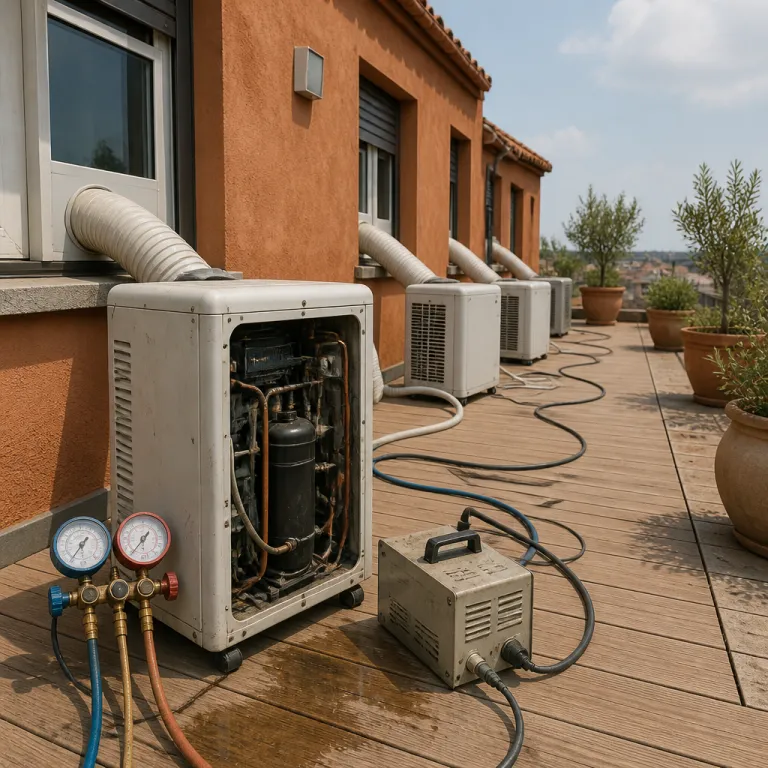
The August portable air conditioner maintenance stress test
Why August breaks so many portable AC units
By August, the indoor air in most apartments is hotter, wetter, and dirtier than in early summer. After six to eight weeks of near continuous air conditioning, every portable unit has pulled kilograms of dust through its filters and pushed litres of condensate through its tiny drainage components. That is exactly when an August performance check separates a healthy conditioner from a unit that is one heat wave away from failure.
Before you dive into details, use this quick three step overview so the test is easy to repeat:
- Tools: two digital thermometers (or one infrared thermometer), a timer, and access to the filter and drain.
- 20 minute test: run the portable AC on maximum cooling and fan speed with doors and windows closed, then measure room air and discharge air temperatures plus condensate output.
- Pass / fail: a healthy unit shows roughly an 8–11 °C temperature drop and steady drainage; a 4–5 °C drop, weak airflow, or no water usually signals trouble.
Three failure modes spike now because the portable air conditioner has been working at full power during the longest days and highest outdoor air temperatures. First, the compressor starts rapid cycling as the condenser coil overheats, especially in single hose portable acs that constantly ingest warm outdoor air through infiltration and then fight their own heat transfer losses. Second, restricted air flow causes ice to form on the evaporator, while third, the condensate system is overwhelmed by humidity peaks and the drain overflows inside the casing or onto your indoor floor.
Clogged filters alone cause a majority of portable air conditioner cooling failures, which is why August is unforgiving when you skip basic maintenance. Field data from HVAC service companies and manufacturer maintenance bulletins consistently highlight dirty filters and coils as the leading causes of reduced capacity and breakdowns. Dirty condenser components can drop real world cooling capacity and energy efficiency by 20 to 30 percent according to guidance from organisations such as the Air-Conditioning, Heating, and Refrigeration Institute (AHRI) and summaries from the U.S. Department of Energy, so a unit that once handled 30 square metres now struggles with 18. If you run a portable unit hard through July without cleaning, the refrigeration system and its conditioning performance will already be marginal before the hottest week arrives.
Think about how your own air conditioners behaved last August during late afternoon heat, when indoor temperature crept up even with the fan on high. If the portable acs in your home needed hours to pull the indoor air down by just a few degrees, that was an early warning that the test you skipped then is required now. A structured late summer stress test gives you data on cooling and heating behaviour, not just vague impressions of whether the air feels cool.
Portable air conditioning is always a compromise between mobility, noise, and raw cooling capacity, but August exposes weak designs fastest. Single hose units recirculate more outdoor air and lose more conditioned air than dual hose spot coolers, so their components run hotter and their compressors age faster. When you add a dirty filter, a partially blocked condenser, and a neglected drain line, the test unit that survived June can quietly become the unit that fails on the first 38 °C afternoon.
The 20 minute August stress test that actually predicts failure
A proper portable air conditioner August maintenance stress test is not complicated, but it must be deliberate. Set your portable unit in the room you actually use, close windows and doors, block obvious outdoor air leaks around the hose, and let the conditioner sit off for ten minutes so temperatures stabilise. Then you can run a repeatable test that tells you whether the air conditioning system still has the cooling headroom you need for late summer.
Use two simple tools so your results are repeatable: either two inexpensive digital thermometers or a basic infrared thermometer, plus a timer or stopwatch. Start by setting the portable air conditioner to its lowest temperature and highest fan speed, then switch to cooling mode only rather than any reverse cycle or automatic cooling heating setting. After the compressor engages, wait a full 20 minutes before judging performance, because short cycling can hide marginal refrigeration system behaviour. During this time, listen for new compressor noises, rattling fan blades, or changes in air flow that suggest worn components or a failing motor.
Next, measure the discharge air temperature at the front grille and compare it with the indoor air temperature about one metre away at head height. Place one thermometer in the room air, away from direct sunlight and the cold air stream, and use the other at the supply outlet, or use an IR gun to read both surfaces in quick succession. A healthy portable unit should deliver at least a 8 to 11 °C temperature drop between return and supply air under August conditions, even when the outdoor temperature is high. That range aligns with common HVAC practice for comfort cooling systems, where a 14–22 °F (about 8–12 °C) split is typically used as a rule of thumb for diagnosing performance. If your test unit barely manages a 4 to 5 °C difference, the cooling capacity reaching the room is already compromised and the unit may not survive the next heat wave.
Pay attention to condensate output during this stress test, because August humidity is brutal on indoor comfort and on drainage components. In dry mode or standard cooling, you should see steady water collection in the tank or a consistent trickle through the drain hose, which confirms that the air conditioning system is actually dehumidifying the indoor air. If the tank stays suspiciously dry while the room still feels clammy, read the user manual and then inspect for a blocked drain line or a malfunctioning internal pump.
While the unit runs, feel the exhaust hose and the area around the condenser outlet, because excessive heat there can indicate restricted outdoor air flow or a dirty coil. The hotter that exhaust and the surrounding wall become, the more energy the unit wastes and the more strain you place on the compressor and other components. A quick mid season stress test like this, repeated every August, often extends the practical lifespan of portable acs from two or three summers to five or more by catching problems before they cascade.
Dehumidification performance is just as critical as raw cooling in August, and it directly affects how cool the indoor air feels at a given temperature. For a deeper look at how moisture removal from air conditioning changes comfort, a guide on how dehumidification in portable air conditioners transforms indoor comfort can help you interpret what your stress test is really showing. When you combine that understanding with your own temperature and condensate observations, you get a far more accurate picture of whether your portable air conditioner can handle the rest of the season.
Targeted August maintenance: filters, coils, drains, and airflow
Once the portable air conditioner August maintenance stress test reveals weak spots, you move straight to targeted maintenance. Start with the air filter, because clogged mesh is responsible for the majority of cooling failures and for many cases of evaporator ice. Remove the filter from the portable unit, vacuum both sides gently, then wash it with lukewarm water and a mild detergent before letting it dry completely.
If cleaning does not restore strong air flow at the fan outlet, it is time to replace the filter rather than keep reusing a tired component. Many air conditioners use inexpensive rectangular filters that cost far less than the energy they waste when dirty, so check the user manual for the exact part number and keep a spare on hand. When you install a fresh filter, repeat a shorter version of the stress test to confirm that the temperature drop and cooling capacity have improved.
Next, address the condenser and evaporator coils, which sit at the heart of the refrigeration system and handle all the heat transfer between indoor air and outdoor air. Unplug the conditioner, open the access panel, and use a soft brush plus a can of compressed air to remove dust from the delicate fins without bending them. For stubborn grime, a coil safe foaming cleaner can restore energy efficiency and reduce compressor temperatures, especially in single hose portable acs that run hotter by design.
Drainage deserves just as much attention in August, because high humidity can overwhelm a partially blocked line in a single stormy weekend. Empty the condensate tank, then flush the drain hose with a solution of one part white vinegar to three parts water to discourage mould growth and biofilm that can clog narrow components. If your unit uses a continuous drain into a floor drain or condensate pump, confirm that the hose slopes downward and that no kinks restrict flow during the next test run.
Air flow around the portable unit matters as much as air flow through it, especially when the room is small and crowded. Keep at least 30 to 45 centimetres of clearance on all sides so the fan can move enough indoor air across the coils and the condenser can reject heat effectively. For readers comparing different portable air and evaporative options, a detailed review of how the Portacool 2000 Apex series reshapes portable evaporative cooling shows how alternative spot coolers handle air movement and heat rejection in demanding conditions.
Finally, inspect the exhaust hose and window kit, because any leak there drags hot outdoor air straight back into the room and forces the conditioner to work harder. Make sure the hose is as short and straight as possible, with no sharp bends that trap heat and stress the plastic over time. A tight seal at the window improves both energy efficiency and comfort, turning the same electrical power into more effective cooling during the harshest August afternoons.
When to repair, when to replace, and how to stay ahead next August
After cleaning filters, coils, and drains, repeat the portable air conditioner August maintenance stress test and compare your new results with the first run. If the discharge air is now significantly cooler and the compressor runs smoothly without rapid cycling, your maintenance work has probably bought the unit several more seasons. When the temperature drop remains poor, the fan still sounds strained, or the unit trips its own safety repeatedly, you are likely dealing with a deeper refrigeration system fault that is rarely economical to repair on a budget portable unit.
Age and usage patterns should guide your decision about repair versus replacement, especially when August heat is already here. A heavily used portable unit that has run every summer day for several years and now fails the stress test is usually a candidate for replacement, because compressor or refrigerant work can approach the cost of a new conditioner. In contrast, a newer portable air conditioner that only shows minor issues, such as a slow drain or a noisy fan, is often worth fixing with inexpensive components and a careful cleaning.
When you shop for a replacement, focus on real world cooling capacity and energy efficiency rather than just the marketing BTU number on the box. Look for models with a higher Combined Energy Efficiency Ratio, a dual hose design that reduces infiltration of outdoor air, and a clear user manual that explains maintenance steps such as filter access and condensate management. The United States Department of Energy has updated testing standards for portable acs, so a modern test unit with a realistic rating will usually outperform an older conditioner with an inflated specification in the same indoor space.
Noise, hose design, and drainage options matter more in August than in May, because you will be running the air conditioner at night and during peak heat. A unit that hums at 52 decibels on low fan can feel dramatically more livable than one that drones at 60 decibels when you are trying to sleep in a small bedroom. If your current portable air conditioner is already blowing lukewarm air during the stress test, a troubleshooting guide on why your portable AC is blowing hot air and how to fix it can help you decide whether a simple airflow correction or a full replacement is the smarter move.
Looking ahead to next summer, schedule your own maintenance calendar so that a quick filter check, coil inspection, and drain flush happen before the first sustained heat wave. Treat the portable air conditioner August maintenance stress test as an annual ritual, just like checking smoke alarms or reversing ceiling fans for seasonal conditioning. In the end, what keeps you comfortable is not the BTU number on the label, but the actual temperature drop and dry, cool indoor air your portable air conditioner delivers at three in the afternoon during the toughest week of August.
- Confirm the filter is clean and unobstructed before every August heat wave.
- Run a 20 minute stress test with two thermometers to verify temperature drop.
- Check for steady condensate drainage and clear hoses or pumps.
- Inspect the exhaust hose, window kit, and room sealing for hot air leaks.
- Listen for new noises, rapid compressor cycling, or reduced airflow.
- Compare results with earlier tests to decide whether to repair or replace.
FAQ
How often should I clean the filter on a portable air conditioner in summer ?
During a heavy cooling season, you should clean the filter on a portable air conditioner every two to four weeks. In August, when dust and humidity are both high, checking it every two weeks prevents airflow restriction and reduces the risk of coil icing. If cleaning no longer restores strong airflow, replace the filter rather than stretching its lifespan.
What temperature difference should I expect from a healthy portable AC during a stress test ?
A healthy portable AC should deliver at least an 8 to 11 °C temperature drop between the room air entering the unit and the cold air leaving the front grille. You measure this by placing one thermometer about one metre from the unit and another directly in the discharge stream after 20 minutes of continuous operation. Anything significantly lower suggests reduced cooling capacity, dirty coils, or a refrigerant side problem.
Why does my portable AC form ice on the coils in August ?
Ice on the evaporator coils usually means restricted airflow or very low refrigerant pressure, and August humidity makes the symptom more visible. A clogged filter, blocked intake grille, or failing fan can all slow airflow enough for the coil temperature to drop below freezing. Cleaning the filter and coils is the first step, but persistent icing after maintenance often requires professional diagnosis.
Is it worth repairing an older portable AC that fails the August stress test ?
For units older than several seasons that have run heavily, major repairs such as compressor replacement or refrigerant work rarely make financial sense. The cost of parts and labour often approaches or exceeds the price of a new, more efficient model with better hose design and drainage. Minor fixes like replacing a fan motor, cleaning coils, or installing a new filter can still be worthwhile if the cabinet and controls are in good condition.
How can I reduce the strain on my portable AC during peak heat ?
You can reduce strain by shading windows, sealing gaps around the exhaust kit, and running a ceiling or pedestal fan to improve room air circulation. Keeping internal doors closed limits the volume the unit must cool, which helps it maintain a lower indoor temperature with less compressor cycling. Regular filter cleaning and ensuring the exhaust hose is short and straight also lower operating stress during the hottest August days.