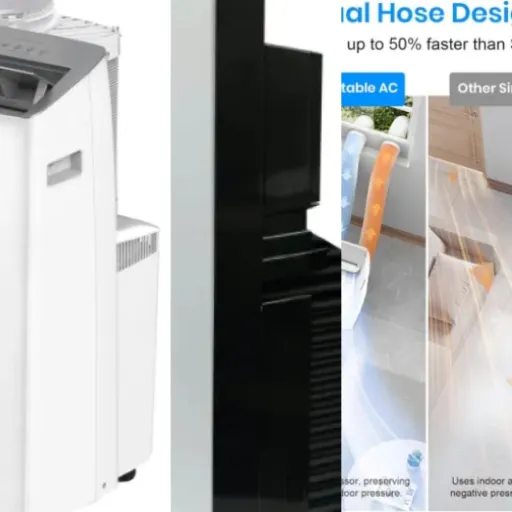
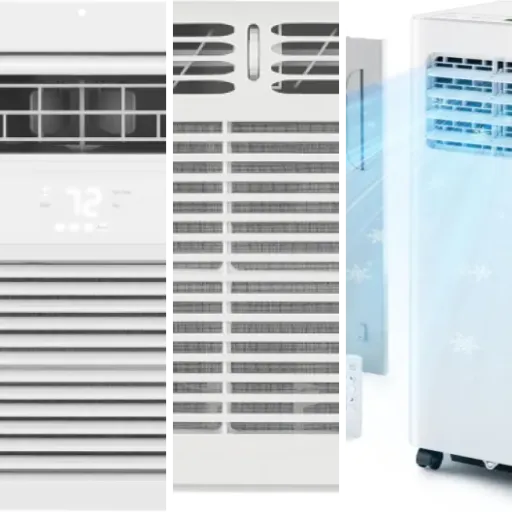
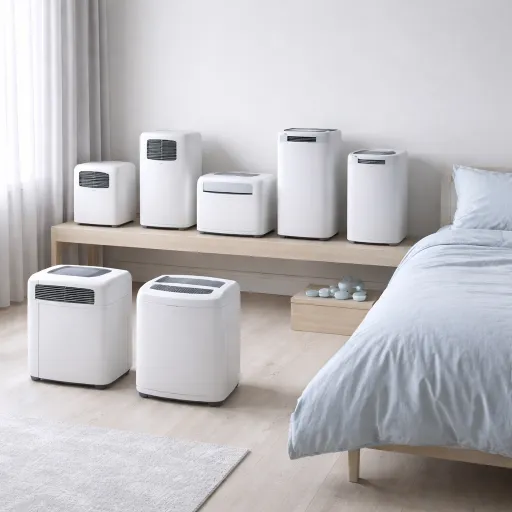
Summary
Editor's rating
Is it worth the money for van life and small rooms?
Compact design, dual hoses that help, and a few annoying details
Power draw and off-grid use: friendly for power stations if you plan it right
Real-life comfort: noise, airflow, and how it feels to sleep next to it
Build quality and durability: feels average, not fragile but not premium
Cooling performance: decent in small spaces, don’t ask too much from it
What you actually get in the box and what this thing is meant for
Pros
- Low power draw (around 330–400W) makes it usable with power stations and limited campsite power
- Dual-hose design improves cooling efficiency in tents, vans, and small rooms
- Self-evaporating system reduces or removes the need to drain water in normal humidity
- Compact and relatively light (about 28.6 lbs), easy to move between spaces
Cons
- Generic brand with basic documentation and unclear long-term support
- Accessories (hoses, window kit) feel cheap and can be fiddly to seal properly
- Limited cooling capacity: best only for small, enclosed spaces under roughly 100 sq ft
- No wheels and short-ish power cord make placement a bit less convenient

Specifications
View full product page →| Brand | Generic |
A small AC for people who are sick of sweating in vans and tents
I picked up this generic portable AC mainly for summer camping and to cool a small bedroom in heatwaves. I’m running the 4500 BTU AC version on 110V most of the time, with a 1000W power station as backup. I’ve used it for about two weeks: a few nights in a tent, a couple of nights in my small office/guest room, and one test in the back of a van. So this is not a lab test, just real-world use with normal expectations: I just don’t want to sweat all night.
The first thing to know: this is a small unit. The 4500–5100 BTU rating and the 28.6 lb weight tell you it’s meant for tight spaces, not whole apartments. If you’re thinking it’ll chill a big living room, forget it. But for a van, truck cab, or a small bedroom under 100 sq ft, it actually does something noticeable, especially once you get the hoses set up right and give it 15–20 minutes.
What interested me was the combo of low power draw (around 330–400W) and the dual-hose setup. A lot of cheap portable ACs are single-hose and suck hot air back in, which is dumb in a tent or RV. This one at least tries to do it properly. The self-evaporating thing also sounded nice because I hate dealing with water tanks and random leaks in the middle of the night.
It’s not perfect. The brand is generic, the documentation is basic, and you can tell this isn’t some big-name unit with polished everything. But it does cool, it doesn’t murder my power station, and noise is acceptable in sleep mode. If you go in with realistic expectations—small space, close distance, and a bit of setup hassle—it’s a pretty solid little AC. If you want hotel-level cold air in a big area, this isn’t it.
Is it worth the money for van life and small rooms?
Value is where this thing sits in a kind of middle ground. It’s clearly not a top-brand unit with fancy support, but you’re also not paying the premium for a big name. For the price range these generic 4500–5100 BTU units usually sit in, you get a real compressor AC, dual hoses, self-evap, and low power draw. That’s more than you get from the super cheap “portable air coolers” that are basically just fans with wet pads. So if you compare it to those, this is way more effective and, honestly, more honest about what it does.
Compared to bigger branded portable ACs (8,000–12,000 BTU), yes, those will cool faster and over a larger area, but they also draw 2–3 times more power and are heavier and bulkier. If you’re on grid power in an apartment, I’d probably say just spend a bit more and get a known brand with higher BTUs. But if your main use is off-grid camping, RV, van, or a small bedroom where you care about power consumption, this one makes more sense. You’re trading raw power for efficiency and portability.
The downsides for value are mostly around the generic branding and accessories. The hoses and window kit feel cheap, and you might end up buying some extra foam, tape, or even a better window plate to get a good seal. Also, there’s not much info about warranty or service, which is always a bit of a gamble. If something important breaks after a year, you might just be out of luck.
So overall, I’d call the value pretty solid if you know exactly what you’re buying it for: small spaces, moderate expectations, and some kind of battery or limited power situation. If you expect it to behave like a full-size home AC or cool a big open-plan area, you’ll think it’s overpriced. Used in the right context—van, tent, truck cab, tiny room—it feels like money reasonably well spent, as long as you accept the generic nature and a few rough edges.
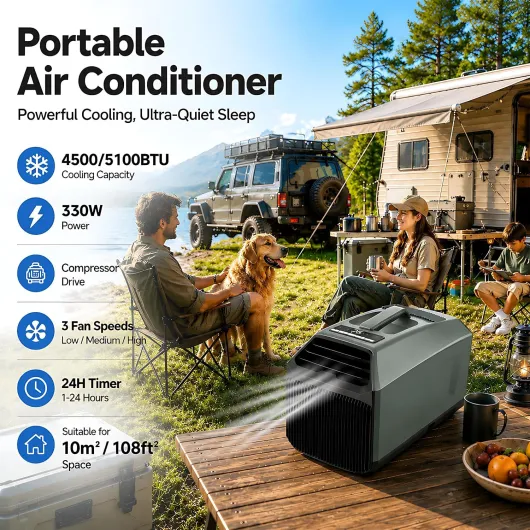
Compact design, dual hoses that help, and a few annoying details
Design-wise, this thing is compact and pretty plain. It’s a white plastic box with vents on the front and hose ports on the back. Nothing stylish, but it doesn’t look ugly either. The integrated handle on top actually helps; I carried it up and down stairs a few times and didn’t feel like I’d drop it. At around 28.6 lbs, it’s lighter than most full-size portable ACs but heavier than those tiny 12V coolers. For tossing it into a van or sliding it into a corner of a room, the footprint is reasonable.
The big design feature is the dual-hose system. You have one hose to bring in outside air and one hose to exhaust hot air. Compared to the single-hose unit I used before, this one definitely holds the cool better in a tent or small room. With the single-hose unit, I could feel hot air getting sucked in under the door. Here, that effect is much weaker. The downside: setting up two hoses instead of one is more annoying. The plastic adapters are a bit flimsy and don’t always sit perfectly tight, so I ended up using some tape to secure them in the van window opening.
The LED touch panel is straightforward: temp up/down, mode, fan speed, timer, sleep, power. Buttons are responsive enough, even if your fingers are slightly sweaty. The remote is basic but does the job; range is fine across a small room or the length of a van. There’s no fancy app control or Wi‑Fi, which frankly I didn’t miss. For this kind of gear, I just want to hit a button and get cold air, not pair it with my phone.
On the downside, cable and hose management is mediocre. The power cord is a bit shorter than I’d like, so in my tent I had to run an extension. The hoses are not super flexible, so if your window or tent opening is at a weird height, you’ll have to fiddle around. Also, there are no wheels, just the handle, so moving it across a room is a lift, not a roll. In short: functional design that focuses on practicality, but don’t expect clever storage or polished finishing touches.
Power draw and off-grid use: friendly for power stations if you plan it right
The main reason I took a chance on this generic unit was the low power draw. The spec says 330–400W, and that lines up pretty well with what my power station reported. On cooling mode with the compressor running, I was usually seeing around 340–380W. When the compressor cycled off and just the fan was running, it dropped a lot lower. Over an 8-hour night in Sleep Mode, it used roughly 2 kWh, give or take. That’s exactly in the range the product page claims, so no nasty surprises there.
For context, I used a 1000Wh power station plus a small extra battery. Running only on the 1000Wh unit, I could get about 2.5–3 hours of solid cooling before it got low. For a full night, you either need a bigger battery bank, solar to top up during the day, or shore power. If you’re in an RV park or have access to regular AC outlets, you’re fine. For totally off-grid camping, this is usable but you need to be realistic: it’s not a tiny USB fan, it’s a real compressor AC, so it will eat power.
Compared to a bigger 10,000+ BTU portable AC I tried before, this one is way kinder to the power station. That bigger unit pulled close to 900–1000W and was just not practical off-grid. This 330–400W range is much more manageable, especially if you mostly use it in the evening and at night. Also, the 24V DC version (5100 BTU) should, in theory, be even better for people with 24V battery setups because you skip some inverter losses, but I didn’t test that one directly, just the AC version.
If your main goal is overnight comfort in a van or tent with a decent battery setup, this is one of the more sensible options I’ve tried. If your battery is small or you’re relying on a tiny power station, you’ll have to ration usage—maybe just run it for an hour before sleep and then again early morning. So: battery-friendlier than most ACs, but still a serious load. Anyone expecting it to run all weekend off a small power bank will be disappointed.
Real-life comfort: noise, airflow, and how it feels to sleep next to it
Comfort-wise, this AC does what you actually care about: it makes a small space feel less gross and sweaty. The airflow is focused but not super wide. If you sit or lie directly in front of it, you get a nice steady stream of cool air. A couple of meters away, you still feel it, but it’s more like a general drop in temperature than a strong breeze. In a tent or van, that’s fine since you’re usually close to it anyway. In a room, you might want to point it more directly at your bed or desk for the best effect.
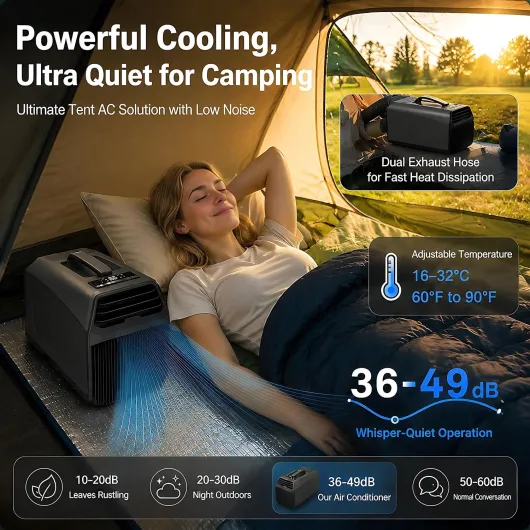
The noise level is important for sleep. On max cooling mode, it’s audible, and if you’re a very light sleeper, it might bother you. For me, in Sleep Mode, it was okay. The fan speed drops, and the compressor cycles more gently. I’d describe it as a steady background sound rather than an annoying whine. I slept next to it at about 2–3 meters distance for three nights straight and didn’t wake up because of it. It’s definitely quieter than the cheap portable AC I used before, which had a harsh fan noise.
The self-evaporating function also helps with comfort in a different way: you’re not constantly worrying about water tanks or leaks. In my climate (moderate humidity), I didn’t have to drain it at all during the two weeks of use. That means no waking up at 3 a.m. to a full tank alarm. They include a backup drain hose for very humid conditions, but in normal use I never needed it. Less hassle equals more comfort, honestly.
The only comfort downside for me is hose and placement limitations. You always need a way to route the hot air out, so you can’t just plop it down anywhere. In the tent I had to position it awkwardly near the door, which meant some cold air was basically blasting my legs while the rest of the tent was just moderately cool. In a perfect world, you’d combine it with a small fan to circulate air around. Still, overall, for sleeping and working in small spaces, it’s pretty solid. Not luxurious, but it takes you from “sticky and miserable” to “comfortable enough to sleep and think straight.”
Build quality and durability: feels average, not fragile but not premium
On durability, it’s obviously hard to judge long-term after only a couple of weeks, but I can at least talk about build quality and first impressions. The plastic casing feels average: not paper-thin, but also not heavy-duty. I carried it around by the handle quite a few times, bumped it into a door frame once, and nothing cracked or rattled. The vents and grilles don’t flex too much when you press on them, which is a good sign. The hose connectors, on the other hand, are a bit on the cheap side and could be the first thing to fail if you’re rough.
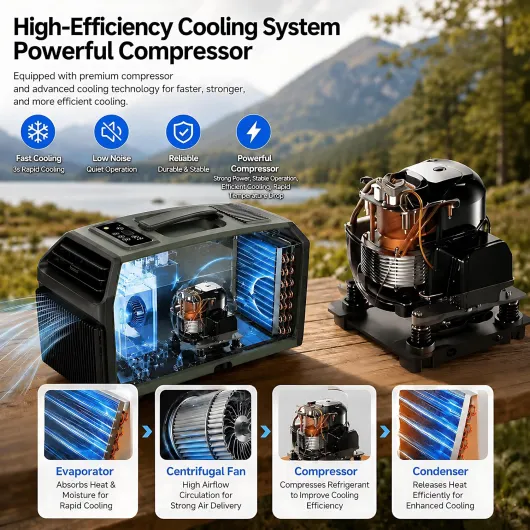
Inside, you can hear the compressor spin up and down, and it sounds stable, not like it’s struggling. That dual-rotor compressor marketing line is hard to verify, but in practice there’s no weird grinding or clunking so far. The fan doesn’t wobble, and there’s no strange vibration when it’s running at full tilt. I ran it for multiple long sessions (6–8 hours) and the housing didn’t get worryingly hot, just slightly warm around the exhaust area, which is normal.
The weak point for durability in my opinion is the accessories. The hoses are okay but a bit stiff, and if you bend them sharply or step on them, I can see them cracking over time. The window/vent adapters feel like generic molded plastic, the kind that can snap if you overtighten something or drop it on a hard surface. The remote is basic and light; I wouldn’t be shocked if it dies before the unit itself, but that’s pretty standard for budget gear.
Given that the brand is just “Generic” and there’s no clear info about long-term support or spare parts, I’d say don’t expect premium appliance lifespan. If you treat it decently—don’t throw it around, keep the filters clean, avoid crushing the hoses—it should last a few seasons of camping and summer use. If you want something to run daily for years like a built-in home AC, this probably isn’t the one. For seasonal and hobby use, the durability seems acceptable so far, but I’d handle it with a bit of care.
Cooling performance: decent in small spaces, don’t ask too much from it
In terms of raw cooling, this unit is decent for what it is. In my small office/guest room (about 90 sq ft), starting at roughly 82°F, it brought the temperature down to around 73–74°F in 45–60 minutes with the door closed and blinds down. That’s not ice-cold, but it made the room actually comfortable to sit and work in. If I left the door open to a hallway, it struggled and basically just cooled the immediate area in front of it. So if you’re thinking of cooling multiple rooms, this is too small.
In a two-person tent, the difference is very noticeable. One night it was around 86°F outside at sunset, and inside the tent it felt like a sauna. With both hoses running out through a vent opening, the tent dropped to a temperature that felt maybe 8–10°F cooler inside after about 20 minutes. I don’t have lab-grade sensors, but you could feel the change clearly. The catch is: you really need to seal the tent openings around the hoses as best you can; otherwise, hot air sneaks back in and you lose a lot of efficiency.
For van and truck use, it’s similar. Parked in the sun, it won’t magically turn the van into a fridge, but it takes the edge off and keeps it from becoming an oven. In the back of a small van, I ran it for about an hour on high and it kept the space comfortably cool-ish, not cold. In the evening or in the shade, it does a lot better. This matches the BTU rating and low power draw: it’s meant to maintain a tolerable temperature, not to fight direct midday sun in a big metal box with no insulation.
Noise-wise, the claimed 36–49 dB feels roughly right. On full blast it’s noticeable, like a medium fan plus compressor hum. In Sleep Mode, it dials down the fan and the compressor cycles less aggressively, and I could sleep with it about 2–3 meters away without being irritated. Not silent, but acceptable. Overall, performance is good if you keep your expectations aligned with the BTUs and space size. If you try to cool too large an area or a badly insulated space under full sun, you’ll be disappointed.
What you actually get in the box and what this thing is meant for
Out of the box, you get the main unit, two hoses, some basic adapters for windows/vents, a remote, and a thin manual. That’s about it. No fancy carrying case, no big accessory kit, just the essentials. The unit itself is compact and about 28.6 lbs, which is light enough to move around with one hand using the handle, but still not something you’d want to carry a kilometer to a campsite. For van life, RVs, trucks, or moving it from bedroom to office, the size is fine.
The model I have is the 4500 BTU 110V version, but the description also mentions a 5100 BTU 24V DC inverter model. So if you’re more into off-grid setups with big battery banks or 24V systems, that higher BTU DC version is probably the one you’d be looking at. Both are clearly targeted at small enclosed spaces: tents, truck cabs, vans, small bedrooms—roughly up to about 108 sq ft according to the spec. In practice, I’d say it works best if you stay under that, especially when it’s really hot outside.
Controls are simple: there’s an LED touch panel on top and a small remote. You get four modes: Cooling, Fan, Dehumidifying, and Sleep. There’s also a 24-hour timer, which is handy if you don’t want it running all night or if you’re trying to save battery. The temperature range is listed as 60°F to 90°F, and in my tests it actually managed to get a small room from about 82°F down to around 73–74°F in roughly 45 minutes, which is decent for the size and power draw.
Overall, the presentation is very “no-name Amazon brand”: it’s functional, not pretty. The best part is that the advertised features mostly line up with reality: dual hose is real, self-evaporating works in normal humidity, and power draw is low. The weak points are the generic branding, the manual that feels rushed, and the slightly fiddly hose adapters. It doesn’t scream quality, but it also doesn’t feel like total junk.
Pros
- Low power draw (around 330–400W) makes it usable with power stations and limited campsite power
- Dual-hose design improves cooling efficiency in tents, vans, and small rooms
- Self-evaporating system reduces or removes the need to drain water in normal humidity
- Compact and relatively light (about 28.6 lbs), easy to move between spaces
Cons
- Generic brand with basic documentation and unclear long-term support
- Accessories (hoses, window kit) feel cheap and can be fiddly to seal properly
- Limited cooling capacity: best only for small, enclosed spaces under roughly 100 sq ft
- No wheels and short-ish power cord make placement a bit less convenient
Conclusion
Editor's rating
After using this portable AC for a couple of weeks in a small room, tent, and van, my overall take is that it gets the job done if you use it in the right way. Cooling is decent for tight spaces under about 100 sq ft, the dual-hose setup is genuinely helpful, and the low power draw makes it one of the more practical options for people running off a power station or limited campsite power. Noise in Sleep Mode is manageable, and the self-evaporating system worked well enough that I didn’t have to mess with draining in normal humidity.
It’s not perfect. The brand is generic, the accessories feel cheap, and it’s not going to magically cool a big living room or a poorly insulated van in direct sun. You also need to be a bit handy with sealing hoses and planning where to vent the hot air. But if your expectations are realistic—cooling a small, enclosed, fairly well-sealed space and not burning through 1000W+ all night—it’s a pretty solid little unit. I’d recommend it to van lifers, truckers, and campers who already have a decent battery setup and want real AC rather than just a fan. If you want long-term, daily home use with strong support and a big cooling area, I’d look at a bigger branded model instead.