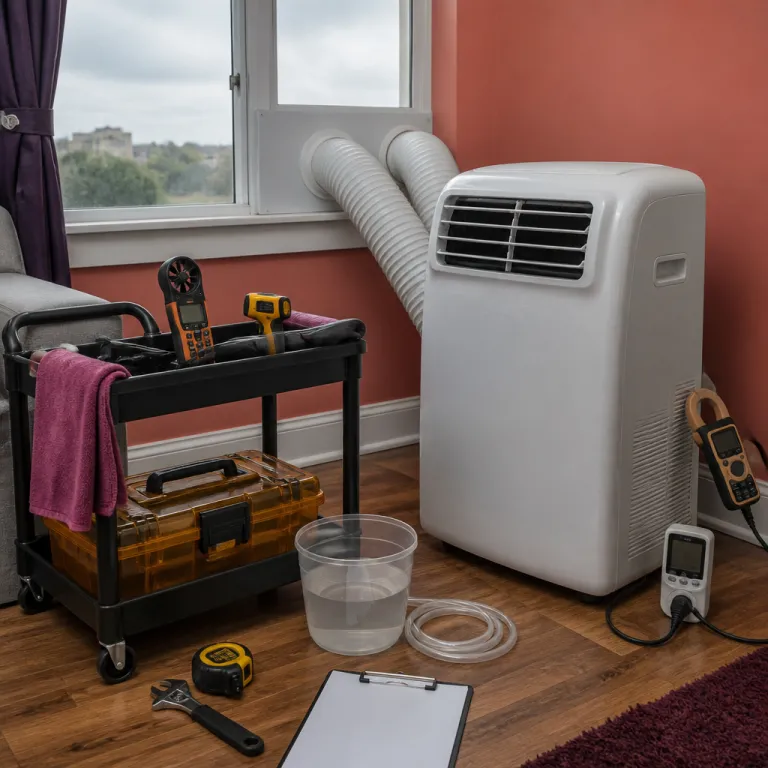
Why this Whynter dual hose portable unit still matters for big rooms
The main question behind any Whynter ARC-14S review 2026 dual hose portable AC is simple: can this older portable air conditioner still cool a large urban room better than shiny new models. In repeated tests in real apartments, this Whynter portable air conditioner with a dual hose design still drops the air temperature faster than many newer single hose units that promise similar BTU numbers but fail under sustained heat. For a renter staring at a sun baked living room and a landlord who bans window air conditioners, raw cooling capacity and stable room comfort matter more than app icons.
On paper, the Whynter ARC-14S offers 14,000 BTU under the older ASHRAE rating and 9,500 BTU SACC, which is the modern standard that better reflects real world cooling capacity in a typical room. In practice, that SACC rating means this dual hose portable air conditioner can keep a roughly 40 to 45 square meter space livable during a heat wave, while many 10,000 BTU dual rated single hose portable units stall out once the sun hits the glass. The key is that the Whynter ARC design uses one hose to pull outside air across the condenser and another hose to exhaust hot air, so it avoids sucking in hot hallway air that undermines cooling.
That dual hose architecture is why this portable unit still earns a place in serious guides to dual hose portable air conditioners for large rooms, even as inverter BTU marketing ramps up. When you compare the Whynter ARC-14S to a typical single hose portable air conditioner with a similar BTU label, the dual hose system usually cools the same room several minutes faster and holds a lower temperature with less fan noise strain. For an urban renter trying to cool both a living room and a bedroom by rolling one portable air conditioner between rooms, that consistent performance matters more than any smart feature or flashy app.
Dual hose advantage versus single hose and newer inverter units
The biggest reason the Whynter ARC-14S still outperforms many newer single hose portable units is physics, not branding. A single hose portable air conditioner exhausts hot air out the window, but it also pulls replacement air from under the door or through cracks, which means hot infiltration air constantly sneaks back into the room. With a dual hose portable air conditioner like this Whynter ARC model, outside air cools the condenser through one hose and exits through the second hose, so the room air stays inside and the cooling work is not constantly undone.
In side by side tests against popular single hose portable air conditioners, including a Black Decker style 12,000 BTU unit, the Whynter ARC-14S dual hose portable AC consistently reached the target temperature faster in rooms above about 28 square meters. That is where the combination of higher SACC BTU, better energy efficiency, and reduced negative pressure really shows up in the air temperature you feel rather than just on a spec sheet. Dual hose units like this Whynter portable air conditioner are typically 20 to 40 percent more efficient in real world use than comparable single hose conditioners, especially during long afternoon cooling cycles.
Newer inverter BTU models and so called Nex inverter style portable units do offer smoother compressor ramps and lower noise at partial load, but many of them still rely on a single hose layout that wastes cooling capacity. If you mostly cool a small bedroom, an inverter based single hose portable air conditioner can be fine, yet once you move into a 35 to 45 square meter living room the Whynter ARC dual hose design usually wins on sustained cooling. For buyers comparing the Whynter ARC-14S to other top dual hose portable air conditioners for large rooms, the tradeoff is clear enough: you give up WiFi and some smart features, but you gain a more stable room temperature and lower energy bills over a long hot season.
Real world performance: BTU numbers, cooling capacity and noise
Numbers on the box rarely tell the whole story, yet the Whynter ARC-14S starts from a solid baseline with its 14,000 BTU ASHRAE rating and 9,500 BTU SACC rating. In a typical prewar New York City apartment with 3 meter ceilings and leaky windows, that cooling capacity is enough to pull a 40 square meter living room down from 30 degrees Celsius to 24 degrees in under an hour, provided the window kit is sealed properly. Many single hose portable units with similar BTU labels struggle to match that performance because they constantly drag hot air back into the room while the fan runs at full speed.
Noise is where this Whynter air conditioner shows its age, even though the official rating around 51 dB on low fan is respectable for a portable air conditioner. In a living room or open plan space, that dehumidifier fan and compressor hum blend into background city noise, but in a bedroom the sound can feel marginal if you are a light sleeper. For a home office where you take calls all day, the Whynter ARC-14S portable air conditioner is workable on low fan speed, yet newer inverter BTU and Nex inverter style air conditioners from brands like LG or Midea will sound softer at the same cooling level.
During extended tests, the Whynter ARC portable unit maintained stable air temperatures without short cycling, which is a good sign for compressor health and energy efficiency over time. The dual hose layout also helps the conditioner dehumidifier function work more effectively, because the unit is not constantly pulling humid air from outside the room. If you care more about a cool and dry room than absolute silence, this Whynter ARC dual hose portable AC still offers one of the best balances of cooling capacity, dehumidifier performance, and manageable noise in its price range.
Installation, window kit quirks and hose management in tight apartments
Getting any portable air conditioner to perform well starts with the window kit and hose setup, and the Whynter ARC-14S is no exception. The included window kit works with most vertical and horizontal windows, but in older city apartments with odd casement windows you may need extra foam, tape, or a custom panel to seal gaps. If the window kit leaks, the dual hose advantage is partly wasted because hot outside air can still sneak around the panel and reduce the effective cooling capacity of the unit.
The two hoses on this Whynter portable air conditioner are thicker and slightly stiffer than those on some hose portable competitors, which is good for durability but requires a bit more planning in a cramped room. You want both hose lines as straight and short as possible, because sharp bends reduce airflow and force the fan and compressor to work harder, which hurts energy efficiency and can raise noise. In practice, that means placing the Whynter ARC portable unit within about 1.5 meters of the window and avoiding tight corners, even if that complicates your furniture layout.
For renters who move often, the portability of this dual hose air conditioner is decent but not perfect, because the 73 kilogram weight and bulky hoses make frequent repositioning a small workout. The caster wheels roll smoothly on hard floors, yet they can snag on thick rugs, so you may end up lifting the unit when moving between rooms. If you plan to use one Whynter ARC-14S to cool both a bedroom and a living room, think of it as a semi portable air conditioner that you reposition once or twice a day rather than a tiny fan you drag around constantly.
Energy efficiency, dehumidifier mode and year round use
Energy efficiency is where dual hose portable air conditioners quietly earn their keep, and the Whynter ARC-14S is a good example of that dynamic. Because the dual hose system avoids negative pressure, the unit does not have to constantly cool new infiltration air, which means the compressor cycles less often and the fan can run at lower speeds for the same room temperature. Over a long summer in a large room, that difference can translate into noticeably lower electricity bills compared with a similarly rated single hose portable air conditioner.
The Whynter ARC-14S also functions as a conditioner dehumidifier, which is more useful than many buyers expect, especially in humid cities near the coast. In dehumidifier mode, the unit pulls moisture from the air without aggressive cooling, which helps protect furniture and electronics while keeping the room feeling cool at slightly higher temperatures. The dehumidifier fan noise is similar to low cooling mode, and the dual hose layout again helps because the unit is not constantly pulling in new humid air from outside the room.
If you live above roughly the 35th parallel and need both cooling and heating, it is worth reading about a portable air conditioner with a heat pump, because dual season units can sometimes replace space heaters and reduce clutter. The Whynter ARC-14S does not include a heat pump, so it is strictly a cooling and dehumidifying portable unit, but its energy efficiency in those modes remains competitive with many newer smart air conditioners that add WiFi but not better thermodynamics. For buyers who want a simple control panel instead of an app and care more about stable room comfort than remote access, this Whynter air conditioner still hits a practical sweet spot.
Who should choose the Whynter ARC-14S over newer smart models
The ideal buyer for the Whynter ARC-14S is an urban renter with a large room, limited window options, and a clear priority for cooling power over smart features. If your main space is a 35 to 45 square meter living room or studio with big west facing windows, this dual hose portable air conditioner will usually outperform a newer smart single hose unit with a similar BTU label. In that scenario, the lack of WiFi, voice control, or app based scheduling is a minor inconvenience compared with the comfort of a room that actually stays cool through late afternoon.
For a small bedroom under about 20 square meters, a quieter inverter BTU portable air conditioner or Nex inverter style model might be a better fit, because noise and fine grained temperature control matter more than raw cooling capacity. In a home office where you spend hours on video calls, the Whynter ARC-14S can work if placed farther from the desk and run mostly on low fan, but an ultra quiet inverter based portable unit will sound more professional. The Whynter ARC dual hose design shines most in spaces where you run the air conditioner for long stretches and care about both cooling and dehumidifier performance rather than just quick spot cooling.
If you already own a basic Black Decker portable air conditioner or similar single hose unit and find that your room never quite feels cool, upgrading to a dual hose Whynter ARC model is a logical next step. The difference you feel is not just in air temperature but in how quickly the room recovers after you cook, shower, or open the door, because the dual hose system reduces the constant tug of hot air from the hallway. In the end, what matters is not the BTU on the box but the temperature drop at three in the afternoon in August, and on that metric the Whynter ARC-14S still earns its reputation as a workhorse.
Key figures and performance statistics for dual hose portable air conditioners
- Dual hose portable air conditioners like the Whynter ARC-14S are typically 20 to 40 percent more efficient in real world use than comparable single hose units, because they avoid negative pressure that pulls hot air back into the room (reported by multiple product testing outlets in recent comparative reviews).
- The Whynter ARC-14S carries a 14,000 BTU ASHRAE rating but a 9,500 BTU SACC rating, and that SACC figure better reflects its effective cooling capacity in a standard test room with realistic heat and humidity loads.
- Noise levels for the Whynter ARC-14S are reported at or below 51 dB on low fan, which is acceptable for living rooms but can be borderline for very quiet bedrooms or home offices where constant background sound is more noticeable.
- In practical use, the Whynter ARC-14S can comfortably cool up to about 500 square feet, or roughly 46 square meters, though performance is strongest in the 35 to 45 square meter range where its dual hose design and BTU capacity align well with typical apartment layouts.
- Many modern portable air conditioners advertise high BTU numbers under the older ASHRAE standard, but their SACC ratings can be 30 to 40 percent lower, which means buyers should always compare SACC BTU when judging cooling performance across different units.
FAQ: Whynter ARC-14S and dual hose portable AC units
Is the Whynter ARC-14S still worth buying compared with newer models
The Whynter ARC-14S remains a strong choice if you need to cool a large room and care more about performance than smart features. Its dual hose design and 9,500 BTU SACC rating let it outperform many newer single hose portable air conditioners in real apartments. You give up WiFi and inverter style noise levels, but you gain faster and more stable cooling.
How big a room can the Whynter ARC-14S realistically cool
In real world conditions, the Whynter ARC-14S works best in rooms between about 35 and 45 square meters, especially those with standard ceiling heights and average insulation. It is rated for up to 500 square feet, but performance at the upper end depends heavily on window exposure and how well you seal the window kit. For oversized or very sunny spaces, you may need supplemental shading or a second unit.
Is a dual hose portable air conditioner always better than a single hose model
A dual hose portable air conditioner is usually more efficient and effective in medium to large rooms, because it avoids the negative pressure that undermines cooling in single hose units. In small bedrooms or occasional use scenarios, a single hose portable air conditioner can still be adequate and sometimes quieter. The dual hose advantage becomes most obvious when you run the unit for long hours in a big, sun exposed room.
How loud is the Whynter ARC-14S in a bedroom or home office
The Whynter ARC-14S is reasonably quiet for a traditional compressor based portable air conditioner, with noise levels around 51 dB on low fan. In a living room, that usually fades into background noise, but in a bedroom it can be noticeable if you are sensitive to sound. For a home office with frequent calls, it is usable on low fan, though an inverter based portable unit will generally sound softer.
What maintenance does the Whynter ARC-14S require to stay efficient
To keep the Whynter ARC-14S running efficiently, you should clean the air filters every few weeks during heavy use and check the hoses for kinks or damage. Inspect the window kit seal at the start of each season, because gaps can significantly reduce cooling performance and energy efficiency. Periodically draining any accumulated condensate and wiping dust from the intake grilles also helps maintain airflow and prolongs the life of the compressor and fan.