Discover our ranking of the 3 best dual hose portable air conditioners based on our tests.

Why dual hose portable air conditioners cool faster and more efficiently

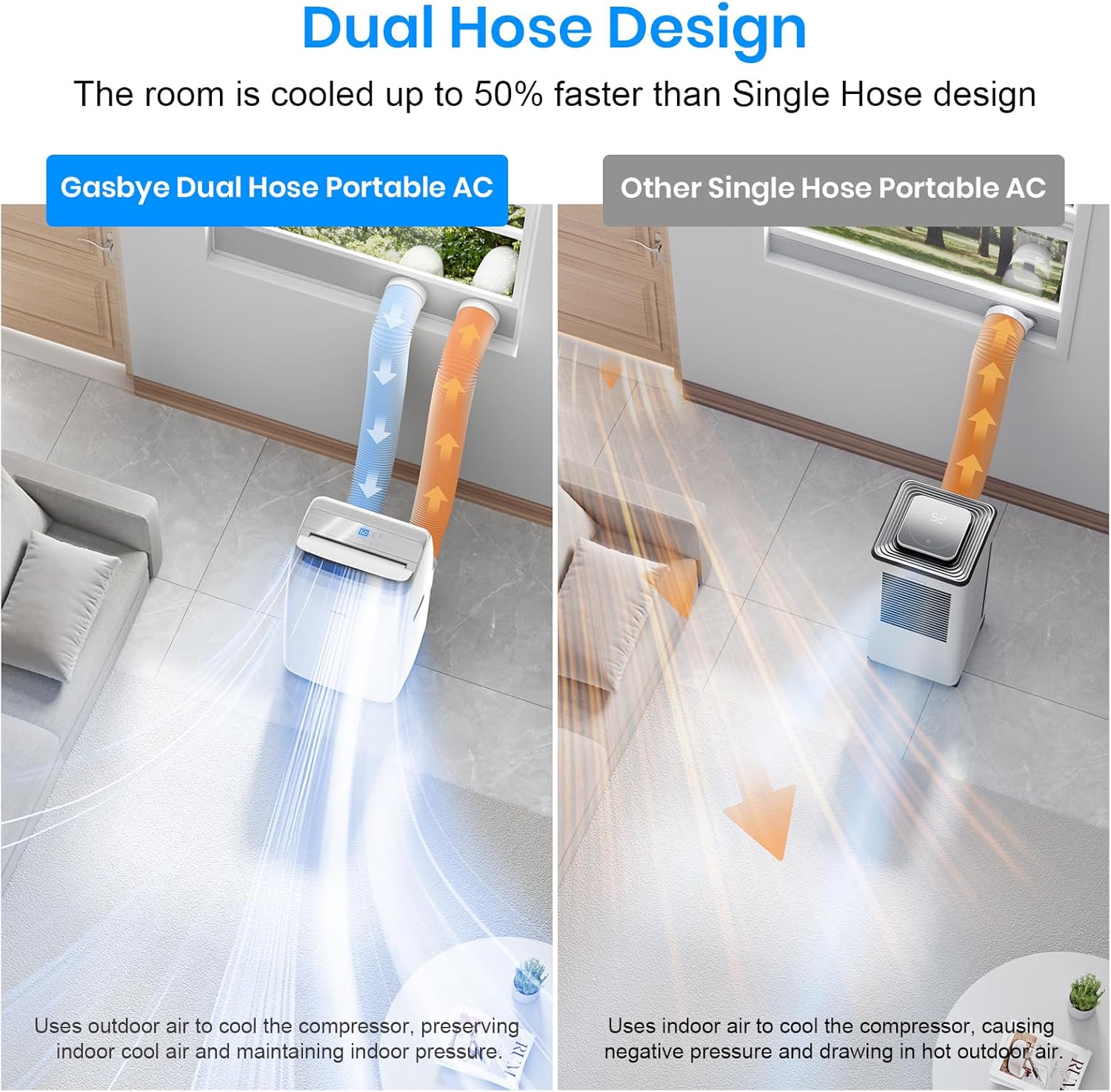
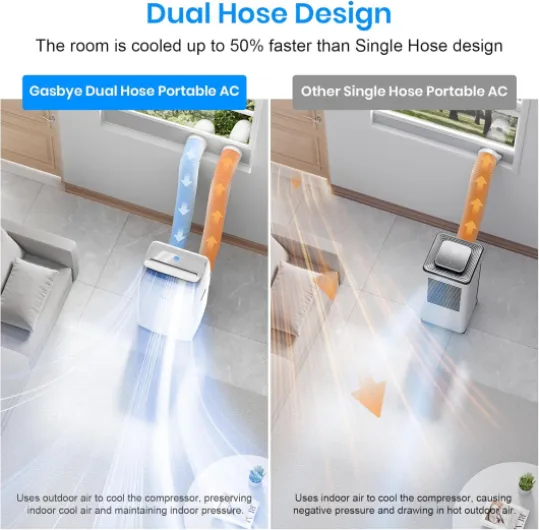
Dual hose portable air conditioners solve a basic physics problem in room cooling. A single hose portable air conditioner pulls conditioned air from your room to cool its condenser, which creates negative pressure and drags hot outdoor air back inside through gaps and vents. A dual hose portable air conditioner uses one hose for outdoor intake and a second exhaust hose for hot air, so the room stays at neutral pressure and the cooling performance remains stable over time.

When you compare the best dual hose portable air conditioners with single hose air conditioners of the same BTU rating, you usually feel a stronger, more even stream of cold air across the room. The dual hose design lets the portable unit use its full BTU SACC capacity for cooling instead of wasting part of that energy on pulling in replacement air from cracks, doors and unsealed windows. This is why many serious buyers now read both the BTU ASHRAE figure and the lower but more realistic SACC dual rating before choosing any portable air conditioner for a medium or large room.

Engineers measure the raw cooling power of a portable air conditioner in BTU ASHRAE, while the SACC ASHRAE rating reflects performance in real world conditions with heat and humidity. The U.S. Department of Energy and AHAM adopted SACC (Seasonally Adjusted Cooling Capacity) to represent output under test scenarios with 80 °F indoor air and outdoor temperatures of 83 °F and 95 °F, as described in DOE 10 CFR 430 Appendix CC and AHAM PAC‑1 procedures. For dual hose portable units, the gap between BTU ASHRAE and BTU SACC is often smaller than for a comparable single hose unit, which signals better energy efficiency and more consistent cooling. If you want a portable air solution that copes with heat waves in an upstairs bedroom or a west facing living room, prioritise a dual hose product with a clear SACC figure, a well insulated exhaust hose kit and manufacturer data that reference AHAM or ASHRAE test procedures.

Ranking

#1 🏆 Best choice
Gasbye Portable Double Hose Air Conditioning Complete DC Inverter Compressor, Energy Saving 13.6 CEER, Low Noise (45 dB), Refreshes Room to 500 White 14,000BTU

Gasbye

Gasbye Portable Double Hose Air Conditioning Complete DC Inverter Compressor, Energy Saving 13.6 CEER, Low Noise (45 dB), Refreshes Room to 500 White 14,000BTU

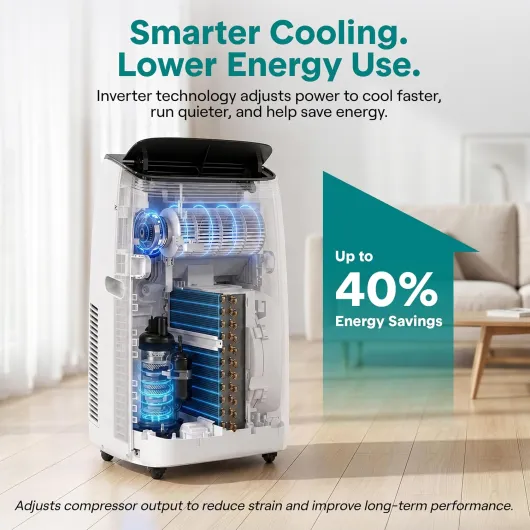
  • Dual-hose and inverter design cools rooms fast without creating negative pressure
  • Noticeably quieter than typical on/off portable units, especially in inverter mode
  • Good energy efficiency for a portable (13.6 CEER) and usually minimal need to drain
Overall, the Gasbye CoolPrime 10000 is a strong portable AC for people who care about real cooling performance and lower noise more than having a famous logo on the front. The dual-hose design and inverter compressor are not marketing fluff; they genuinely make a difference. Rooms in the 300–500 sq ft range cool down quickly and stay comfortable without that weird vacuum effect you get from single-hose units. Noise is much more manageable, especially in inverter mode, so using it overnight in a bedroom is realistic, not torture.It’s not flawless. The remote is clumsy, the window kit can be a bit of a DIY project if your windows aren’t standard, and the thing is big and heavy enough that “portable” really means “move it a couple of times per season, not every day.” The brand name also feels random, even though the underlying hardware comes from a serious manufacturer. But none of those issues break the core experience: it cools well, it’s relatively quiet, and it doesn’t demand constant draining or fiddling once you’ve set it up.If you’re renting, can’t install a window unit, or just want a portable that actually behaves like a proper AC instead of a noisy compromise, this Gasbye is worth a serious look. If you’re on a tight budget, have very small rooms, or don’t feel like wrestling with hoses and window panels, you might be better off with a simpler, cheaper portable or a basic window unit if you can install one.
8.7 /10
★★★★★ ★★★★★
🌟 Excellent See full review →
See offer Amazon
#2 💰 Best price
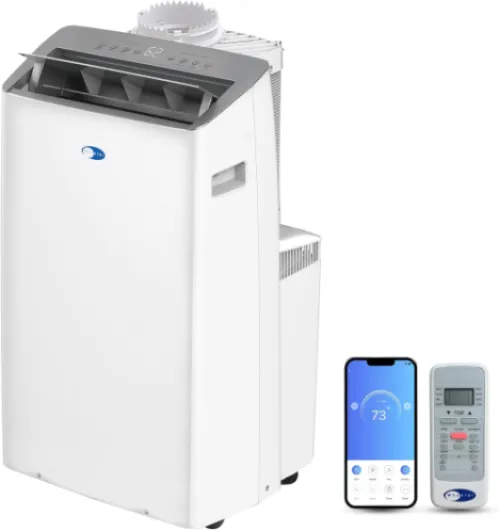
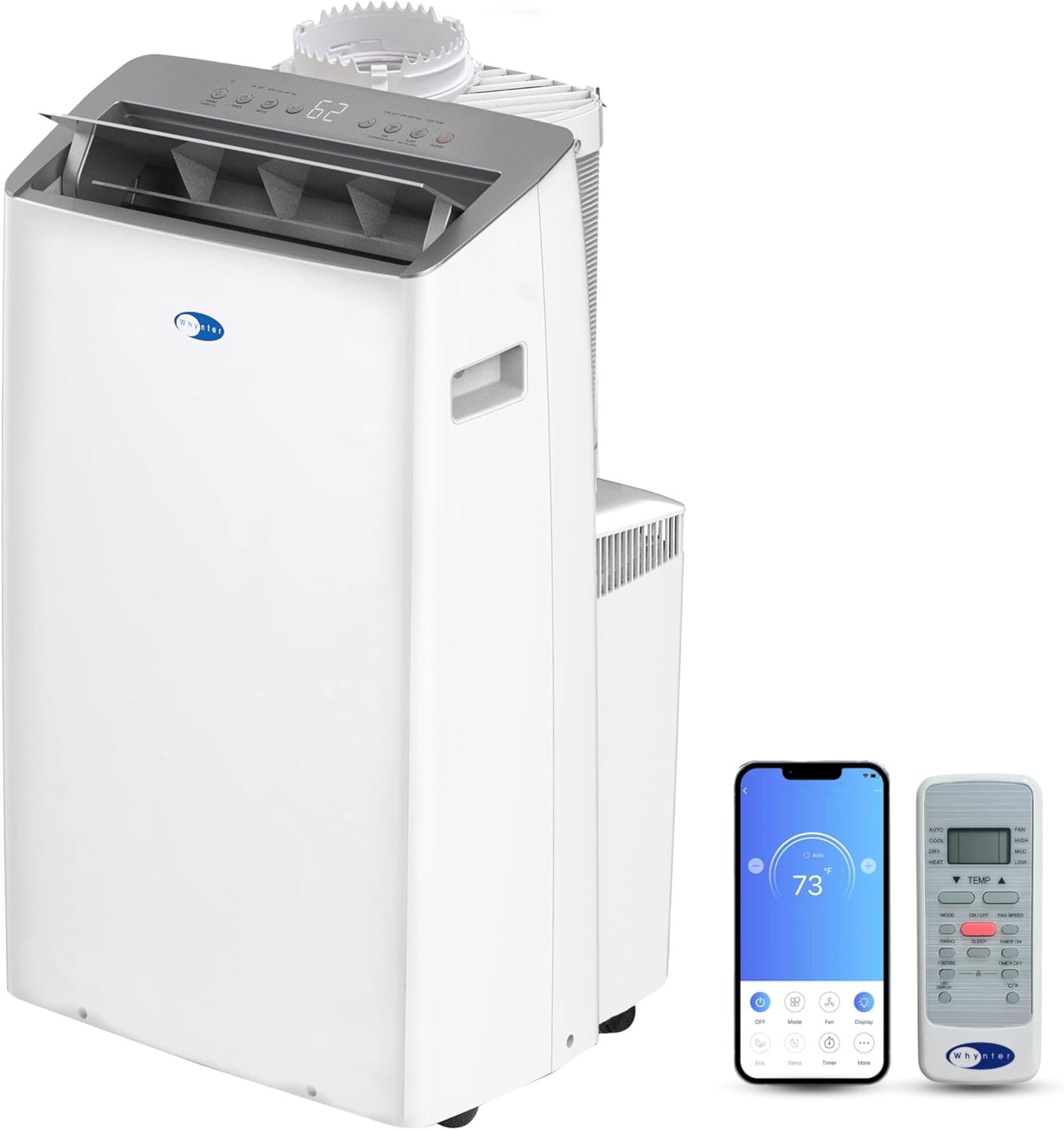
ARC-1230WN 14,000 BTU (12,000 BTU SACC) NEX Inverter Dual Hose Cooling Portable Air Conditioner, Dehumidifier, and Fan with Smart Wi-Fi, Up to 600 sq ft in White 14,000 Cooling Only Air Conditioner

Whynter

ARC-1230WN 14,000 BTU (12,000 BTU SACC) NEX Inverter Dual Hose Cooling Portable Air Conditioner, Dehumidifier, and Fan with Smart Wi-Fi, Up to 600 sq ft in White 14,000 Cooling Only Air Conditioner

🔥 Populaire
  • Dual-hose inverter design cools rooms up to ~600 sq ft more evenly and efficiently than typical single-hose units
  • Quieter once target temperature is reached, with smooth inverter ramp-down instead of harsh on/off cycles
  • Sturdy, more durable hose and a cleaner hose-in-hose setup compared to older dual-hose designs
The Whynter ARC-1230WN is a solid choice if you’re serious about cooling a medium to large room and you’re stuck with portable units. The dual-hose inverter setup actually makes a difference in real life: rooms cool faster, stay cooler, and the unit doesn’t blast at full power all the time. Noise is reasonable for the power level, especially once the inverter ramps down, and in a bedroom or office it’s manageable as long as you don’t expect silence on max.It’s not perfect. The hose is a bit short, the window kit needs some tinkering if your windows are awkward, and the unit is heavy to move up stairs. The air coming out might feel a bit less icy than some older non‑inverter models, but the overall room comfort ends up better. The app and Wi‑Fi are useful but not life-changing, more of a convenience layer on top of a basically solid machine.If you have a 400–600 sq ft space, decent insulation, and want something that actually cools the whole room instead of just blasting one corner, this is a good fit. It’s also a good option if you run AC a lot and want something more efficient than the usual portable bricks. If you only need occasional spot cooling in a small room or you’re on a tight budget, a cheaper single-hose unit will still do the job, just less comfortably and less efficiently. Overall, I’d rate it as a strong, practical purchase for people who are done gambling on the cheapest portable ACs.
8.4 /10
★★★★★ ★★★★★
🌟 Excellent See full review →
See offer Amazon
#3 🔥 Most popular
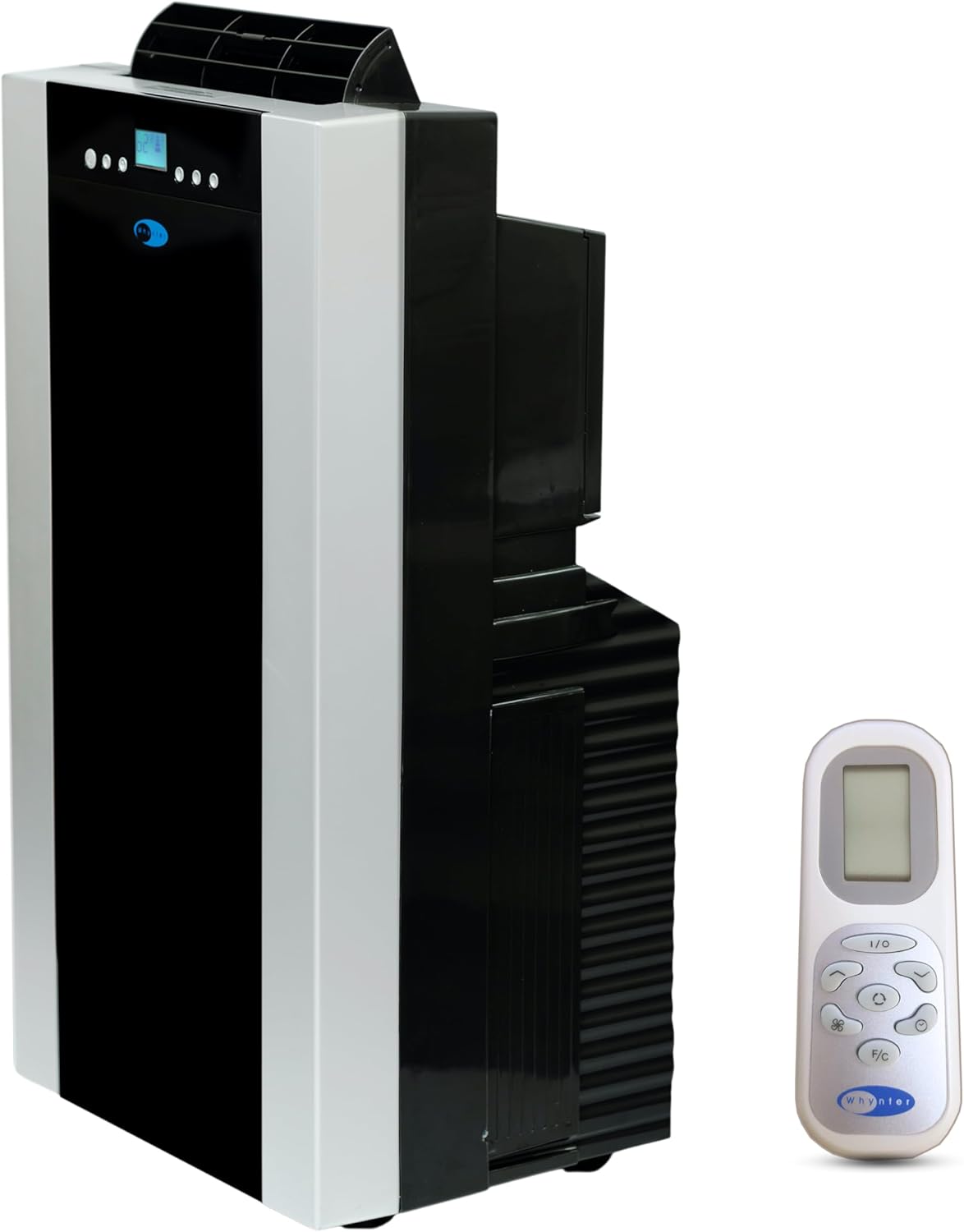
Portable Air Conditioner 14,000 BTU with Dual Hose Dehumidifier & Cooling Fan for 500 Sq Ft Rooms, Includes AC Unit Window Kit, ARC-14S (9,500 SACC) AC Unit Only

Whynter

Portable Air Conditioner 14,000 BTU with Dual Hose Dehumidifier & Cooling Fan for 500 Sq Ft Rooms, Includes AC Unit Window Kit, ARC-14S (9,500 SACC) AC Unit Only

🔥 Populaire
  • Dual-hose design cools a 400–500 sq ft room more effectively than most single-hose portables
  • Straightforward controls and useful modes (cool, dehumidify, fan) with decent airflow
  • Build feels sturdy enough and casters roll okay on hard floors for semi-permanent placement
Overall, the Whynter ARC-14S is a solid choice if you actually need a portable AC that cools a decent-sized room, not just a tiny bedroom. The dual-hose system and 14,000 BTU rating translate into real-world performance: it can keep a 400–500 sq ft space comfortable in hot weather, especially if you help it out with curtains and reasonable insulation. It’s not silent, it’s not small, and it’s not the cheapest, but it does the basic job of making a hot room livable, which is more than I can say for a lot of portable units I’ve tried.On the downside, it’s heavy, noisy at higher fan speeds, and not something you’ll want to move from room to room every day. The window kit is fine for standard windows but can be annoying for casement or odd setups, and you may end up at the hardware store for extra materials. Long-term durability seems decent but not legendary; it should last several seasons if you maintain it, but don’t expect it to behave like a 20-year-old window unit. Power use is typical for this size but not especially efficient, so keep that in mind if you plan to run it nonstop.If you have one main area you want to cool (living room, studio, big bedroom/office), can commit to a semi-permanent installation in a window, and you’re okay with some fan noise, this unit is worth considering. If you’re super sensitive to sound, want to cool multiple rooms with one device, or can install a window unit or mini-split instead, you might be happier going another route. It’s pretty solid overall, not perfect, but it gets the job done in the situations it’s designed for.
8.2 /10
★★★★★ ★★★★★
🌟 Excellent See full review →
See offer Amazon

Comparison table : Dual hose portable air conditioners

Overall score Value for money Design Comfort Durability Performance Presentation
Gasbye Portable Double Hose Air Conditioning Complete DC Inverter Compressor, Energy Saving 13.6 CEER, Low Noise (45 dB), Refreshes Room to 500 White 14,000BTU
#1 Gasbye
Gasbye Portable Double Hose Air Conditio...
See offer Amazon
8.7/10 ★★★★★ ★★★★★ ★★★★★ ★★★★★ ★★★★★ ★★★★★ ★★★★★ ★★★★★ ★★★★★ ★★★★★ ★★★★★ ★★★★★
ARC-1230WN 14,000 BTU (12,000 BTU SACC) NEX Inverter Dual Hose Cooling Portable Air Conditioner, Dehumidifier, and Fan with Smart Wi-Fi, Up to 600 sq ft in White 14,000 Cooling Only Air Conditioner
#2 Whynter
ARC-1230WN 14,000 BTU (12,000 BTU SACC)...
See offer Amazon
8.4/10 ★★★★★ ★★★★★ ★★★★★ ★★★★★ ★★★★★ ★★★★★ ★★★★★ ★★★★★ ★★★★★ ★★★★★ ★★★★★ ★★★★★
Portable Air Conditioner 14,000 BTU with Dual Hose Dehumidifier & Cooling Fan for 500 Sq Ft Rooms, Includes AC Unit Window Kit, ARC-14S (9,500 SACC) AC Unit Only
#3 Whynter
Portable Air Conditioner 14,000 BTU with...
See offer Amazon
8.2/10 ★★★★★ ★★★★★ ★★★★★ ★★★★★ ★★★★★ ★★★★★ ★★★★★ ★★★★★ ★★★★★ ★★★★★ ★★★★★ ★★★★★

Key buying criteria for the best dual hose portable air conditioners

Choosing among the best dual hose portable air conditioners starts with sizing the unit correctly. For most well insulated rooms of 25 to 35 square metres, a dual hose portable unit with around 10 000 to 12 000 BTU SACC usually delivers strong cooling without wasting energy. If your space has poor insulation, large windows or heavy electronics, move closer to the higher BTU ASHRAE and SACC dual figures to keep the air comfortably cool during peak heat.

Noise level matters as much as raw cooling power when the air conditioner runs in a bedroom or home office. Look for a dual hose portable air conditioner with a low fan setting around 50 to 55 decibels and a higher setting that still stays below loud conversation, then read user reviews carefully to confirm the real noise level. Many of the top dual hose portable air conditioners on Amazon now publish both maximum and minimum sound levels, and some smart models allow you to reduce fan speed or activate night mode from a remote control or phone app.

Installation details also separate a good portable air conditioner from a frustrating one. A solid window kit with adjustable panels and a tight seal around each hose keeps hot air and insects outside while protecting the unit energy performance you paid for. When you compare any hose portable product online, check whether the window kit fits sliding windows, casement windows or only classic sash designs, and verify that the exhaust hose length and diameter match your room layout before you commit to a final price.

To make these criteria easier to compare, the table below summarises typical specifications for three popular dual hose portable air conditioner categories. Figures are indicative only and should be checked against the manufacturer’s current datasheet before purchase.

Model type Approx. ASHRAE BTU Approx. SACC BTU Noise (dB) Window-kit compatibility Typical price range
Compact dual hose (small rooms) 10 000–12 000 7 000–8 000 50–55 Sash, horizontal sliding Entry level
Mid size dual hose (medium rooms) 12 000–14 000 9 000–10 000 52–57 Sash, sliding, some casement kits Mid range
High capacity dual hose (large rooms) 14 000–15 000+ 10 000–12 000 54–60 Sash, sliding, optional specialty kits Premium

Dual hose versus single hose portable units in real homes

Many people start with a cheaper single hose portable air conditioner and only later understand its limits. In a small room, a single hose portable unit can feel acceptable, but as soon as you cool a larger living area or an attic, the negative pressure effect becomes obvious because warm air leaks back through every crack. Dual hose portable air conditioners avoid this by separating intake and exhaust air, so the cooled air stays inside and the unit does not fight against its own airflow.

When you compare dual hose and single hose air conditioners side by side, the dual design usually reaches the target temperature faster and cycles less often. That difference shows up clearly in SACC ASHRAE tests, where dual hose portable units tend to maintain their BTU SACC output more consistently under high outdoor temperatures. Independent lab comparisons that follow AHAM PAC‑1 and ASHRAE 128 style methods typically record higher delivered capacity for dual hose designs at 95 °F outdoor air, because they avoid the make up air penalty that reduces effective cooling in single hose products. If you want a deeper technical breakdown of why many experts argue that single hose portable ACs should be phased out, you can read this detailed analysis on why single hose portable ACs are becoming obsolete.

Energy efficiency is another decisive factor when you compare a single hose unit with a modern dual hose portable air conditioner. Because the dual hose system does not pull unconditioned air into the room, the compressor and fan work less to maintain the same cooling level, which improves unit energy use over long summer seasons. In practice, this means that a well chosen dual hose portable air conditioner with a strong SACC dual rating can match or beat the seasonal energy consumption of a smaller single hose product, even if the dual hose model has a higher BTU ASHRAE headline figure.

Notable dual hose brands, models and smart features

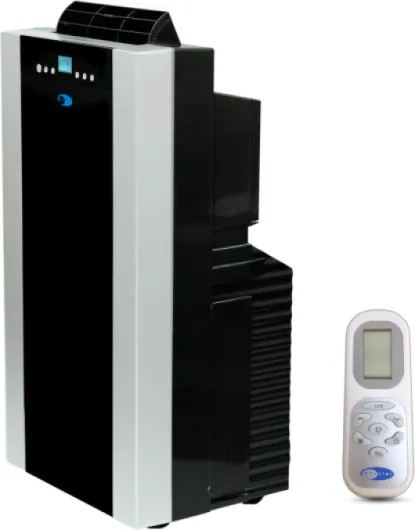
Among enthusiasts, the Whynter ARC series often comes up when discussing the best dual hose portable air conditioners for demanding conditions. A typical Whynter ARC dual hose portable unit combines a high ASHRAE BTU rating with a more realistic SACC figure, plus a robust exhaust hose system that resists kinks and heat soak. Many Whynter ARC air conditioners also include a dehumidifier mode and a multi speed fan, which helps you fine tune both cooling and noise level.

When you browse Amazon for a dual hose portable air conditioner, pay attention to how each product lists its BTU SACC and ASHRAE BTU values. Some brands still highlight only the larger arc BTU style number, which can mislead buyers about real world cooling capacity in hot, humid air. A trustworthy listing will show both SACC ASHRAE and BTU ASHRAE ratings, detail the window kit components, specify the exhaust hose length and diameter, and clearly state whether the remote control includes a thermostat sensor.

Smart connectivity has become a standard expectation in higher end dual hose portable air conditioners. Wi Fi enabled models let you adjust temperature, fan speed and mode from your phone, integrate the air conditioner with voice assistants and schedule cooling around your daily routine to save energy. If you prefer a simpler portable unit, at least choose a product with a clear digital display, a responsive remote control and a free flowing dual hose design that keeps the intake air path separate from the hot exhaust hose at all times.

To turn these points into a quick buying checklist, focus on three areas: capacity and SACC rating that match your room size, verified noise levels with a usable sleep mode, and a complete window kit that fits your frame type without extra parts. Once those boxes are ticked, compare secondary features such as dehumidifier performance, Wi Fi control, condensate management and warranty length.

Installation, window kits and practical setup tips

Even the best dual hose portable air conditioners will underperform if the installation is sloppy. Start by planning the portable unit position so that both the intake hose and the exhaust hose run as straight as possible, because sharp bends restrict air flow and reduce cooling efficiency. Keep the air conditioner at least 30 centimetres from walls or furniture to allow free circulation around the condenser and fan grilles.

A well designed window kit is essential for any dual hose portable air conditioner, since it seals the opening where the hoses exit and prevents hot air from leaking back inside. Before you buy, read the product description carefully to confirm that the window kit can extend to your window width and that it includes gaskets or foam strips to close small gaps. If you have an unusual window type, such as a tilt and turn frame, you may need an aftermarket hose portable adapter or a custom panel to maintain the unit energy efficiency promised by the SACC rating.

Once the window kit is in place, secure each hose firmly and check that the external vents point slightly downward to shed rainwater away from the air conditioner. Many dual hose portable air conditioners include quick release couplings that let you detach the hoses when you move the portable air unit between rooms, which protects the threads and extends the life of the kit. For a detailed example of a quiet, efficient portable air conditioner with a complete window kit and remote control, you can review this in depth test of a 12 000 BTU portable air conditioner with fan and dehumidifier.

Running costs, energy efficiency and noise management

Operating costs for dual hose portable air conditioners depend on three main factors. The first is the unit energy efficiency, which you can estimate from the ratio between BTU SACC and electrical input in watts, often expressed as an energy efficiency ratio on the label. The second is how many hours per day the air conditioner runs at high fan speed, while the third is your local electricity price per kilowatt hour.

To keep energy use under control, start by setting the thermostat a few degrees higher than you think you need, then let the dual hose portable unit stabilise the room temperature. Because dual hose portable air conditioners maintain neutral pressure, they usually cycle less often than single hose models, which reduces compressor wear and long term energy consumption. Many smart air conditioners also offer eco modes, timers and geofencing, so the fan and compressor only run when you are home and actually need cooling.

Noise level can make or break your satisfaction with any portable air conditioner, especially in bedrooms. Dual hose portable units often sound slightly deeper than single hose models because of the extra fan and hose, but a well designed product keeps the noise level balanced across low, medium and high settings. When you read reviews, focus on comments about sleep mode, fan noise at night and any rattling from the exhaust hose or window kit, then choose a dual hose portable air conditioner that matches both your cooling needs and your tolerance for background sound.

How to interpret BTU, SACC and ASHRAE ratings when comparing models

Understanding the different capacity metrics helps you compare the best dual hose portable air conditioners fairly. ASHRAE BTU ratings represent the theoretical maximum cooling output of an air conditioner under controlled laboratory conditions, while SACC values reflect performance in more realistic scenarios with heat and humidity. For dual hose portable units, the SACC dual rating is usually the best guide to how effectively the product will cool your actual room.

When you see a portable air conditioner advertised with a very high arc BTU or BTU ASHRAE figure but a modest BTU SACC rating, treat that as a sign that the unit may struggle in extreme heat. Dual hose portable air conditioners tend to maintain a closer relationship between ASHRAE BTU and SACC ASHRAE numbers, because the separate intake and exhaust hose system reduces recirculation of hot air. This is one reason many experts recommend choosing a dual hose portable air conditioner for larger rooms, open plan spaces and areas with strong sun exposure.

For most buyers, the practical approach is simple and reliable. Use the SACC rating to match a dual hose portable unit to your room size, then use the ASHRAE BTU figure and energy efficiency ratio to compare how much electricity different air conditioners will use to deliver that cooling. Finally, consider the full package, including the quality of the window kit, the flexibility of the remote control, the smart features, the stated noise level and the total price, before deciding which dual hose portable air conditioner offers the best long term value.

Key figures about dual hose portable air conditioners

  • Independent lab comparisons that follow AHAM and ASHRAE test methods often find that dual hose portable air conditioners cool rooms noticeably faster than comparable single hose units of the same ASHRAE BTU rating, because they avoid negative pressure losses.
  • Energy Star guidance indicates that high efficiency portable air conditioners can use around 10 to 15 percent less electricity than standard models, and dual hose designs often sit at the upper end of this energy efficiency range when properly installed.
  • Noise level measurements from several laboratory style tests indicate that well designed dual hose portable units can operate around 50 to 55 decibels on low fan speed, which is similar to a quiet conversation at home.
  • Consumer satisfaction surveys from major retailers report that buyers who switch from a single hose portable air conditioner to a dual hose model are more satisfied with cooling performance in rooms larger than 25 square metres, especially during heat waves.

Frequently asked questions

Dual hose portable air conditioners are generally more efficient because they use one hose to draw outdoor air across the condenser and a second exhaust hose to expel hot air, which keeps room pressure neutral. Single hose units pull conditioned indoor air across the condenser and exhaust it outside, creating negative pressure that drags hot air back in through gaps. This design difference means a dual hose portable unit usually delivers more effective cooling for the same ASHRAE BTU rating and can achieve better SACC performance in real homes.

For a typical bedroom or office of 15 to 20 square metres, a dual hose portable air conditioner with around 7 000 to 8 000 BTU SACC usually works well. Medium rooms of 25 to 35 square metres often need a dual hose portable unit with 10 000 to 12 000 BTU SACC, especially if there is strong sun exposure. Always check both the SACC and ASHRAE BTU figures, then adjust upward if your room has poor insulation, high ceilings or many heat generating devices.

Most dual hose portable air conditioners ship with a standard window kit designed for sliding or sash windows, where the panel can sit securely in the opening. If you have tilt and turn, casement or very narrow windows, you may need an additional adapter or a custom panel to route the intake and exhaust hose correctly. Before buying, read the product specifications to confirm the maximum and minimum window kit dimensions and check whether the manufacturer offers optional accessories for unusual frames.

Noise level varies by model, but many modern dual hose portable air conditioners operate around 50 to 55 decibels on low fan speed and 60 to 65 decibels on high. That range is similar to a normal conversation or background office noise, so most people find it acceptable for living rooms and home offices. For bedrooms, look for a dual hose portable unit with a dedicated sleep mode, a quiet fan setting and user reviews that confirm low noise during night time operation.

Like any air conditioner, dual hose portable units need basic maintenance to keep their cooling performance and energy efficiency. You should clean or replace the air filters every few weeks during heavy use, inspect the exhaust hose and intake hose for kinks or leaks and occasionally wipe the window kit seals to prevent dust build up. Many dual hose portable air conditioners also require periodic draining of condensate water or checking that the self evaporative system works correctly, which helps protect the compressor and fan over the long term.

According to our tests, the best dual hose portable air conditioners is the Gasbye Portable Double Hose Air Conditioning Complete DC Inverter Compressor, Energy Saving 13.6 CEER, Low Noise (45 dB), Refreshes Room to 500 White 14,000BTU with a score of 8.7/10.

The cheapest dual hose portable air conditioners in our comparison is the ARC-1230WN 14,000 BTU (12,000 BTU SACC) NEX Inverter Dual Hose Cooling Portable Air Conditioner, Dehumidifier, and Fan with Smart Wi-Fi, Up to 600 sq ft in White 14,000 Cooling Only Air Conditioner.

The most popular dual hose portable air conditioners is the Portable Air Conditioner 14,000 BTU with Dual Hose Dehumidifier & Cooling Fan for 500 Sq Ft Rooms, Includes AC Unit Window Kit, ARC-14S (9,500 SACC) AC Unit Only with 15 701 customer reviews.

To choose a dual hose portable air conditioners, we recommend comparing performance, build quality, value for money and user reviews. Our comparison table above helps you make the right choice.

We have tested 3 Dual hose portable air conditioners to establish this ranking.
#1 Gasbye Portable Double Hose Air Conditioning Complete DC Inverter Compressor, Energy Saving 13.6 CEER, Low Noise (45 dB), Refreshes Room to 500 White 14,000BTU Gasbye Portable 14,000 BTU Dual‑Hose DC Inverter Air Conditioner
8.7/10 Best choice
See offer Amazon
Published on