Summary
Editor's rating
Value for money: good for heatwaves, not for AC addicts
Design: functional, with some annoying heat bleed
Comfort: cool air, loud fan
Build quality and durability: feels okay, but clearly budget
Performance and energy use: decent cooling, typical portable AC efficiency
What you actually get out of the box
Effectiveness: it cools properly if you set it up right
Pros
- Cools small to medium rooms effectively when the window is sealed and doors are closed
- Simple controls and remote, easy to set up and move around on its wheels
- Good price-to-performance ratio for occasional summer use with R290 refrigerant and Class A rating
Cons
- Quite noisy, especially on high fan speed, which can bother light sleepers
- Single-hose design wastes some energy and pulls warm air into the home from outside
- Hot exhaust hose and warm lower body radiate heat back into the room, reducing efficiency slightly

Specifications
View full product page →| Brand | Alecome |
A cheap way to survive a heatwave
I bought this Alecome R290 8000BTU portable air conditioner because I was tired of roasting in a small bedroom every summer and didn’t want to mess around with a fixed split unit. I’ve used portable ACs before, so I had a rough idea of what to expect: decent cooling, annoying hose, quite a bit of noise. This one fits that pattern pretty well. It’s not fancy, it’s not silent, but it does cool a room down properly if you set it up right.
I’ve mainly used it in a bedroom around 12–14 m² and a living room roughly 20 m². The brand is clearly not a big name, which made me a bit suspicious at first, but the 8000 BTU rating and the R290 refrigerant caught my eye. R290 just means it uses propane as the gas, which is pretty standard now and a bit more eco-friendly than older gasses. In practice, you don’t notice that part at all, but it’s good to know.
From the first heatwave, I ran it for several hours straight. It took my bedroom from around 27–28 °C down to about 20–21 °C in a couple of hours. So in terms of raw cooling, it does what it says on the tin. It’s not instant, and if your room is badly insulated or you leave doors open, it’ll struggle like any portable AC. But if you close the room off and use the window kit properly, you feel the difference clearly.
The trade-off is noise and some design choices that are just typical of cheap portable units: loud airflow, a hot exhaust hose that warms the room a bit, and the usual hassle with the window seal. If you’re expecting hotel-style quiet AC, this is not it. If you just want to stop sweating and don’t care too much about the fan noise, it’s a pretty solid budget fix.
Value for money: good for heatwaves, not for AC addicts
On value, I’d say this Alecome R290 sits in a pretty sweet spot if you only need cooling for a few weeks or months per year. It’s usually priced around the lower to mid-range for portable ACs, and for that you get solid 8000 BTU performance, a full window kit, a remote, and a reasonably efficient R290 system. There are cheaper units out there, but they often cut corners on the window kit or have worse user reviews. There are also more expensive models with extra features like Wi‑Fi or dual hoses, but if you just want cold air in a bedroom, those extras might not matter to you.
Compared to a split system, the initial cost of this portable unit is much lower and you don’t need to pay for installation. That’s a big plus if you’re renting or can’t drill holes in walls. On the flip side, if you’re in a very hot area and plan to run AC every day for months, this will cost you more in electricity over time and be less comfortable because of the noise. In that case, saving up for a proper split AC makes more sense.
For casual use—heatwaves, a few hot nights, a home office that gets stuffy—this is good value for money. It cools well, it’s easy to move between rooms, and it doesn’t feel like a toy. The main downsides that affect value are the noise level, the typical single-hose inefficiency, and the slightly rough window seal kit that takes some fiddling. If you’re okay with those compromises and you just want something that works without overthinking it, it’s a sensible buy.
If you’re very picky about silence, perfect temperature control, and energy bills, then no portable AC in this class will truly satisfy you. But for a straightforward “I’m too hot, I need cold air now” solution, this one does the job for a fair price.
Design: functional, with some annoying heat bleed
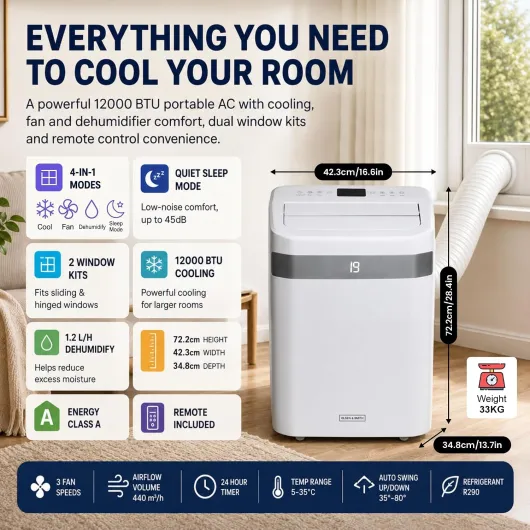
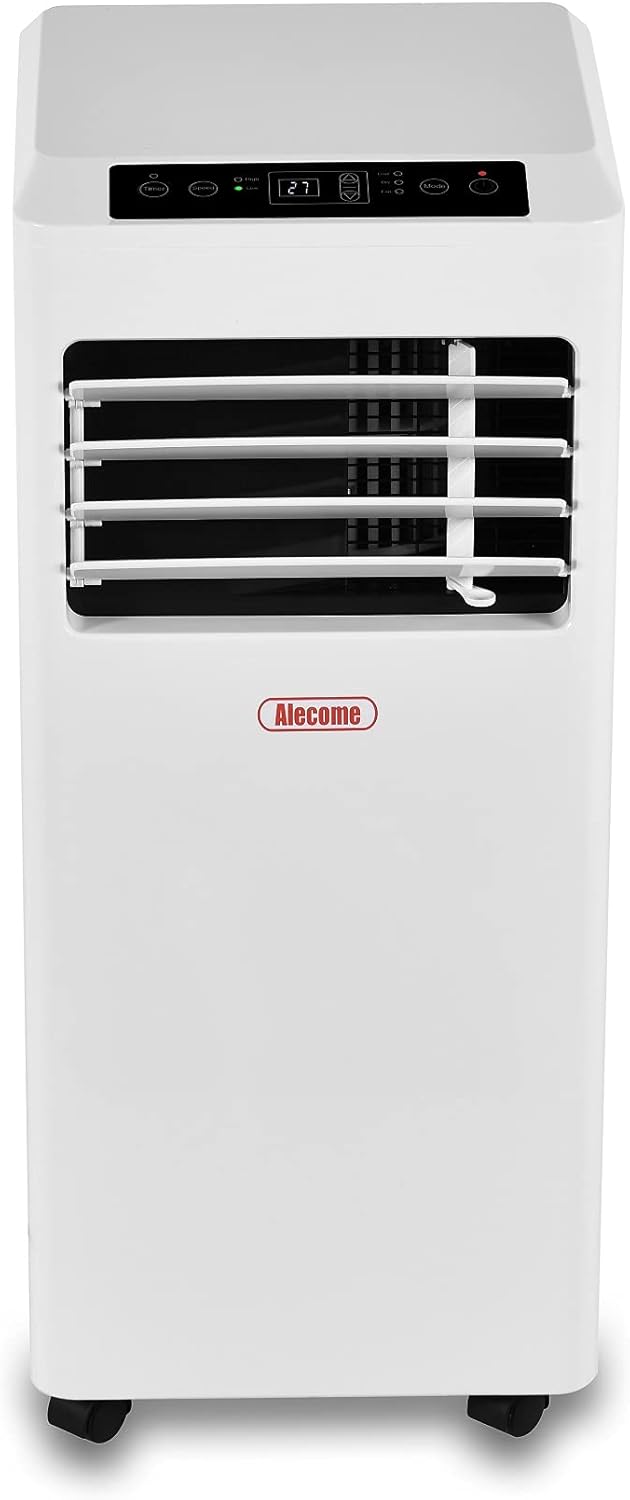
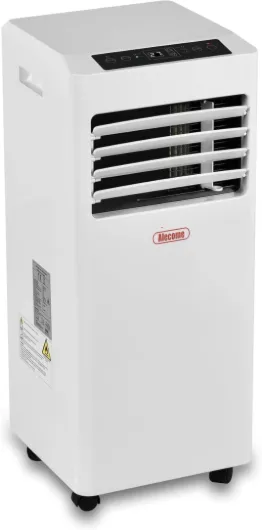
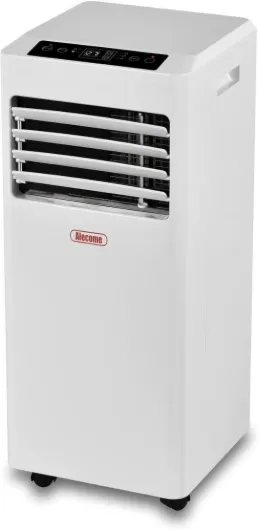
Design-wise, this thing is pretty simple: tall rectangular tower, air intake at the back and front, cold air blowing from the top front, and the hot air hose plugging into the back. The dimensions are roughly 70 cm high and about 33.5 x 32.5 cm footprint, so it doesn’t take a huge amount of floor space. It’s on four small casters, so you can roll it between rooms as long as you don’t have thick carpets everywhere. The overall look is generic white appliance, the kind of thing that just blends into a corner.
Where the design shows its limits is in how it handles heat. The exhaust hose gets really warm during use, we’re talking well above body temperature. If that hose runs across part of the room or close to the intake, you’re basically reheating the air you’re trying to cool. One Amazon reviewer even mentioned the hose radiating a lot of heat and throwing off the thermostat, and I agree. If you want decent performance, you either keep the hose as short and straight as possible or wrap it in some cheap insulation. Otherwise you’re wasting a chunk of the cooling power.
Another design quirk: like all single-hose portable ACs, it pulls air from the room, cools part of it, and pushes hot air outside. That means you’re constantly expelling indoor air, which then gets replaced by warm air sneaking in through gaps, doors, or other windows. This is not a defect of this specific model, it’s just how this type of AC works. But it does mean you never get the same efficiency as a proper split system or even a dual-hose portable unit. You can feel a slight draft under doors if the house isn’t sealed well.
The body itself also gets warm in the lower half where the compressor is sitting. If you run a hand along the sides after an hour, you’ll feel it. Again, normal for a one-piece design, but it means some of the heat you’re removing from the room is coming right back through the plastic shell. If you’re picky, you could add some reflective foil or insulation on the sides, but most people will just live with it. So overall: design is practical and compact, but not very optimized for minimizing heat loss or noise.
Comfort: cool air, loud fan
On comfort, I’d split it into two parts: how well it cools you, and how tolerable the noise is. In terms of cooling, I was honestly pretty happy. In a 12–14 m² bedroom with the door closed and the window kit installed properly, it dropped the temperature from about 26–27 °C to around 20 °C in a couple of hours. If I start it earlier, before the room turns into an oven, it keeps everything at a steady 22–23 °C without any trouble. You really feel the cold airflow if you’re within a couple of meters of the front vent. For sleeping, I usually set it to 23–24 °C and point the vents slightly away from the bed so it’s not blasting straight at my face.
Noise is the trade-off. On high fan speed, it’s roughly like having a big 16–20 inch fan plus the deeper hum of a compressor. You can still watch TV, but you’ll raise the volume a bit. For working at a desk, it’s okay if you’re not on calls all day. For sleeping, it depends on how sensitive you are. I can sleep with it on low or sleep mode, but it’s definitely not quiet. A few users compared it to hotel room AC noise, and that’s pretty accurate. If you’re expecting near-silent operation, this isn’t going to make you happy.
The airflow direction is adjustable up and down, but not a lot left to right unless you physically turn the unit. There’s no fancy oscillation, just manual louvers. The air itself is properly cold in Cool mode; I had readings around 11–13 °C right at the vent when the room was hot. That’s enough to chill you quickly if you sit in front of it. In Fan-only mode, it’s just a regular fan with no cooling, decent for mild days when you don’t want to waste power.
For night-time comfort, the sleep mode helps a bit, but the basic problem is still the same: it’s a portable AC, and portable ACs are not quiet devices. If your priority is silence, you’re better off with a fixed split system. If your priority is not sweating through your sheets, this will do the job, as long as you accept the fan noise as background hum.
Build quality and durability: feels okay, but clearly budget
In terms of build, this Alecome unit feels like a typical mid-budget Chinese portable AC. The plastic shell is not premium, but it’s not flimsy either. You can push on the sides and it doesn’t creak excessively. The wheels roll fine on hard floors and thin carpets. The hose is the usual flexible plastic you get on most portable units: it works, but if you bend it too aggressively or move it a lot, it’ll probably wear over a couple of years. If you treat it gently and don’t constantly yank the unit by the hose, it should last a while.
The buttons and the LCD screen feel basic but functional. I didn’t notice any wobble or misaligned parts. The remote is light and feels cheap, but it does the job: buttons click, the signal works from a few meters away, and the battery compartment isn’t a nightmare to open. I can’t speak to long-term electronics durability yet, but nothing in the design screams “this will die in six months”. It’s more like: this is a budget appliance, expect a few years of use if you don’t abuse it.
A couple of Amazon users mentioned some water leakage at the bottom. That suggests the internal seals or the drain plug area aren’t perfect. I didn’t get a full puddle, but I did see some minor moisture around the lower drain after long use. My take: if you plan to run it for hours in a very humid environment, just hook the drain hose and direct it into a container. That way you’re not relying purely on the built-in evaporation system and rubber plug.
Long term, the main weak points on these units are usually the hose, the plastic window parts, and the fan/compressor noise increasing with age. This one doesn’t feel worse than other brands in that sense. For the price range, build quality is acceptable, nothing special but not junk. Just don’t expect the same lifespan as a high-end split system. If it gives you a few summers of reliable use, it’s basically done its job.
Performance and energy use: decent cooling, typical portable AC efficiency
On paper, this unit looks quite efficient: Class A energy label, SEER of 18, and R290 refrigerant which is supposed to be more eco-friendly and efficient. In reality, it still behaves like a standard single-hose portable AC, so don’t expect it to be super cheap to run if you leave it on all day. You’re powering a 2300W device plus dealing with the usual air loss through the hose. That said, compared to older portable units I’ve used, it does seem to cool a bit faster for the same size and feels slightly less wasteful, especially if you use the timer and don’t just blast it 24/7.
The three fan speeds let you play with the performance/noise balance. On high, you get the best cooling speed but also the loudest operation. On low or sleep, it still cools but more slowly, so I usually use high in the afternoon and drop it to low at night. The 24-hour timer is handy: you can set it to start an hour before you get home or shut off in the middle of the night to save power. The remote makes that easy enough, no need to lean over the unit.
Compared to a proper split AC, this will always be less efficient because the compressor and all the heat are sitting inside the room and you’re sucking indoor air out of the house. That’s not a specific flaw of this model, it’s just the nature of portable ACs. If your electricity is expensive and you plan to run AC every day for months, a split system is a better investment. If you just need something for a few hot weeks a year, this is a reasonable compromise between cost and performance.
One thing I liked is that under continuous use, it didn’t trip breakers or behave weirdly. No random shutdowns, no strange smells, just consistent operation. The body gets warm at the bottom, the hose gets very hot, the air coming out is cold, and the room slowly cools down. That’s basically what you want from a unit in this price range: no drama, steady performance, acceptable power draw if you use it smartly.
What you actually get out of the box
Out of the box, the Alecome R290 looks like most generic portable air conditioners: a white plastic block on wheels, a flexible exhaust hose, and a couple of window adapters. Nothing fancy, but the basics are there. You get the main unit, the 15 cm diameter exhaust hose, the connectors for the hose, a plastic window panel for sliding windows, a fabric window seal kit for hinged windows, a small water drain hose, and a simple remote control. No surprises, no extras, just the stuff you need to get it running.
The controls on the top are straightforward: you’ve got buttons for power, mode (Cool/Dry/Fan), temperature up/down, fan speed, and timer. The temperature range is 16–32 °C. Fan speeds are basically high, low, and a kind of sleep/quiet mode. The LCD screen is basic but readable, even from across a small room. The remote copies all the main functions, and in my case it worked from the bed or sofa without having to point it perfectly at the unit.
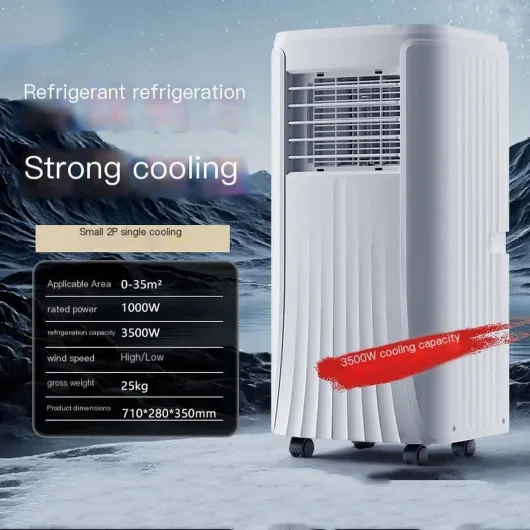
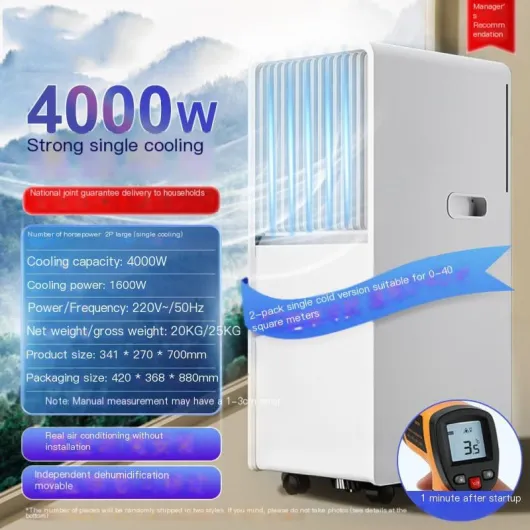
The unit is rated at 8000 BTU (about 0.6 tons) and 2300W, with a Class A energy label. On paper they say it’s good up to about 20 m². In reality, I’d say it’s comfortable up to that size if the room isn’t an oven and you keep doors and windows closed. In a bigger open-plan area, it’ll still help but you’ll never get that real cold feeling, more like “less hot” than “properly cool”.
Overall, the presentation is very no-nonsense. It feels like a typical Chinese-made unit rebranded under Alecome. The manual is usable but a bit basic, and the window fabric kit instructions need a bit of trial and error. But if you’ve ever installed a portable AC before, you’ll get it running in 20–30 minutes. It’s clearly designed to be plug-and-play, not something you obsess over.
Effectiveness: it cools properly if you set it up right
In terms of pure effectiveness, this Alecome R290 does what an 8000 BTU portable AC is supposed to do. For small to medium rooms, it cools them down to a comfortable level as long as the room is reasonably closed off and the sun isn’t blasting directly through a huge window all day. I tried it in a roughly 20 m² living room during a 30 °C day. With curtains half closed and the door shut, it kept the room around 23–24 °C after a couple of hours, which is totally fine for sitting around and watching TV without sweating.
The thermostat is okay but not super precise. Like another reviewer mentioned, the intake can suck in slightly warmer air if the hot exhaust hose runs near it, so sometimes the unit keeps cooling below the temperature you set because it “thinks” the room is warmer than it is. I noticed this when I set it to 24 °C and the actual room thermometer showed 21–22 °C. Not a huge problem, but worth knowing. If you route the hose away from the intake and keep it short, this effect is less obvious.
Dehumidifying is built into the cooling mode, and it does pull moisture out of the air. Most of the time, the condensed water is evaporated and sent out with the hot exhaust, so you don’t have to empty a tank constantly. In very humid conditions, you might get some water buildup, and a couple of users mentioned small leaks at the bottom. I didn’t have a big leak, but I did notice some condensation near the drain area after long runs. If you’re worried, just hook up the included drain hose to the lower port and route it to a bucket or drain, especially in a basement or very humid room.
So overall, effectiveness is pretty solid for the price. It won’t turn a poorly insulated loft into an ice box, but for normal bedrooms, small living rooms, or home offices, it gets the job done. Just don’t ignore the basics: seal the window properly, keep doors closed, keep the hose short, and don’t expect miracles in a giant open space.
Pros
- Cools small to medium rooms effectively when the window is sealed and doors are closed
- Simple controls and remote, easy to set up and move around on its wheels
- Good price-to-performance ratio for occasional summer use with R290 refrigerant and Class A rating
Cons
- Quite noisy, especially on high fan speed, which can bother light sleepers
- Single-hose design wastes some energy and pulls warm air into the home from outside
- Hot exhaust hose and warm lower body radiate heat back into the room, reducing efficiency slightly
Conclusion
Editor's rating
The Alecome R290 8000BTU portable air conditioner is a simple, effective way to cool small and medium rooms without committing to a full split system. It’s not pretty, it’s not quiet, but it pushes out genuinely cold air and can drop a bedroom from the mid‑20s to around 20 °C if you give it some time and seal the window properly. The controls are basic but clear, the remote is handy, and the included window kits (rigid panel plus fabric seal) mean most people can get it running without buying extra parts.
On the downside, it has all the usual flaws of single-hose portable ACs: the exhaust hose gets very hot and bleeds heat back into the room, the unit pulls indoor air out so warm air sneaks in from elsewhere, and the compressor sits inside the room, adding extra warmth and noise. It’s also loud enough that light sleepers may struggle with it running at night, even on the lower fan settings. Build quality is decent for the price but clearly budget, and you might want to use the drain hose in very humid conditions to avoid minor leaks.
If you’re looking for a practical, budget-friendly way to survive heatwaves in a flat, rented place, or a small house, this is a solid option. It suits people who care more about not sweating than about perfect silence or top-tier efficiency. If you want quiet operation, use AC daily for long periods, or are very focused on power consumption, you should probably skip this and look at a proper split system or at least a higher-end dual-hose unit.