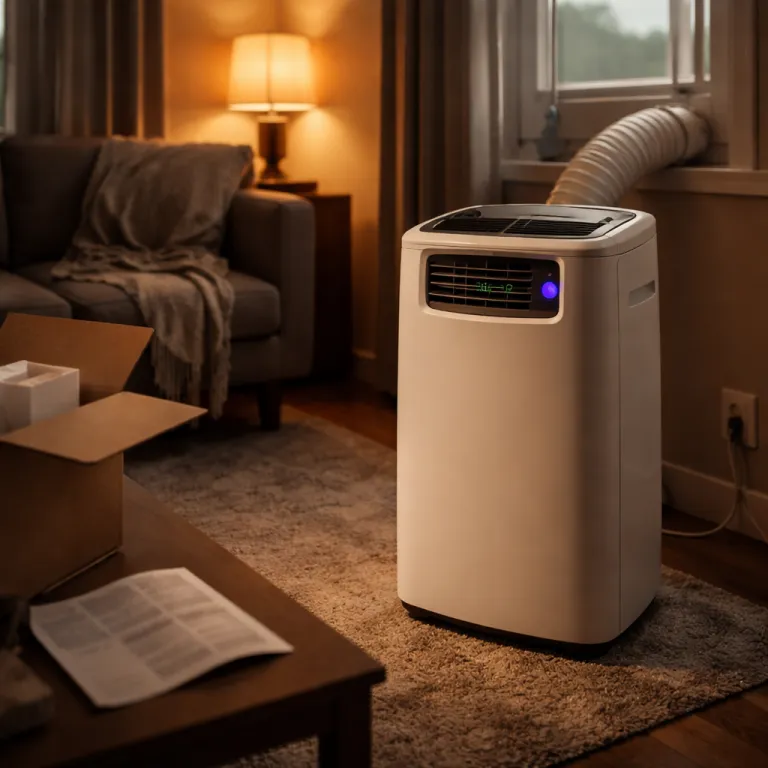
Why portable air conditioner SACC BTU explained matters more than the box number
Portable air conditioners promise big cooling capacity numbers, but your room often stays sticky. The gap between the advertised BTU rating and the real SACC rating is where most first time buyers lose both comfort and money. When you see a portable air conditioner with 14 000 BTUs on the box, you are usually looking at an ASHRAE rating measured under conditions your flat will never see.
ASHRAE testing assumes controlled air conditions, low humidity, and no hot infiltration air sneaking in through gaps. A typical single hose portable air conditioner pulls in hot corridor or street air to replace what it exhausts, so part of its cooling capacity is wasted fighting its own design. That structural flaw is why the U.S. Department of Energy (DOE) pushed the industry toward the Seasonally Adjusted Cooling Capacity (SACC) metric in its 2016–2017 portable AC rulemaking, which adjusts for duct losses, infiltration, and on off cycling over the hour under the DOE test procedure (10 CFR Part 430, Appendix CC).
Seasonally Adjusted Cooling Capacity, or SACC, is expressed in BTUs per hour just like the old ASHRAE BTU rating, but it reflects realistic room conditions. In practice, a portable air conditioner with a 14 000 BTU ASHRAE rating might deliver only 9 000 to 10 000 SACC BTU, which is an entire size tier lower. When you read portable air conditioner SACC BTU explained on spec sheets, you are really seeing two rating systems fighting for your attention, and only one of those ratings tells you how cool your room will feel at 3 pm in August.
The key is to treat the SACC rating as the engineer’s honest note and the ASHRAE rating as the marketing headline. For single hose portable ACs, assume the SACC BTU will be roughly 30 percent below the ASHRAE BTU ratings, while dual hose units usually lose closer to 15 to 20 percent. Those ranges line up with DOE’s own test data in the portable air conditioner technical support documents, which show large drops from nameplate capacity once duct and infiltration losses are included.
Budget buyers working under 400 dollars should ignore the biggest number and hunt for the SACC ratings buried lower on the page. Many retailers list the ashrae sacc pair together, but they rarely explain how the rating system works or why the lower SACC rating is the one that matters. If you remember nothing else from this portable air conditioner SACC BTU explained guide, remember this one sentence rule for shortlisting portable air conditioners: ignore the nameplate BTU rating, buy on SACC BTU instead.
Room size, BTUs per hour, and the real cooling capacity you actually feel
Room size is where most people start, and it is also where most people go wrong. A 25 square metre bedroom with average ceiling height and moderate humidity needs around 7 000 to 8 000 SACC BTUs per hour, not the 10 000 or 12 000 ashrae btu number splashed across many portable air conditioners. When you see a compact 5 000 BTU air conditioner guide, such as the one in this small room BTU sizing article, remember that those figures usually refer to traditional window units, not portable acs with hose losses.
Portable air conditioners work harder because they sit inside the room and exhaust hot air through a hose, which drags in replacement air from under the door or through cracks. That infiltration air can be 30 degrees Celsius or more during a heat wave, so part of the unit’s cooling capacity is constantly spent on new heat entering the room. This is why a portable air conditioner with a 10 000 BTU ashrae rating might only deliver 6 500 to 7 000 SACC BTU under real conditions, especially in a west facing living room with strong afternoon sun.
For a budget first time buyer, the practical move is to map room size directly to SACC BTU, not to the inflated ashrae rating. A 15 square metre office or bedroom usually pairs well with a unit around 6 000 to 7 000 SACC BTUs hour, while a 25 to 30 square metre lounge often needs 9 000 to 10 000 SACC BTU. If your room has poor insulation, high ceilings, or heavy electronics, treat those as extra load and move up one SACC rating band rather than trusting the old ratings ashrae tables.
To make that mapping concrete, here is a simple example sizing table you can adapt to your own flat:
| Room area (m²) | Typical use | Suggested SACC BTU range |
|---|---|---|
| 10–15 | Small bedroom or office | 6 000–7 000 SACC BTU |
| 20–25 | Medium bedroom or study | 7 000–8 500 SACC BTU |
| 25–30 | Lounge or open plan studio | 9 000–10 000 SACC BTU |
Humidity also matters because portable air conditioners must remove moisture as well as heat, and latent cooling quietly eats into the headline BTU rating. In a coastal flat with 70 percent relative humidity, a portable air conditioner spends more of each hour condensing water on its coils, which reduces the sensible cooling capacity that actually lowers air temperature. That is another reason why SACC ratings, which bake in realistic humidity and cycling, are a better guide than raw btu ratings when you are trying to sleep in a damp bedroom.
Think of the ashrae rating as the lab score and the sacc rating as the street score. Your goal is not to win a laboratory test but to keep a specific room at 24 to 26 degrees Celsius during a heat wave without running the unit flat out all day. Matching SACC BTU to room size, rather than chasing the biggest ashrae sacc number, is how you get there without overspending on both the unit and the ongoing energy use.
Single hose versus dual hose: how the hose design rewrites your BTU math
Hose design is the quiet villain in most portable air conditioner SACC BTU explained stories. A single hose portable air conditioner uses room air to cool its condenser, then throws that air out the window, which forces the room to suck in hot replacement air from somewhere else. That constant stream of infiltration air means a single hose unit with a 14 000 ashrae btu rating might deliver only 9 000 SACC BTU, while a dual hose unit with the same ashrae rating can hold closer to 11 000 or 12 000 SACC BTU.
Dual hose portable air conditioners use one hose to pull in outside air for cooling the condenser and a second hose to exhaust it, so they do not depressurise the room as much. That design change reduces the amount of hot corridor or outdoor air sneaking in through gaps, which directly improves effective cooling capacity and SACC ratings. In practice, a dual hose unit with a lower ashrae rating can outperform a larger single hose unit because its SACC BTU stays closer to the nameplate figure across a range of conditions.
If you are cooling a 30 square metre living room with a lot of glass, a dual hose portable air conditioner with around 10 000 to 11 000 SACC BTUs hour is usually a safer bet than a 14 000 BTU single hose model with only 9 000 SACC BTU. That is why serious BTU by room type guides, such as this room specific BTU planning resource, increasingly reference SACC BTU rather than just ashrae rating numbers. When you compare portable acs, always ask whether the quoted btu rating is ashrae or SACC, then adjust your expectations based on whether the unit is single hose or dual hose.
Hose length and diameter also affect performance, because longer or crushed hoses increase resistance and reduce airflow. A portable air conditioner with a narrow, extended hose may show the same ashrae sacc pair on paper, but in a real flat with a 2 metre run to the window, its effective SACC BTU can drop further. Keeping the hose as short and straight as possible, and avoiding unnecessary bends, helps the unit hit something closer to its rated SACC btu in your room.
For renters who cannot modify windows much, a well sealed window kit is almost as important as the raw SACC rating system number. Any gaps around the hose let hot outdoor air leak back in, which quietly erodes the cooling capacity you paid for and forces the unit to run longer each hour. When you add up hose design, window sealing, and infiltration air, the difference between single hose and dual hose portable air conditioners becomes a real comfort gap, not just a spec sheet curiosity.
How to read spec sheets, avoid BTU traps, and pick one unit that actually works
Spec sheets for portable air conditioners are written to sell units, not to help you understand portable air conditioner SACC BTU explained in plain language. Retailers often highlight the ashrae btu rating in large type, then tuck the SACC rating three scrolls down under a technical heading. On many product pages, you will find the honest SACC btu figure only after expanding a hidden specifications table or reading the fine print near the energy label.
Start by scanning for the words Seasonally Adjusted Cooling Capacity or SACC, then note that number in BTUs per hour before you look at anything else. Treat that SACC rating as the real cooling capacity and map it to your room size, insulation level, and humidity, using conservative assumptions rather than optimistic ones. If a unit lists only an ashrae rating with no SACC ratings, assume the SACC BTU is at least 25 to 35 percent lower for a single hose design and 15 to 25 percent lower for a dual hose design.
Next, look at the energy efficiency metrics such as CEER, which tell you how many BTUs of cooling you get per watt hour of electricity. A portable air conditioner with a slightly lower SACC BTU but a higher CEER can cost less to run over a long heat wave, especially if you are using it for eight to ten hour btus of operation each day. For a budget buyer, that balance between SACC BTU, CEER, and purchase price matters more than chasing the highest ashrae rating on the shelf.
Noise, drainage, and build quality also separate good conditioners from forgettable ones, and they rarely show up in the headline ratings ashrae tables. Before committing, read at least a handful of long term user reviews that mention how the unit behaves after two summers, whether the hose or window kit feels flimsy, and how often they need to empty the condensate tank in high humidity. When you are ready to shortlist specific models that will still be available during a heat wave, a curated guide such as this pre season portable AC picks overview can save you from panic buying whatever is left in stock.
Once you have chosen a unit, install it with care so that the real world SACC BTU matches the lab figure as closely as possible. Keep the hose short and straight, seal the window kit tightly, shade the room where you can, and clean the air filters monthly to maintain airflow and cooling capacity. The BTU on the box is the marketing team; the SACC rating is the engineer.
Key figures on portable air conditioner BTU and SACC performance
- For portable air conditioners sold in the United States, the Department of Energy requires SACC ratings for most new units, and typical SACC BTU values are 25 to 35 percent lower than the corresponding ashrae btu ratings for single hose designs, based on DOE test procedure data published with the 2016 portable AC energy conservation standards.
- Independent lab testing of popular 14 000 BTU ashrae rating single hose portable acs has found effective SACC BTU outputs around 9 000 to 10 000 BTUs per hour, which aligns with a full size tier drop in cooling capacity compared with the nameplate figure; Consumer Reports and similar labs have reported this pattern repeatedly in their comparative reviews.
- Dual hose portable air conditioners generally retain a higher fraction of their ashrae sacc pairing, with SACC BTU values often only 15 to 20 percent below the ashrae rating, because they reduce infiltration air losses through balanced intake and exhaust hoses.
- Energy use for a mid range 10 000 SACC BTU portable air conditioner typically falls between 900 and 1 200 watts during active cooling, which means running the unit for eight hours per day can add roughly 7 to 10 kilowatt hours to daily consumption, depending on cycling and room conditions; this aligns with DOE’s representative input power levels for units in the 8 000 to 12 000 SACC BTU band.
- Field measurements in small flats and studio rooms have shown that improving window kit sealing and shortening the exhaust hose can raise effective cooling capacity by several hundred BTUs per hour, enough to lower indoor temperature by 1 to 2 degrees Celsius during peak heat, even when the ashrae btu and SACC ratings on the label stay the same.