Why high efficiency HVAC thinking matters for portable air conditioners
Portable air conditioners look simple, yet their real-world efficiency can vary dramatically. When you apply high efficiency HVAC thinking to a single portable unit, you treat it like a miniature hvac system inside a larger building, with the same focus on energy use, indoor comfort, and long term costs. This mindset helps you judge how the system handles heat removal, air circulation, and room comfort rather than just chasing the lowest purchase price.
Engineers design full hvac systems for commercial buildings to balance heating, cooling, air quality, and operating costs, and you can borrow those principles at home. A portable air conditioner is still a complete cooling system that moves heat from indoor air to the outside, so its efficiency depends on how well it limits heat gain from windows, walls, and other parts of the building. Thinking in terms of energy efficiency rather than raw power leads to lower electricity bills and better indoor comfort over the long term.
High efficiency in this context means getting the same cooling with less energy, less noise, and less maintenance. Instead of focusing only on high advertised BTU numbers, you look at how the system performs in real indoor conditions, how effectively it expels hot air, and how well it maintains stable indoor air temperature and humidity. That is exactly how professionals compare one hvac system to another in both homes and commercial buildings, using standardized test methods such as the AHAM SACC procedure to reflect realistic performance.
Understanding energy efficiency and real operating costs
For a person seeking information, the first priority is usually energy costs. A portable air conditioner that follows high efficiency HVAC principles will use less electricity for the same cooling, which directly reduces energy bills and long term operating costs. To judge true efficiency, you need to look beyond marketing labels and estimate how many kilowatt hours the system will use during a typical heat wave.
Energy efficiency ratings such as EER or CEER show how much cooling you get per unit of energy, and higher numbers usually mean a more efficient system. When you compare two hvac systems or a portable unit against a window unit, always translate those ratings into estimated monthly costs using your local electricity price, because that is how professionals evaluate energy savings in both homes and commercial buildings. For example, if a unit draws 1.2 kW and runs 8 hours a day, it uses about 9.6 kWh daily; at $0.20 per kWh, that is roughly $1.90 per day or about $57 for a 30 day hot spell.
To see how daily use affects costs in practice, imagine a similar model with a higher CEER that uses only 1.0 kW for the same cooling. Over the same 8 hour day, it would consume about 8 kWh, or $1.60 at $0.20 per kWh, saving nearly $9 per month during a long heat wave. That kind of simple energy math mirrors how hvac engineers model operating costs and energy savings for larger hvac systems in commercial buildings. The United States Department of Energy and ENERGY STAR both encourage this type of kWh-based comparison because it reveals real operating costs instead of just nameplate ratings.
BTU ratings, heat removal, and why high numbers can mislead
Portable air conditioners are sold on big BTU numbers, yet those numbers often misrepresent real heat removal. In high efficiency HVAC design, professionals care more about how effectively a system moves heat out of indoor air under realistic conditions than about theoretical maximums. The same logic applies to portable units, where duct losses, air leaks, and poor placement can slash effective cooling capacity.
Manufacturers now publish SACC, the Seasonally Adjusted Cooling Capacity, which better reflects how the system performs in a real building. SACC is defined by the AHAM test method and accounts for the heat that flows back into the room through the exhaust hose and the extra heat pulled in from outside air, so it is a more honest measure of efficiency for both single hose and dual hose systems. This mirrors how hvac systems in commercial buildings are sized using realistic load calculations rather than simple rule of thumb BTU per square metre.
To see how the number on the box can differ from real performance, consider a unit advertised at 14,000 BTU with a SACC of only 8,000 BTU. In practice, you should size it as an 8,000 BTU system when matching it to room area and heat load. That kind of careful interpretation reflects the same efficiency thinking used when comparing split system heat pumps, efficiency furnaces, or any other hvac system. Once you focus on SACC and not just headline BTU, you can choose a more efficient system that delivers reliable indoor comfort without wasting energy.
Design choices that shape efficiency, comfort, and air quality
Several design details determine whether a portable air conditioner behaves like a high efficiency hvac system or a noisy energy drain. The most important are hose configuration, variable speed operation, filtration quality, and how the system manages indoor air and condensate. Each of these elements affects energy efficiency, indoor comfort, and long term maintenance costs.
Dual hose systems usually perform more efficiently than single hose systems because they reduce the amount of cooled indoor air that is expelled outside, which lowers the heat load on the building. When less cooled air is lost, the system does not need to work as hard, so you gain energy savings, lower operating costs, and more stable indoor air temperature, especially in high heat conditions. This is the same principle used in balanced hvac systems for commercial buildings, where controlled ventilation protects both energy efficiency and air quality.
Variable speed compressors and fans, common in modern split system heat pumps, are now appearing in some portable units. A variable speed design lets the system modulate output instead of cycling on and off, which improves efficiency, reduces energy use, and keeps indoor comfort more consistent. Better filtration also helps indoor air quality, and when filters are easy to access, routine maintenance becomes simpler and cheaper over the long term. In smaller rooms or mild climates, a well sealed single hose model can still be acceptable, especially where dual hose options are limited, but it becomes even more important to minimize air leaks and manage window kit installation carefully.
Using high efficiency HVAC logic to choose the right portable unit
Choosing a portable air conditioner through the lens of high efficiency HVAC means starting with the building, not the box. You evaluate the room’s heat gains from windows, occupants, and equipment, then match a system that can handle that load with the lowest realistic energy use. This approach mirrors how hvac systems are sized for both homes and commercial buildings.
First, measure the room area in square metres and note ceiling height, insulation quality, and sun exposure. A south facing room with poor shading and many devices will need more cooling capacity and a more efficient system than a shaded, well insulated space of the same size, because the heat load is higher. Next, look for a portable unit with strong SACC, an energy efficient design, and features such as variable speed fans, programmable timers, and sleep modes that reduce energy use when full power is not needed.
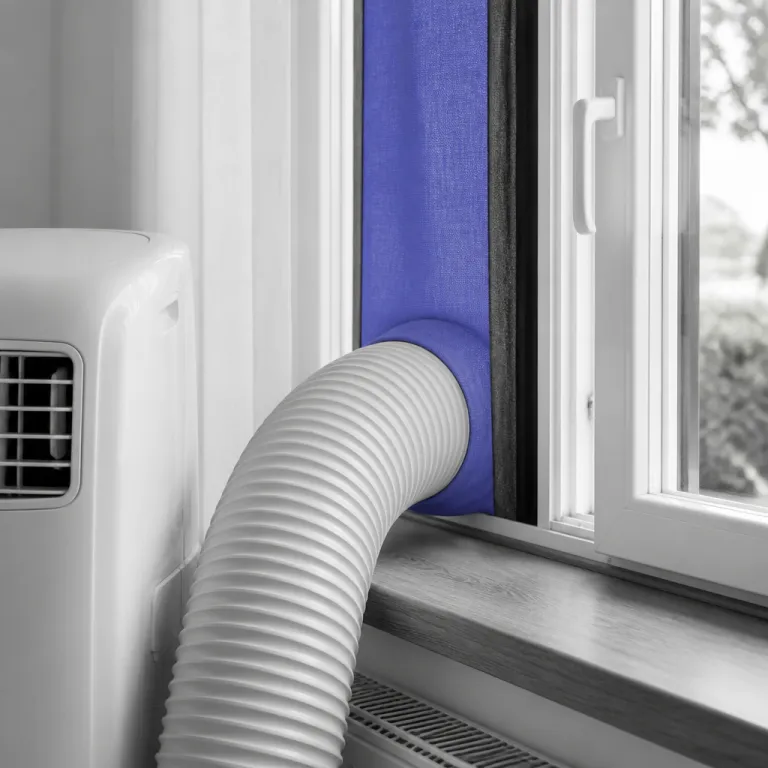
Placement also matters for efficiency and indoor comfort, because a poorly placed unit can waste energy and still leave hot spots. Keep the exhaust hose as short and straight as possible, seal gaps around the window kit to reduce energy loss, and avoid blocking air intake or discharge with furniture. To turn this into a simple selection flow, first confirm room size and heat load, then shortlist models with suitable SACC and CEER, and finally compare estimated kWh per day and noise levels before you buy, using the same efficiency criteria applied in professional hvac system selection.
Managing maintenance, heating cooling strategies, and long term costs
Even the most efficient portable air conditioner will waste energy if you neglect maintenance. High efficiency HVAC practice treats cleaning, inspection, and filter replacement as essential tools to reduce energy use and protect indoor air quality. You should apply the same discipline to your portable system if you want reliable indoor comfort and lower long term costs.
Clean or replace filters regularly to keep airflow high, because restricted air movement forces the system to run longer and raises operating costs. Check the exhaust hose and window kit for leaks that let hot outdoor air back into the building, since those leaks increase the heat load and undermine energy savings in exactly the same way they would in larger hvac systems. Drain condensate as required, or ensure the self evaporative function is working correctly, because excess moisture can reduce cooling efficiency and harm indoor air quality over time.
Think of your portable unit as part of a broader heating cooling strategy for the building rather than a standalone gadget. Use it to support an existing hvac system during extreme heat, to cool only occupied rooms, or to delay expensive upgrades to central systems, which can all reduce energy bills and protect efficiency furnaces or heat pumps from excessive wear. When you manage the system this way, you gain high efficiency performance, better indoor comfort, and more predictable long term costs.
Key efficiency concepts from whole building HVAC applied to portables
Professionals who design high efficiency HVAC systems for commercial buildings rely on a few core ideas that translate directly to portable air conditioners. They focus on the building as a whole, the balance between heating and cooling, and the way each system interacts with indoor air and occupants. You can use the same concepts at home to get more comfort from less energy.
First, every building has a thermal envelope that either resists or leaks heat, and portable units work far better in efficient buildings with good insulation and shading. Improving the envelope by sealing gaps, adding blinds, or using reflective films can reduce energy demand so that a smaller, more efficient system can maintain indoor comfort with lower operating costs. Second, professionals treat each hvac system as part of a network, so they coordinate portable units with central systems, fans, and even window opening strategies to reduce energy use without sacrificing comfort.
Finally, they always evaluate systems over the long term, not just at purchase. A slightly more expensive, energy efficient portable unit with a variable speed compressor, robust components, and easy maintenance can deliver high efficiency performance for many seasons, while a cheaper, inefficient model may drive up energy bills and fail early. Findings from organizations such as the International Energy Agency and Lawrence Berkeley National Laboratory show that improving the efficiency of small hvac systems contributes meaningfully to lower electricity demand, so thinking like an hvac engineer helps you choose systems that respect both your budget and the energy footprint of your building.
Key figures on portable air conditioner efficiency and costs
- According to the United States Department of Energy’s ENERGY STAR program, room air conditioners, including portable units, can use around 10 to 20 % less energy when they carry the ENERGY STAR label compared with standard models, which highlights the impact of choosing an energy efficient system.
- Field studies from the Lawrence Berkeley National Laboratory on residential cooling equipment have shown that poor installation and air leakage can reduce effective cooling capacity of portable and window units by roughly 10 to 30 %, which means careful sealing and hose management are essential for real world efficiency.
- Data from the International Energy Agency’s 2018 “Future of Cooling” report indicate that space cooling accounts for nearly 10 % of global electricity demand, so improving the efficiency of small hvac systems such as portable units contributes meaningfully to overall energy savings.
- Utility program evaluations in several European countries during the past decade have reported payback periods of roughly three to five cooling seasons when consumers replace inefficient cooling equipment with higher efficiency models, demonstrating that long term operating cost reductions can outweigh higher purchase prices.
FAQ about high efficiency HVAC principles and portable air conditioners
How can I tell if a portable air conditioner is truly efficient ?
Look for a high CEER rating, a strong SACC value, and features such as variable speed fans or compressors that reduce cycling. Check whether the unit meets ENERGY STAR criteria, which indicate better energy efficiency than standard models. Finally, estimate annual operating costs using your local electricity price and expected hours of use to see how the system will affect your energy bills.
Are dual hose portable air conditioners more efficient than single hose models ?
Dual hose designs usually perform more efficiently because they draw outdoor air for cooling the condenser and return it outside, which reduces the loss of cooled indoor air. This lowers the pressure difference between indoors and outdoors, so less hot air infiltrates the building. As a result, the system can maintain indoor comfort with less energy use and lower operating costs.
How does room size affect the efficiency of a portable unit ?
If the unit is undersized for the room, it will run constantly, struggle to remove enough heat, and still leave you uncomfortable. An oversized system will cycle on and off frequently, which wastes energy and can lead to uneven temperatures and poor humidity control. Matching SACC capacity to the room’s size and heat load is essential for high efficiency performance.
What maintenance tasks have the biggest impact on energy savings ?
Regularly cleaning or replacing air filters has the largest impact, because clogged filters restrict airflow and force the system to run longer. Keeping the exhaust hose short, straight, and well sealed also preserves efficiency by reducing heat gain from outside air. Periodically checking for leaks around the window kit and ensuring condensate drains correctly will further protect both energy efficiency and indoor air quality.
Can a portable air conditioner work with my existing HVAC system to reduce costs ?
Yes, many households use portable units to cool only occupied rooms while setting the central hvac system a few degrees higher. This zoning strategy can reduce energy use across the whole building, especially during peak heat, while still maintaining acceptable indoor comfort. It can also relieve stress on central systems such as heat pumps or efficiency furnaces, potentially extending their service life.
