Who a 10,000 BTU portable air conditioner really suits
A 10,000 BTU portable air conditioner sounds powerful on the box. In reality this type of portable air conditioning unit usually delivers around 6,500 BTU SACC (Seasonally Adjusted Cooling Capacity), which means it cools a typical 23 to 32 m² room when the insulation and sun exposure are reasonable. U.S. Department of Energy SACC test procedures show that this adjusted figure better reflects real-world performance than the older ASHRAE rating. For a budget first time buyer trying to cool a small living room or bedroom, that balance of cooling output and electrical draw often works well.
Think of this 10,000 BTU portable air conditioner size as the default choice for a 300 sq ft living room, a home office with a gaming PC, or a medium bedroom that gets afternoon sun. In those spaces a single-hose portable air conditioner can push enough cold air to offset both the warm air leaking through walls and the heat from electronics, while still staying under about 1,100 W of power draw on a standard 120 V, 15 A circuit. That means you can usually run the portable unit, a monitor, a router and a desk lamp together without tripping the breaker, as long as you avoid plugging in a hair dryer or space heater on the same line.
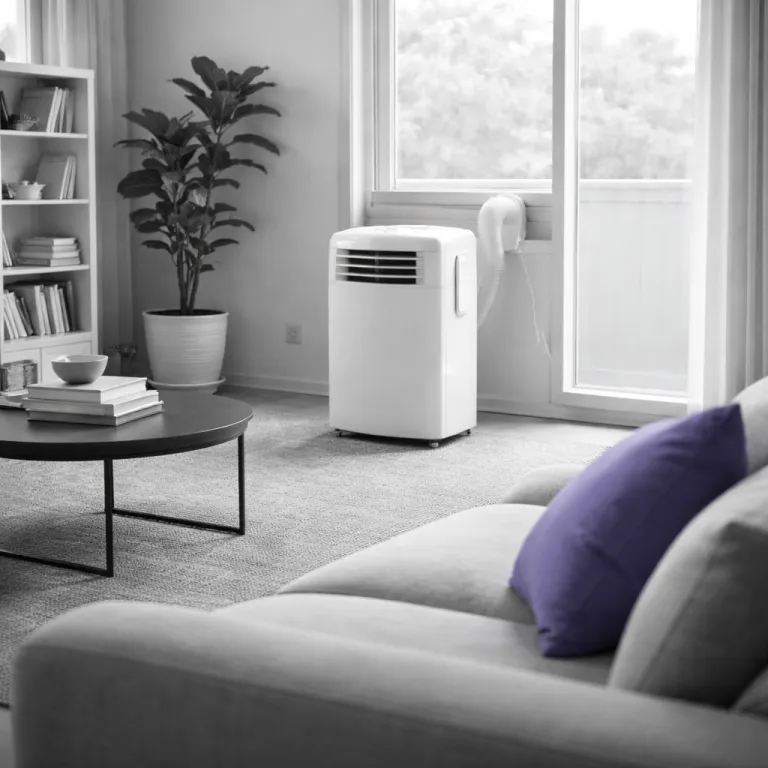
For renters who cannot install a window air conditioner, a 10,000 BTU portable air conditioner is often the best compromise between performance, price and portability. The product category is crowded, but a well designed portable air conditioner with a decent fan and a properly sealed window kit can feel surprisingly close to a small window unit in comfort. When you see a compact color white portable air conditioner with smooth casters that is easy to move between a bedroom and a living room, you are looking at the kind of unit that fits this sweet spot.
Single-hose portable air conditioners in this BTU portable range are not perfect, because they pull some warm air from other parts of the home as they exhaust hot air outside. Still, for a 25 m² room with average insulation, the trade off between simplicity and efficiency is acceptable if you keep doors closed and blinds down during the hottest hours. If your room is smaller than 20 m² and well insulated, you might even find that an 8,000 BTU portable air conditioner or a compact 7,000 BTU portable air conditioning unit with a dehumidifier fan function cools just as well for less money and less noise.
Buyers often focus on the headline BTU number and the star rating on an Amazon review, but the SACC rating and room size match matter more. A 10,000 BTU portable air conditioner with 6,500 BTU SACC will usually cool a 300 sq ft room better than a cheaper 12,000 BTU portable air conditioner with only 7,000 BTU SACC, because the latter may be louder and cycle on and off inefficiently. When you read that a product works well in a review, check whether the reviewer mentions their room size, ceiling height and whether they used the full function remote control to set a realistic temperature rather than forcing the unit to run flat out all day.
Understanding BTU, SACC and real room coverage
The most confusing part of choosing a 10,000 BTU portable air conditioner is that the BTU number on the box is not the cooling you actually feel. Manufacturers still advertise the older ASHRAE BTU rating, but the more realistic SACC rating for a portable air conditioner accounts for heat gained through the single hose and infiltration air from the rest of the home. In practice a 10,000 BTU ASHRAE portable air conditioner behaves more like a 6,500 BTU window air conditioner when you measure the temperature drop in a closed 28 m² room, as shown in DOE-backed comparative tests of portable versus window units.
For a budget buyer this matters because you might be comparing a 10,000 BTU portable air conditioner against a cheaper 8,000 BTU portable air conditioner or even a 7,000 BTU portable air conditioning unit that promises to cool 200 to 300 sq ft. A well engineered 8,000 BTU inverter portable air conditioner can sometimes match or beat a basic 10,000 BTU portable unit in real cooling power, especially if the smaller product has a better fan, a tighter window kit and a more efficient compressor. The Hisense HAP0824TWD, for example, is an 8,000 BTU inverter portable air conditioner that many testers say performs like a traditional 10,000 BTU portable air conditioner while using less electricity and producing smoother cold air.
Room size guidelines on portable air conditioners are usually optimistic, especially for single-hose designs that constantly exhaust conditioned air. Independent lab work cited by Consumer Reports and DOE technical notes indicates that single-hose portable air conditioners can lose roughly 10 to 20 % of their effective cooling capacity to warm air infiltration. In a 300 sq ft living room with a large south facing window, a 10,000 BTU portable air conditioner will keep you comfortable but may not give you the icy cold air you expect during a heat wave, particularly if the ceiling is higher than 2.4 m. If your room is on the top floor, poorly insulated or open to a warm kitchen, you should seriously consider stepping up to a 12,000 BTU portable air conditioner or a dual-hose portable air conditioner in the same price band.
When you compare models, look beyond the headline BTU portable number and check the SACC rating, the airflow in cubic metres per hour and the decibel level at low fan speed. A portable air conditioner that moves more air at a lower noise level will feel cooler in real use, because the fan distributes cold air evenly instead of creating a single cold spot near the hose. If you want to see how a smaller 7,000 BTU portable air conditioning unit with a 24 hour timer and two speed settings performs in a 200 to 300 sq ft room, a detailed test such as this 4 in 1 cooling and dehumidifier fan review can give you a useful reference point.
Remember that every portable air conditioner, whether 7,000, 8,000 or 10,000 BTU, must fight both sensible heat (the temperature you feel) and latent heat (the moisture in the air). That is why a 10,000 BTU portable air conditioner with a strong dehumidifier fan mode can feel more effective than a higher BTU portable unit that barely dries the air, especially in humid climates. When the air is drier, your skin evaporates sweat faster, so a 25 °C room with low humidity can feel as comfortable as a 23 °C room with sticky, warm air.
Single hose versus dual hose in the 10,000 BTU class
Most 10,000 BTU portable air conditioner models under 400 USD use a single-hose design. This means the unit pulls room air across the condenser to remove heat, then pushes that warm air outside through the hose, which creates a slight vacuum that draws unconditioned warm air from other parts of the home. The result is that some of the cooling power you paid for is constantly being used to offset the warm air sneaking back in under doors and through cracks.
A dual-hose portable air conditioner solves this by using one hose to pull outside air across the condenser and a second hose to exhaust the hot air, so the room stays closer to neutral pressure. In the 10,000 BTU portable air conditioner range, a dual-hose design often behaves like a larger single-hose portable air conditioner, especially in a 30 m² living room with high sun exposure. If you are trying to cool a 300 sq ft room on the top floor, a dual-hose portable air conditioner can feel like a full size window air conditioner in how quickly it delivers cold air and how stable the temperature remains.
Single-hose portable air conditioners still have advantages for renters and first time buyers. They are usually cheaper in price, lighter, and easier to set up with a basic window kit that fits most sliding or hung windows without tools, which makes them easy to move between rooms. A 10,000 BTU portable air conditioner with a single hose and a compact color white cabinet can be rolled from a bedroom to a living room in minutes, especially if the product has large wheels and side handles designed for easy move convenience.
If you are curious about how a smaller portable air conditioning unit behaves in real use, look at detailed tests of 7,000 BTU portable air conditioners with remote control, dehumidifier and fan modes. For example, this portable air conditioning unit with remote control and window kit shows how much performance you can squeeze from a smaller product when the hose seal is tight and the fan is well tuned. The same principles apply to a 10,000 BTU portable air conditioner, where a well sealed window kit and a correctly installed hose can easily make a 2 to 3 °C difference in peak afternoon temperatures.
If your budget allows and your room is larger than 28 m², it is worth reading a guide to the top dual hose portable air conditioners for large rooms before committing to a single-hose 10,000 BTU portable air conditioner. Dual-hose models like the Midea Duo series use a more advanced air path that reduces warm air infiltration and often improves energy efficiency, though they can cost more and weigh several kilograms extra. For a small bedroom or home office, however, a well chosen single-hose 10,000 BTU portable air conditioner still offers a strong balance of cooling power, noise and price.
Features that matter on a 10,000 BTU portable unit
Once you have settled on a 10,000 BTU portable air conditioner size, the next step is choosing the right product features. A good portable air conditioner is more than a box that blows cold air, because the details of the fan, controls and remote control determine how comfortable your room feels hour by hour. When you are shopping on Amazon or in a local store, focus less on marketing phrases and more on the practical features that make the unit easy to live with.
The remote for a 10,000 BTU portable air conditioner should offer full function control, including temperature, fan speed, mode selection and a 24 hour timer, so you can manage the unit from bed or a sofa in the living room. A function remote that mirrors the front panel display is easier to use in low light, and a clear digital screen helps you avoid setting the temperature too low, which wastes energy without making the air feel much cooler. Look for a remote control with large buttons and clear icons rather than a cluttered layout that makes it hard to change modes between cooling, dehumidifier fan and simple fan only operation.
Build quality matters as much as raw cooling power in a 10,000 BTU portable air conditioner. A sturdy cabinet in a neutral color white finish tends to blend into most rooms and shows dust less than glossy black plastic, while smooth rolling casters and side handles make the unit easy to move for cleaning or storage. Pay attention to how the hose attaches to the back of the portable air conditioner, because a secure bayonet style connection and a flexible but thick hose will last longer and leak less warm air than a flimsy, thin hose that kinks easily.
Noise is another critical factor, especially if you plan to sleep near your 10,000 BTU portable air conditioner. Many buyers underestimate how loud a portable air conditioner can be at high fan speed, so look for decibel ratings at low and medium speeds and read user comments about night time use. Consumer Reports and similar testing organisations often measure low fan speed levels for mainstream 10,000 BTU portable air conditioners around 50 to 55 dB at one metre in a quiet room, which is comparable to a soft conversation and generally acceptable for bedroom use.
Finally, do not overlook drainage and maintenance features on a 10,000 BTU portable air conditioner. A self evaporating system that expels most condensate through the hose reduces how often you need to empty the internal tank, but you should still have an accessible drain port for very humid days. Washable filters that slide out from the side or top of the portable air conditioner make it easy to keep airflow high and dust out of the coils, which helps the unit work well for more than one or two summers.
Budget, price and how to read online reviews
For most first time buyers, the budget for a 10,000 BTU portable air conditioner sits between 300 and 400 USD. Within that price range you will see dozens of portable air conditioners that look similar, share the same color white plastic and promise to cool a 300 sq ft room, yet their real performance can vary widely. The challenge is separating marketing claims from the kind of cooling power that keeps your living room comfortable during a heat wave.
When you browse Amazon or other retailers, do not be seduced by the highest number of stars alone. A 10,000 BTU portable air conditioner with thousands of five star ratings might still struggle in your specific room if most reviewers used it in smaller bedrooms or cooler climates, so read the text of each review carefully. Look for comments that mention room size, ceiling height, whether the user installed the window kit correctly and how the portable air conditioner handled very warm air during peak afternoon hours.
Price differences between 10,000 BTU portable air conditioner models often come down to compressor type, noise control and extra features like Wi Fi or a more advanced full function remote. An inverter based portable air conditioner, such as the Hisense HAP0824TWD in the 8,000 BTU class, can cost more upfront but usually runs quieter and uses less electricity over time, which matters if you run the unit for many hours each day. Cheaper fixed speed portable air conditioners can still work well if you mainly need them for a few weeks each summer and you are willing to accept more noise and less precise temperature control.
Be wary of vague claims like "works well" without context in a review. A 10,000 BTU portable air conditioner that works well for a 15 m² bedroom might disappoint in a 30 m² open plan living room, especially if the hose is long and the window kit leaks warm air around the edges. Give more weight to reviews that describe how easy the unit was to set up, how the hose fit the window, how often the user had to empty the condensate tank and whether the portable air conditioner kept running reliably after two or three summers.
Remember that the best 10,000 BTU portable air conditioner for you is not necessarily the top rated product overall. It is the portable air conditioner whose BTU portable rating, SACC value, noise level and feature set match your specific room, climate and budget, while fitting comfortably on your existing electrical circuit. In other words, the right choice is not the BTU on the box, but the temperature drop you still feel at 3 pm in August when the sun is hammering your windows and the fan is quietly pushing cold air across the room.
Installation, electrical load and everyday use
Getting the most from a 10,000 BTU portable air conditioner starts with installation. A poorly sealed window kit or a kinked hose can easily erase a third of the cooling power you paid for, because warm air leaks back into the room while the unit struggles to exhaust hot air outside. Take the time to fit the window kit tightly, use foam strips to seal gaps and keep the hose as short and straight as possible so the portable air conditioner can move air efficiently.
On the electrical side, a typical 10,000 BTU portable air conditioner draws around 1,000 to 1,100 W, which fits comfortably on a standard 120 V, 15 A circuit with some headroom. The National Electrical Code and many utilities recommend staying under about 80 % of a circuit’s rating for continuous loads, so keeping the combined draw of the air conditioner and other devices below roughly 1,440 W is a sensible target. You can usually share that circuit with a computer, a router and a few LED lamps without trouble, but avoid running other high draw appliances like microwaves or hair dryers on the same line while the portable air conditioner is at full power.
Daily operation of a 10,000 BTU portable air conditioner is easier if you use the thermostat and timer instead of manually switching the unit on and off. Set the target temperature a few degrees below your comfort point and let the portable air conditioner cycle the compressor while the fan maintains gentle airflow, which saves energy and keeps the room from swinging between hot and cold air. Use the dehumidifier fan mode on very humid days when the temperature is moderate, because drying the air can make the room feel cooler without the full energy cost of continuous cooling.
Placement also matters for performance and noise. Position the 10,000 BTU portable air conditioner near a window but not jammed into a corner, so the fan can pull in room air freely and push cold air across the space rather than straight into a wall. Keep at least 30 cm of clearance around the unit, avoid running the hose across a walkway where it might be crushed, and do not drape curtains over the back of the portable air conditioner, because that traps warm air and forces the compressor to work harder.
Finally, build a simple maintenance routine into your week. Vacuum or rinse the intake filters on your 10,000 BTU portable air conditioner every couple of weeks during heavy use, check the hose for dust buildup and make sure the drain system is clear so condensate does not back up into the unit. A clean, well ventilated portable air conditioner not only cools better but also lasts longer, which protects your initial price investment and keeps the unit ready for the next heat wave.
When to size up, when to size down and what to skip
A 10,000 BTU portable air conditioner is not a magic solution for every room. If your living room is larger than 32 m², has high ceilings or faces west with large unshaded windows, a 10,000 BTU portable air conditioner will struggle to maintain a comfortable temperature during the hottest hours. In those cases you should either move up to a 12,000 BTU portable air conditioner with a strong SACC rating or consider a dual-hose portable air conditioner that handles warm air infiltration more efficiently.
On the other hand, if you are cooling a small, well insulated bedroom under 18 m² in a mild climate, you can probably save money by choosing an 8,000 BTU portable air conditioner or even a 7,000 BTU portable air conditioning unit with a good dehumidifier fan mode. These smaller portable air conditioners often cost less, use less electricity and run quieter, which matters if the unit will sit only a few metres from your bed. The key is to match the BTU portable rating to your real room size and conditions rather than chasing the biggest number your budget allows.
Some buyers are tempted by very cheap portable air conditioners that promise 10,000 BTU performance at a bargain price but cut corners on the fan, hose and window kit. Those units may blow cold air directly in front of the outlet yet fail to cool the whole room, because the fan cannot move enough air and the hose leaks warm air back inside. It is better to buy a slightly smaller but well engineered portable air conditioner that works well across the entire room than a nominally larger product that only cools your ankles.
If you live in a very humid region, prioritise a 10,000 BTU portable air conditioner with a strong dehumidifier fan mode and clear drainage options. Removing moisture from the air reduces the load on the compressor and makes the room feel cooler at a given temperature, which can offset some of the limitations of a single-hose portable air conditioner. In a dry climate, by contrast, you can focus more on airflow, noise and price, because latent cooling is less of a concern and the portable air conditioner spends more of its energy on sensible cooling.
In the end, the 10,000 BTU portable air conditioner class is the sweet spot for many renters and homeowners trying to cool a 300 sq ft room without tripping the breaker. Choose a model with honest SACC numbers, a solid window kit, a reliable full function remote and a fan that moves air quietly, and you will get far more value than chasing inflated BTU claims. The right portable air conditioner is the one that turns a stifling, warm air box into a calm, evenly cooled space where you can work, sleep and breathe easily.
Key figures for 10,000 BTU portable AC performance
- Typical 10,000 BTU ASHRAE portable air conditioners deliver around 6,500 BTU SACC, which means they cool roughly 23 to 32 m² depending on insulation and sun exposure, according to U.S. Department of Energy testing and Energy Star sizing guidance.
- A 10,000 BTU portable air conditioner usually draws about 1,000 to 1,100 W at full load, leaving headroom on a standard 120 V, 15 A household circuit that is rated at 1,800 W but is commonly derated to about 1,440 W for continuous use under National Electrical Code recommendations.
- Independent lab measurements referenced by Consumer Reports and DOE technical papers show that single-hose portable air conditioners can lose 10 to 20 % of their effective cooling capacity to warm air infiltration, while dual-hose designs reduce that penalty significantly by keeping room pressure closer to neutral.
- Noise tests on mainstream 10,000 BTU portable air conditioners place low fan speed levels around 50 to 55 dB at one metre, which is comparable to a quiet conversation and generally acceptable for bedroom use, based on Consumer Reports and manufacturer lab data.
- Energy use estimates from utility calculators suggest that running a 1,050 W 10,000 BTU portable air conditioner for eight hours a day over a hot month can add roughly 60 to 80 kWh to your bill, depending on thermostat settings and local climate.
FAQ about 10,000 BTU portable air conditioners
Is a 10,000 BTU portable air conditioner enough for a 300 sq ft room ?
In most cases a 10,000 BTU portable air conditioner with around 6,500 BTU SACC is adequate for a 300 sq ft room with average insulation and standard 2.4 m ceilings. If the room has large sun exposed windows or sits on the top floor, you may be closer to the upper limit of what this size can handle comfortably. For very hot climates or poor insulation, stepping up to a higher SACC or dual-hose model is safer.
How much electricity does a 10,000 BTU portable AC use ?
A typical 10,000 BTU portable air conditioner draws about 1,000 to 1,100 W when the compressor is running. Over an eight hour day that translates to roughly 8 to 9 kWh, though the actual number is lower if the thermostat cycles the compressor off part of the time. On a standard 120 V, 15 A circuit this load is usually fine as long as you avoid running other high wattage appliances on the same breaker.
Are single hose portable air conditioners really that inefficient ?
Single-hose portable air conditioners are less efficient than dual-hose designs because they exhaust conditioned air and pull in warm air from elsewhere in the home. The efficiency penalty is real but manageable in small to medium rooms if you seal the window kit well and keep doors closed. For larger or very hot rooms, a dual-hose portable air conditioner or a window unit will usually maintain lower temperatures with less energy.
Can I use a 10,000 BTU portable AC in multiple rooms ?
You can roll a 10,000 BTU portable air conditioner between rooms if each space has a compatible window for the kit and you are willing to move the hose. In practice these units work best when left in one primary room, because frequent setup and teardown increases wear on the hose and seals. If you must share the unit, plan to cool the bedroom at night and the living room during the day rather than trying to cool several rooms at once.
What maintenance does a 10,000 BTU portable AC need ?
Routine maintenance for a 10,000 BTU portable air conditioner includes cleaning or vacuuming the intake filters every couple of weeks, checking the hose for kinks and dust buildup and ensuring the condensate drain is clear. In very humid climates you may need to empty the internal tank or connect a continuous drain hose more often. An annual deep clean of the coils and interior, either by a professional or a careful owner, helps maintain cooling performance and extend the unit’s lifespan.
Sources
- U.S. Department of Energy – Portable air conditioner SACC rating methodology and efficiency guidelines.
- Consumer Reports – Comparative testing of portable air conditioners across BTU classes and room sizes.
- Energy Star – Recommendations for room air conditioner sizing, energy use and installation best practices.