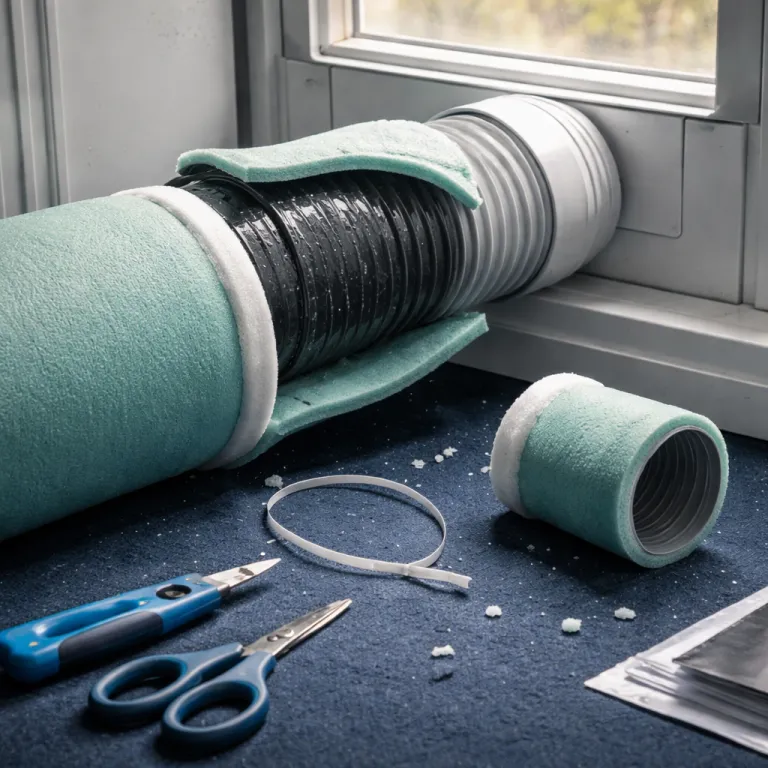
Why portable air conditioner exhaust hose insulation matters more than BTU ratings
Every portable air conditioner lives or dies by its exhaust hose efficiency. When that hot exhaust tube runs bare across your floor, it quietly radiates heat back into the same air you are trying to cool, which means your unit works harder, runs longer, and still leaves the room sticky. Treat portable air conditioner exhaust hose insulation as part of the cooling system, not as an optional accessory you might select later.
On a typical single portable hose, surface temperatures reach roughly 50–60 °C (122–140 °F) in independent tests of consumer units, so each foot of uninsulated hose can leak around 150–200 BTU of heat into the room. A simple steady-state heat transfer estimate using a 130 mm diameter hose, 1.5 m length, and a 25–30 °C temperature difference gives a similar range, which supports those field measurements. If you model the hose as a thin plastic cylinder with an effective overall heat transfer coefficient of 3–4 W/m²·K, the resulting heat loss converts to roughly 150–200 BTU/h per foot, which matches what reviewers have reported with infrared thermometers and plug-in power meters. Stretch that to a standard 1.5 m exhaust hose and you are throwing away 750–1 000 BTU, which is roughly 10–15 percent of a 10 000 BTU air conditioner’s real cooling output. That is why a basic insulated sleeve or foam wrap around the conditioner hose often delivers a more noticeable temperature drop than paying a higher price for a slightly larger model.
Manufacturers ship these hoses uninsulated for three blunt reasons. Bare hoses are cheaper to produce, easier to compress into the box, and flexible enough to fit almost any awkward window duct or bracket without tearing a stiff cover. For an urban renter juggling portable air conditioners between rooms, that flexibility matters, but it also means you must add your own hose cover or insulated hose sleeve if you care about performance.
The physics of a hot exhaust hose and how it sabotages your room
A portable air conditioner works by pulling warm room air across a cold evaporator coil, then dumping the captured heat outdoors through an exhaust duct. When the exhaust hose is thin plastic with a light gray corrugated surface, it behaves like a small radiator, soaking up that concentrated heat and bleeding it back into the room air. The longer the tube and the closer it runs to where you sit or sleep, the more you feel that wasted heat as a stubborn warm zone.
Think about the conditioner hose as a pipe carrying high temperature exhaust gases at 50–60 °C, because every square centimetre of exposed surface area radiates energy. A 1.5 m run with a 130 mm diameter exhaust hose has enough area to undo a big slice of your portable air conditioner’s sensible cooling, especially in a compact 20 m² bedroom where every watt counts. That is why keeping the hose duct as short and straight as possible, then adding proper insulation, often beats chasing higher BTU numbers on the box.
When you insulate that portable hose with foam and an aluminum reflective cover wrap, you cut the radiated heat by roughly 60 percent, and even more on sun exposed sections near the window. The physics is simple but unforgiving, because any kink in the exhaust hoses increases back pressure, raises compressor temperature, and forces the air conditioner’s insulated shell to work harder just to maintain the same thermostat setting. For a deeper look at how the hose duct shapes performance, read this guide on the role of the portable air conditioner hose before you start wrapping anything.
How to insulate a portable exhaust hose with foam and reflective wrap
Start by measuring the full length of your existing exhaust hose, then note the outer diameter so any hose insulated sleeve you buy actually fits diameter properly. Most portable air conditioners use a conditioner hose with a diameter exhaust between 125 and 150 mm, so you will usually find compatible foam pipe insulation or a purpose made hose cover in the plumbing aisle. Aim to keep the total portable hose run under 1.5 m, because every extra 30 cm adds more surface area and more heat loss.
For a budget build, select closed cell foam pipe insulation that matches the tube size, then slit it along the seam and slide it over the hose duct in sections. Tape each joint with aluminum foil tape, then add an outer wrap of reflective cover material around the last 30 cm closest to the window, where the exhaust air is hottest and sun exposure is strongest. If you prefer a cleaner look, buy a dedicated insulated hose sleeve with adjustable straps, because these sleeves usually ship as a single piece that fits diameter ranges and can be cinched tight with a cover adjustable buckle system. Look for products rated for at least 80–90 °C continuous service temperature and labelled for HVAC or hot water pipe use so the foam and fabric do not soften, off-gas, or pose a fire risk when the exhaust runs for hours.
Pay attention to how the insulated hose bends, because tight curves crush the duct ribs and restrict airflow, which raises internal heat and shortens compressor life. A good cover portable kit will include adjustable straps that let you suspend the hose so it hangs in a gentle arc instead of sagging across the floor. When you combine a short, straight run with a conditioner insulated wrap and a properly supported window bracket, you get a quieter, cooler room without touching the thermostat setting or paying a higher price for a new unit, and you can pair this with a stable support by choosing the right bracket for portable air conditioners. In humid climates, check the hose occasionally for condensation under the insulation and leave small gaps at the ends so moisture can dry out instead of soaking the cover.
Choosing the right sleeves, covers and window kits for urban renters
Urban apartments rarely offer textbook window openings, so your portable air conditioner exhaust hose insulation plan has to respect odd frames, sliding panes, and landlord rules. When you shop for an insulated hose sleeve or hose cover, check that it fits diameter ranges listed on your conditioner hose label and that the material can handle continuous heat from the exhaust air without melting. Many light gray sleeves use polyester with an inner aluminum layer, which balances flexibility, durability, and a reasonable price for renters who may move often.
Window kits matter just as much as hoses, because a leaky panel around the duct can let hot outdoor air sneak back into the room and erase the gains from any cover wrap you install. Look for window kits with adjustable panels that can extend to match tall sash windows, and make sure the ships with hardware list includes foam gaskets or weatherstripping to seal gaps around the tube opening. If your window frame is fragile or unusually deep, consider a bracket or stand that supports the portable air conditioner weight without stressing the sill, and this detailed guide on choosing the right stand for your portable AC unit explains how to match stands to different window types.
Some conditioners insulated kits bundle a hose insulated sleeve, a window panel, and adjustable straps so you can route the hose duct cleanly along a wall instead of across the floor. These cover portable bundles often use a neutral light gray fabric that blends with most interiors, while the inner aluminum layer reflects radiant heat back toward the exhaust outlet. When you compare options, ignore marketing fluff about jun clearance events or limited time price drops, and focus instead on whether the insulated hose, cover adjustable hardware, and window duct panel actually match your room layout. As concrete examples, a typical kit might specify compatibility with 5 in (127 mm) and 6 in (152 mm) hoses, include 10–20 mm thick closed cell foam, and carry a fire rating such as UL 94 V-0 or an equivalent local standard.
Real world performance gains and when insulation is worth the effort
In a 20 m² bedroom with a 10 000 BTU portable air conditioner, insulating a 1.5 m exhaust hose can feel like upgrading to the next size class without changing the unit. Foam insulation alone typically cuts radiated heat by around 60 percent, and adding a reflective aluminum wrap on the last 30 cm near the window can trim another 10–15 percent, especially on west facing walls. In one simple home test with a plug-in energy meter and a basic infrared thermometer, a user measured hose surface temperature dropping from about 58 °C to 38 °C and average power draw falling from 980 W to roughly 840 W over a two hour run after adding a 25 mm thick foam sleeve and reflective jacket. That combined reduction means your air conditioners cycle off sooner, the room reaches setpoint faster, and the compressor spends less time baking inside a hot plastic shell.
The payoff is biggest when the hose runs through direct sun or passes close to where you sit, because that is where uninsulated exhaust hoses behave like unwanted space heaters. If your conditioner insulated shell already struggles in a top floor flat with poor shading, every watt of wasted heat matters, and a simple hose insulated sleeve with adjustable straps can be the cheapest upgrade you make all summer. In small studios where the portable air unit doubles between living room and sleeping area, a removable cover wrap lets you keep the same insulated hose while still moving the machine freely.
Insulation is less critical when the exhaust hose is extremely short, fully shaded, and routed through a well sealed wall duct rather than a window kit. Even then, a basic hose cover costs little compared with the long term electricity price of running an inefficient setup, especially as energy tariffs creep upward. For most urban renters, the rule is simple; if you can touch the exhaust hose and feel strong heat on your hand, then portable air conditioner exhaust hose insulation is worth doing, because what matters is not the BTU on the box but the temperature drop at 15 h in August.
FAQ
Does insulating a portable AC exhaust hose really make a noticeable difference ?
Yes, insulating the exhaust hose usually makes a clear, measurable difference in small and medium rooms. By adding foam insulation and a reflective aluminum wrap, you can cut radiated heat from the hose by roughly half or more, which often feels like upgrading to a higher capacity unit. Most people notice faster cooldown times, fewer compressor cycles, and less hot air bleeding back into the room.
What is the best material for portable air conditioner exhaust hose insulation ?
Closed cell foam pipe insulation is the most practical material for most renters, because it is cheap, light, and easy to cut to length. Pairing that foam with an outer reflective aluminum cover wrap on the hottest section near the window improves performance further, especially on sun exposed walls. Purpose made insulated hose sleeves with adjustable straps offer a cleaner look, but they work on the same basic principle as the foam and foil combination.
How short should my portable AC exhaust hose be for best performance ?
Keeping the exhaust hose under about 1.5 m usually offers the best balance between flexibility and efficiency in typical apartments. Every extra 30 cm of hose adds more surface area that can radiate heat back into the room and increases airflow resistance inside the duct. If you must extend the run, prioritize a straight path, avoid kinks, and always insulate the full length of the tube.
Can I safely use any foam or fabric to cover my exhaust hose ?
No, you should only use materials rated for the temperatures and conditions around an exhaust hose, which can reach 50–60 °C on the surface. Look for foam and fabric sleeves that specify heat resistance and are designed for HVAC or plumbing use, rather than generic craft materials. Avoid fully sealing the hose ends with airtight plastic, because the duct still needs to vent moisture and heat without trapping condensation against the portable air conditioner body.
Will insulating the hose void my portable air conditioner warranty ?
Most manufacturers do not address hose insulation directly, so adding a removable sleeve or foam wrap around the exhaust duct usually does not affect the core warranty. You should avoid drilling, gluing, or permanently altering the conditioner hose or the unit body, because those modifications can be grounds for denial of service. When in doubt, use non permanent adjustable straps and wraps that you can remove before any warranty inspection.