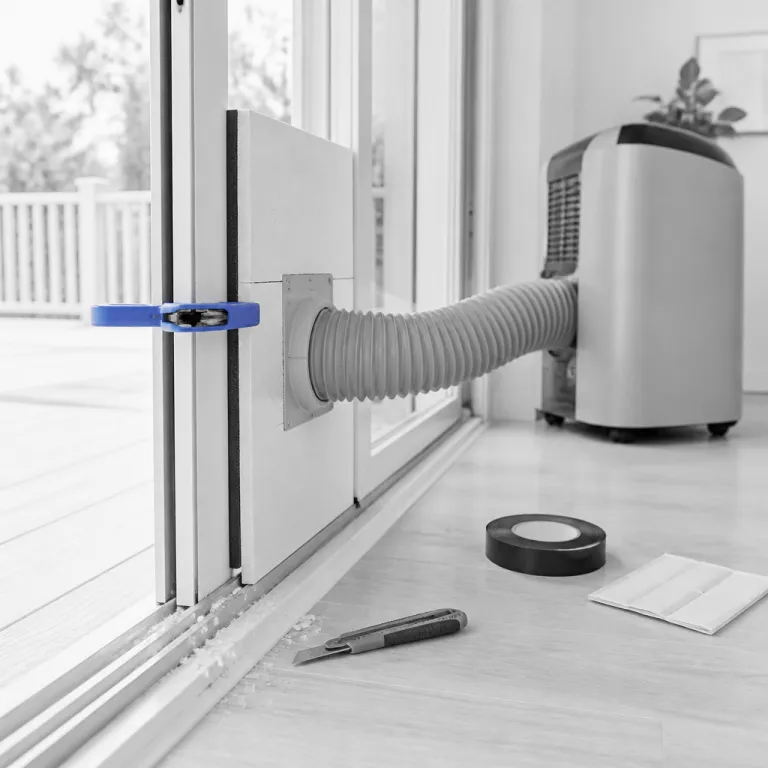
Why portable ACs struggle with a sliding glass door vent
A portable air conditioner looks simple until you try to vent it through a tall glass door. The stock window kit that comes with most portable air conditioners is built for short, double hung windows between about 50 and 120 centimetres wide, so it rarely fits a full height sliding door without leaving gaps that leak hot air back into the room. When you rotate that narrow plastic panel vertically for a sliding glass opening, you usually get a 20 to 40 centimetre unsealed strip that quietly erases up to a third of your cooling.
The core problem is geometry, not the portable air conditioner unit itself. A typical sliding glass door is 200 to 210 centimetres tall and 150 to 180 centimetres wide, while the supplied vent kit panels max out around 130 centimetres, which means the door vent area above or below the panel becomes a chimney for outdoor heat and infiltration air. Every centimetre of that gap matters because the AC’s exhaust hose is pushing hot air out, creating negative pressure that sucks warm air back through any unsealed crack around the glass door frame.
Most renters try to improvise with towels, cardboard or a badly cut kit portable insert. Those quick fixes rarely seal tightly around the hose and window edges, so the air conditioner ends up recirculating hot air from the balcony instead of expelling it cleanly through a proper sliding glass door vent. If you feel a warm draft near the sliding window while the portable air unit runs, you are paying for cooling that is literally slipping out through the door.
Stock window kits, exhaust hoses and why they fail on tall glass doors
Standard window kit panels are designed to sit horizontally in a sash window, not vertically in sliding doors. When you stand that vent kit on its end inside a tall glass door opening, the plastic strips rarely reach the full height, so you are forced to stack extra pieces or leave a gap that leaks hot air around the exhaust hose cutout. Even if you manage to fit the inch scaled segments together, the joints flex and bow under pressure, which opens hairline cracks that a strong portable air conditioner will exploit.
The exhaust hose itself adds another complication for a portable sliding setup. Many air conditioners ship with a 12 to 15 centimetre diameter exhaust hose that is longer than necessary, and when you snake that hose through a narrow door kit it kinks, which restricts airflow and raises exhaust temperatures at the vent. If you want to test a replacement exhaust hose that matches your unit’s thread and diameter, a specialised portable AC exhaust hose can help you confirm a proper fit before you commit.
Manufacturers know this, which is why some now sell a taller door kit for sliding windows and glass doors, but those kits still assume a fairly narrow opening. On a wide sliding door you often end up with a plastic column on one side and bare glass on the other, so the air conditioner pulls warm air around the panel edges and through the remaining sliding window gap. When you read customer reviews that mention three or four stars with comments about rooms never reaching set temperature, the culprit is often this half sealed door vent rather than the portable air unit’s raw cooling power.
The foam board seal: a cheap, tight fix for a sliding glass door
A rigid foam board insert is the most cost effective way to turn a leaky sliding glass door into a proper vent for a portable air conditioner. You buy a 2,5 centimetre thick insulation board rated around R 5, cut it to the exact width and height of the open glass door section, then cut a circular hole that matches your exhaust hose diameter for a snug fit. With weatherstripping tape along all four edges, that foam panel becomes a custom window kit that seals better than most plastic door kits shipped with portable air conditioners.
The process is straightforward but rewards careful measuring and a bit of patience. First, slide the glass door until you have just enough opening for the portable air conditioner vent panel, then measure that rectangle in both centimetres and inch units so you can match it to the foam board size at the store. After cutting the main panel, trace the hose collar from your existing vent kit to mark a perfect circle, then cut slowly so the exhaust hose collar snaps in tightly without gaps that could leak hot air back into the room.
Once installed, the foam board acts as both a structural door vent insert and an insulation layer. Because the material is light, you can lift the whole kit portable panel out when you want to close the sliding doors fully, yet it is dense enough to resist air pressure from the air conditioner unit. For even better performance, you can wrap the exhaust hose with insulation as explained in this guide on insulating a portable AC exhaust hose, which reduces radiant heat from the hose and keeps the glass door area cooler.
Plexiglass and commercial sliding door kits for a cleaner permanent look
Foam works brilliantly, but some renters want a clearer view and a more polished sliding glass insert. A cut to size plexiglass panel can replace the foam board, giving you a transparent door vent that lets light through while still holding a tight seal around the exhaust hose collar. You measure the same opening as for foam, have a hardware shop cut the plexiglass to that size, then drill a clean circular vent hole that matches the hose diameter from your original window kit.
Commercial sliding door kits from manufacturers such as Martinson Manufacturing take this plexiglass idea and refine it into a ready made product. These door kit systems use aluminium framing and clear panels that slide into the track of your glass door, with pre cut openings for one or more exhaust hoses from portable air conditioners, and they often include weatherstripping to help the panel fit tightly against the existing frame. While they cost more than a simple foam board, they offer a durable, landlord friendly solution that looks like part of the original sliding window assembly rather than a temporary patch.
When you compare options, think about how often you move the portable air conditioner unit between rooms. A lightweight foam window kit is easier to lift in and out of different sliding windows, while a heavier plexiglass door vent or commercial door kit suits a permanent installation in a single glass door. In both cases, the goal is the same ; to stop hot air from sneaking around the vent panel so the portable air conditioner sliding glass door vent setup cools the room instead of the balcony.
Weatherstripping, security and the details that protect your cooling
Even the best foam or plexiglass panel fails if you skip weatherstripping around the edges. The pressure difference created by a strong portable air conditioner means any tiny gap between the panel and the sliding door frame becomes a straw for outdoor air, so you need adhesive foam tape along every contact surface of the window kit. Press the panel firmly into the track, close the sliding glass door against it, then run your hand around the perimeter while the unit runs to feel for stray hot air leaks.
Security is the next concern when you leave a glass door partially open for a vent kit. A simple wooden or metal bar laid in the track behind the sliding door prevents it from being forced open beyond the panel, and many hardware shops sell adjustable security bars that fit both sliding windows and full height glass doors. For extra peace of mind, some renters drill a small pin lock through the overlapping frames, which anchors the sliding door in place even when the portable air conditioner hose and door vent panel are installed.
Finally, think about drainage and long term maintenance of the portable air unit. Some air conditioners use a drain hose to remove condensate, and if you route that hose near the sliding window opening you must seal around it just as carefully as around the exhaust hose to avoid new hot air paths. For a deeper look at how drain hoses affect performance and placement, this guide on the role of a drain hose in portable air conditioners explains why water management matters as much as a tight seal at the sliding glass door.
How to judge kits, feedback and real world performance
Choosing the right portable air conditioner sliding glass door vent setup means reading beyond glossy product photos. When you scan customer reviews for a door kit or window kit, pay close attention to feedback that mentions how well the panel seal holds against the glass door frame and whether the exhaust hose connection stays tight after weeks of use. A pattern of three stars with complaints about drafts or a poor fit around sliding doors is a red flag, even if the headline rating looks decent at first glance.
Look for reviews that describe the exact door and window dimensions, because a kit that fits a 180 centimetre sliding window may not work on a 210 centimetre balcony door. Verified purchase badges add some confidence that the reviewer actually installed the vent kit on a real portable air conditioner, but you still need to read the details about how they handled the inch based hose opening and whether they had to add extra foam to stop hot air blowback. Free shipping and fast delivery are nice, yet they mean little if the panel flexes, the seal peels away from the glass, or the portable air unit still struggles to cool the room.
In practice, the best performing setups combine a solid structural panel with careful sealing and a properly sized exhaust hose. Whether you choose a foam board kit portable insert, a plexiglass door vent or a commercial sliding glass system, the goal is a rigid surface that lets the air conditioner push exhaust outside without pulling warm air back through the same opening. When you get that balance right, the room temperature drop on a brutal afternoon tells you more than any row of stars on a product page.
FAQ
How do I vent a portable air conditioner through a sliding glass door without leaks ?
The most reliable method is to create a full height insert that fills the open section of the sliding glass door and then cut a precise hole for the exhaust hose. A 2,5 centimetre thick rigid foam board or a cut to size plexiglass panel can act as a custom window kit, provided you add weatherstripping along all edges and around the hose collar. When the glass door closes firmly against this panel and you feel no warm draft while the unit runs, your portable air conditioner sliding glass door vent is effectively sealed.
Is a foam board insert better than the stock plastic window kit ?
For tall sliding doors, a foam board insert usually seals better than the narrow plastic window kit that ships with most portable air conditioners. Foam is easier to cut to the exact height and width of your glass door opening, so you avoid the stacked panel gaps that often leak hot air around the exhaust hose. With proper weatherstripping, a foam board kit portable panel can outperform many stock vent kits in both insulation and draft control.
Can I still lock my sliding door when using a portable AC vent panel ?
You cannot use the original latch in its normal position, but you can secure the sliding door with a bar or pin behind the vent panel. A simple adjustable security bar placed in the track stops the glass door from being forced open beyond the panel, and a small pin lock drilled through the overlapping frames adds another layer of protection. These low cost additions let you run a portable air conditioner sliding glass door vent setup without leaving your home vulnerable.
Do I need to insulate the exhaust hose on my portable air conditioner ?
Insulating the exhaust hose is not mandatory, yet it noticeably improves comfort in rooms with large glass doors. The bare hose radiates heat back into the room, especially when it runs close to the sliding window or foam panel, which can raise local temperatures even if the door vent is well sealed. A simple foam wrap around the hose reduces this effect and helps your portable air conditioner maintain a lower, more stable room temperature.
What size hole should I cut for the vent hose in a foam or plexiglass panel ?
You should match the hole to the outer diameter of the hose collar that came with your original window kit, not just the flexible hose itself. Most portable air conditioners use exhaust hose collars between about 12 and 15 centimetres in diameter, and cutting the opening a few millimetres smaller ensures a tight friction fit. If the collar snaps into the foam or plexiglass without wobbling and you can seal any tiny gaps with weatherstripping, the door vent will stay secure under pressure.