How to size a single hose portable unit by BTU and room type
Choosing the best single hose portable air conditioners starts with correct sizing, not brand hype. Cooling capacity is usually expressed in BTU, but for portable ACs you should pay close attention to the BTU SACC value, which reflects more realistic performance. A portable unit with a high BTU number but a weak BTU SACC rating may struggle to cool a sun-exposed room.
For a typical bedroom of about 15 square meters, a single hose portable air conditioner with around 7,000 to 9,000 BTU SACC usually works well. A larger living room of 25 to 30 square meters may need a portable air conditioner closer to 12,000 BTU SACC, especially if you have big window areas or several heat-producing devices. When comparing air conditioners, always check whether the stated BTU refers to older standards or to the newer SACC rating, because this difference can change real-world cooling power dramatically.
Rooms with poor insulation, west-facing window exposure, or many occupants often require stepping up one capacity level. If you choose a unit that is too small, the fan will run constantly, the cooling effect will feel weak, and energy consumption will rise without real comfort. On the other hand, an oversized conditioner can short-cycle, leading to uneven cooling and higher purchase cost without proportional benefits.
| Room type |
Approx. size |
Recommended SACC (BTU) |
| Small bedroom or office |
10–15 m² |
7,000–9,000 |
| Medium living room |
20–25 m² |
9,000–12,000 |
| Large, open-plan space |
25–30 m²+ |
12,000+ (or dual-hose) |
Key features that separate average and best single hose portable air conditioners
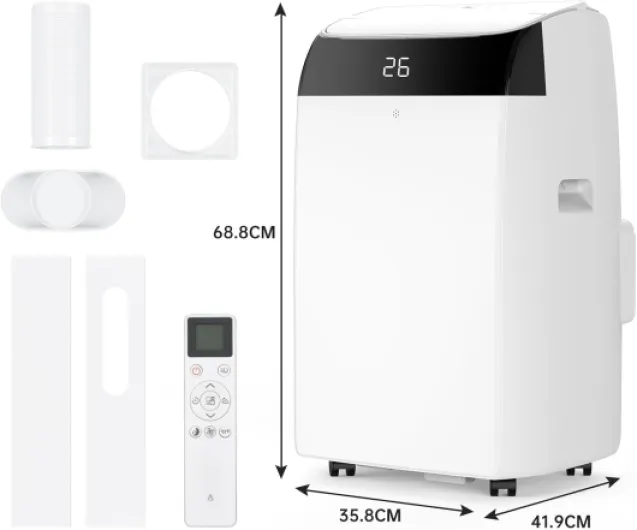
Beyond raw BTU numbers, the best single hose portable air conditioners stand out through thoughtful design details. A good portable unit should include a complete window kit that seals tightly, preventing hot air from leaking back into the room. Look for a portable hose assembly that feels sturdy, with connectors that lock firmly into the window kit and the air conditioner body.
Noise level is critical if you plan to cool a bedroom or home office, because a loud fan can ruin sleep or concentration. Many quality portable air conditioners now offer multiple fan speeds and a sleep mode that reduces both noise level and energy consumption overnight. For example, manufacturer specifications for the Midea MAP10S1CWT (10,000 BTU SACC) list sound levels in the low-50 dB range on quieter settings, which independent reviewers such as Consumer Reports broadly describe as suitable for most sleepers.
Remote control convenience also matters more than people expect, especially when the unit sits across the room. A responsive remote lets you adjust temperature, fan speed, and timer without leaving your desk or bed, which encourages smarter use of the air conditioner. Some models add app-based remote control and voice integration, but even a simple physical remote can make a single hose portable air conditioner feel more premium and easier to live with.
Comparing single hose and dual hose portable acs for different users
Many shoppers wonder whether they should skip single hose designs and move directly to dual hose portable ACs. A dual-hose system uses one hose to pull in outdoor air and another hose to exhaust hot air, which can improve efficiency and reduce negative pressure in the room. This design often delivers stronger cooling power for large spaces, but it usually costs more and can complicate installation.
Single hose portable air conditioners remain attractive for renters and people who move frequently between homes. The single-hose layout keeps the unit lighter, the window kit simpler, and the overall installation process faster, which matters if you set up and remove the conditioner often. For a small bedroom or study, the performance gap between a well-designed single hose portable unit and a dual-hose model may be modest in everyday use.
If you live in a very hot climate or need to cool a big open-plan room, a dual-hose system can justify its higher rating and price. However, if your priority is flexibility, lower upfront cost, and quick window air setup, the best single hose portable air conditioners still offer excellent value. The decision ultimately depends on room size, climate, and how often you plan to move or store the air conditioner.
Real world examples of standout single hose portable models and brands
When browsing retailers such as Amazon, you will see a long list of portable air conditioners that look similar at first glance. Some of the best single hose portable air conditioners come from brands better known for dual-hose designs, such as the Whynter ARC series, which still offers efficient single-hose options for smaller rooms. Other manufacturers focus on compact portable units that prioritize low noise level and easy remote control use.
The Midea Duo line is known for advanced air conditioner engineering, although certain models use a hybrid hose system rather than a classic single-hose layout. For shoppers who want a more budget-friendly portable unit, the SereneLife SLPAC series often appears among well-rated portable ACs in user reviews, especially for bedrooms and small offices. These air conditioners typically include a complete window kit, a programmable timer, and a fan-only mode that lets you circulate air without active cooling.
Some users prefer a portable air cooler rather than a full compressor-based air conditioner, but these evaporative devices work best in dry climates and cannot match true BTU SACC performance. For instance, a 70-watt evaporative cooler might move a lot of air but still feel weak compared with a 9,000 BTU SACC portable AC in humid conditions. If you pay by credit card, check whether the retailer offers extended warranty options, because portable air conditioners endure heavy seasonal use. Reading verified customer reviews about hose durability, window kit fit, and remote responsiveness can reveal long-term strengths and weaknesses that technical specifications alone never show.
Practical tips for installation, maintenance, and smarter energy use
Correct installation makes the difference between a struggling machine and the best single hose portable air conditioners performing as advertised. Always mount the window kit so that the panel sits level, with no gaps where hot outdoor air can sneak back into the room. The hose should run as straight and short as possible, because sharp bends trap heat and reduce cooling efficiency.
Regular maintenance keeps any portable air conditioner working near its original rating for many seasons. Clean or replace the air filters every few weeks during heavy use, since clogged filters restrict airflow and force the fan and compressor to work harder. Wipe dust from the exterior, check the hose connections, and inspect the window kit seal to prevent leaks that would waste cooling power and increase energy consumption.
Smart operation habits also matter, especially when electricity prices rise. Close curtains on sun-facing windows, keep doors shut to the cooled room, and use the built-in timer or remote control to pre-cool spaces before peak heat. By combining these simple steps with a correctly sized single-hose portable unit, you can enjoy a comfortably cool home while keeping both noise level and running costs under control.
- Confirm SACC rating and suitable room size on the product label.
- Measure your window opening and check that the included kit will fit.
- Compare noise levels in dB, especially for bedroom or office use.
- Look for washable filters and easy-access panels for routine cleaning.
- Check warranty length, service options, and availability of spare hoses.
Key statistics about portable air conditioning and home cooling
- In many temperate countries, portable air conditioners account for a growing share of seasonal cooling sales, reflecting stricter building rules on permanent window air installations.
- Energy efficiency improvements in modern portable ACs can reduce electricity use by roughly 10 to 20 percent compared with older models of similar BTU rating, according to summaries of testing by organizations such as AHAM and Consumer Reports.
- Independent lab measurements compiled in U.S. Department of Energy documentation show that real-world BTU SACC values for portable units can be 20 to 40 percent lower than older nameplate BTU numbers, which is why checking SACC is essential for accurate sizing.
- Noise level for quality single hose portable air conditioners typically ranges between about 50 and 60 decibels on low to medium fan settings, comparable to a normal conversation in a quiet room.
- Consumer surveys reported by major review outlets consistently find that ease of installation and reliable remote control operation rank among the top three satisfaction drivers for owners of portable air conditioners, alongside cooling performance.
Are single hose portable air conditioners efficient enough for daily use ?
Single hose portable air conditioners can be efficient for daily use when sized correctly and installed with a well-sealed window kit. Their energy consumption is higher than that of a top-tier split system, but comparable to many window air units of similar BTU SACC rating. For small and medium rooms, especially in rented spaces, a quality single-hose portable unit offers a practical balance between efficiency, flexibility, and upfront cost.
How noisy are portable acs compared with other cooling options ?
Most portable ACs produce a noise level similar to a box fan or a quiet dishwasher, usually between 50 and 65 decibels depending on fan speed. This is louder than a typical split air conditioner, because the compressor sits inside the room rather than outdoors. If you are sensitive to sound, look for models with a dedicated sleep mode, multiple fan settings, and clear noise level data in the product rating.
Can a single hose portable unit cool more than one room at a time ?
A single hose portable unit is designed to cool one enclosed room at a time, not an entire apartment. Leaving doors open allows cool air to escape and forces the air conditioner to work harder, often without reaching the desired temperature. For multi-room cooling, you either move the portable air conditioner between spaces or combine it with other solutions such as window air units or ceiling fans.
What is the difference between an air cooler and a portable air conditioner ?
An air cooler, often called an evaporative cooler, uses water evaporation to make air feel cooler and works best in dry climates. A portable air conditioner uses a refrigeration cycle with a compressor, refrigerant, and exhaust hose, delivering measurable BTU SACC cooling power in a wider range of humidity conditions. If you live in a humid region or need precise temperature control, a true portable air conditioner is usually the more reliable choice.
Is it safe to buy portable air conditioners with a credit card from online retailers ?
Buying portable air conditioners with a credit card from reputable online retailers such as Amazon is generally safe, especially when you check seller ratings and return policies. Using a credit card can provide extra protection in case of delivery issues or product defects, and many cards extend the manufacturer warranty. Always review the listing details carefully, including BTU SACC rating, window kit compatibility, and remote control features, before completing the purchase.