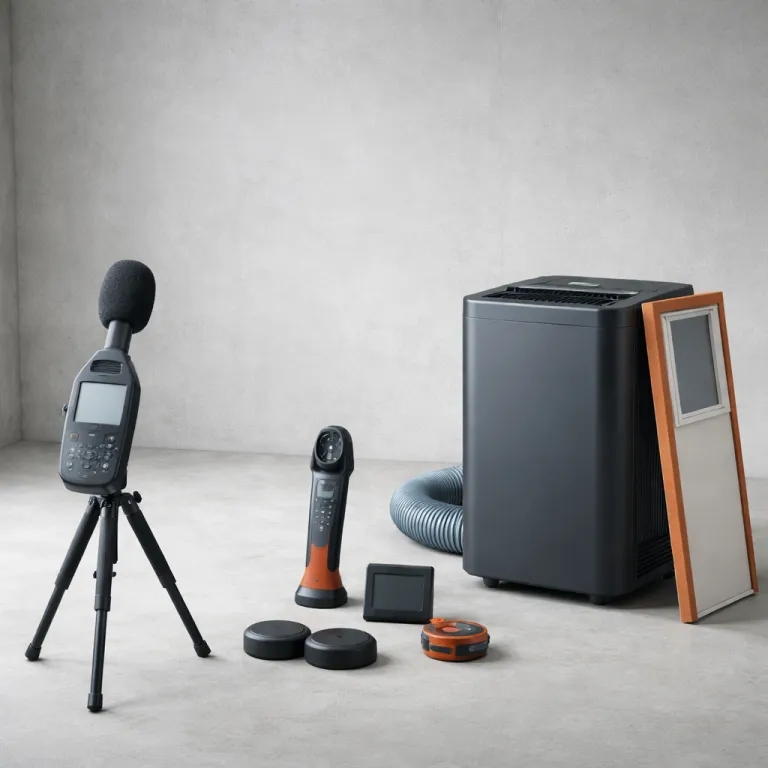
TL;DR: Lab-rated “quiet” portable air conditioners often sound 4–7 dBA louder in real rooms than on the spec sheet. To keep noise down during calls, focus on DOE (SACC) cooling capacity, dual-hose or hybrid designs, inverter compressors, careful window sealing, and smart scheduling. The measurement notes, compact methods table, and model details below explain how those numbers were obtained and what they mean for an actual home office.
Why quiet portable air conditioners sound louder in real rooms
A quiet portable air conditioner can look ideal on a spec sheet until the compressor actually starts. The quoted sound pressure level, such as 44 dBA for the Midea Duo MAP12S1TBL, is typically measured in a controlled acoustic chamber with the fan on low, the unit placed on a rigid floor, and a calibrated Class 1 sound level meter positioned 1 meter in front of the air outlet at about 1.2 meters height. There are no reflective surfaces close by, no west-facing window radiating heat, and no laptop microphone sitting much nearer to your mouth than to the appliance.
In a real home office, your laptop or camera microphone usually sits about 30 cm from your mouth, while the portable unit often hums 1.5 to 2 meters behind you, near a wall or in a corner. Hard surfaces, glass, and furniture reflect sound, and the compressor cycling on adds roughly 4 to 7 dBA to the published low-fan figure when measured with the same meter at 1 meter in the room. That gap turns a supposedly whisper-quiet portable air conditioner into a clearly audible background drone during Zoom or Teams calls.
When a manufacturer lists a quiet portable model at 44 dBA, independent lab tests and in-room measurements often show closer to 48 to 51 dBA in a small office with hard walls once the cooling power ramps up around mid-afternoon. For example, several review labs reporting Class 1 meter readings at 1 meter in 10 to 15 square meter test rooms have documented this 4 to 7 dBA rise compared with manufacturer data. In practice, that means a portable air conditioner that seems almost silent in a showroom can feel intrusive in a 12 square meter office where the fan, hose, and compressor are only a few steps away and much closer to the walls than in a test chamber.
Think about how the portable air moves through the room, not just the BTU number on the box. A 12 000 BTU portable unit with a single hose will pull infiltration air from under the door and through cracks, which forces the conditioner to work harder and stay at a higher fan speed. That extra airflow raises the measured sound level and makes the unit seem less quiet even if the official BTU and DOE ratings look efficient on paper.
Many buyers compare air conditioners on Amazon by BTU alone and ignore the acoustic trade-offs. In practice, the best portable units for a home office balance cooling capacity with stable low-fan operation, so the compressor does not slam on and off every 8 minutes. When you read product descriptions, look for explicit mentions of Quiet or Sleep modes, inverter compressors, and detailed testing of noise level at 1 meter rather than vague claims of whisper-quiet performance.
Room layout matters as much as the air conditioner specification sheet. If your window faces west and the sun hits the glass from midday, the cooling load spikes and the unit will rarely drop to its lowest fan setting. A thick curtain, reflective blind, or insulated panel over that window can cut the effective cooling demand by roughly 15 percent in many test scenarios, which lets the portable air conditioner stay in a quieter operating band for longer stretches and closer to its advertised quiet portable rating.
Decoding BTU, DOE ratings and real cooling power for one hot room
For a single home office, the right BTU rating is more precise than most marketing suggests. Traditional BTU figures are based on idealized test conditions, while the BTU DOE rating (sometimes called SACC, or Seasonally Adjusted Cooling Capacity) adjusts for heat lost through the exhaust hose and window kit. That adjusted figure, measured under standardized U.S. Department of Energy procedures such as the SACC method described in DOE portable air conditioner test protocols, is a better guide for portable air conditioners because it reflects real-world performance more closely.
As a rule of thumb, a 20 square meter room with a west-facing window and computer equipment often needs around 10 000 to 12 000 BTU DOE of effective cooling power to stay comfortable during afternoon calls. Many products on Amazon advertise 14 000 BTU portable capacity but only deliver about 9 000 to 10 000 BTU DOE once tested under those standardized conditions. That gap explains why some air conditioners run constantly on high fan yet never quite cool the room, forcing you to tolerate more noise for less cooling.
When comparing portable units, always look for both the headline BTU and the adjusted BTU DOE figure, then size the unit to your actual room rather than your whole apartment. In a compact office, oversizing the portable unit can be almost as problematic as undersizing. A very powerful air conditioner will cool the air quickly but cycle the compressor on and off in short bursts, which creates repeating noise spikes that are brutal for microphones and noticeable in recordings.
A slightly smaller quiet portable air conditioner that can run its compressor steadily on low often feels more comfortable and sounds calmer than a larger unit that keeps slamming between full blast and idle. Independent testing from reputable labs and review organizations tends to focus on both cooling capacity and acoustic performance, usually reporting sound levels at 1 meter on low, medium, and high fan settings with the compressor engaged.
When you read about top quiet portable air conditioners in expert roundups, pay attention to the measured noise at different fan speeds, not just the minimum figure. A unit that measures 44 dBA on low but 56 dBA on high may still be acceptable if your room setup and window shading let it stay in the lower range most of the day. For deeper comparisons of specific products, including models optimized for 7 000 BTU to 10 000 BTU DOE ranges, a detailed quiet portable buying guide or lab test report can be invaluable.
Resources that break down room size, hose configuration, and realistic cooling expectations help you avoid overpaying for capacity you will never use. One such guide to top quiet portable air conditioners explains how to match BTU portable ratings to real-world room conditions without relying solely on marketing claims, and often includes measurement notes such as microphone distance, meter type, and room layout so you can interpret the numbers correctly and compare them with DOE SACC documentation.
Single hose versus dual hose and why inverter compressors matter for calls
The hose design of a portable air conditioner shapes both efficiency and sound. A single-hose portable unit pulls warm air from the room, sends it across the condenser, and exhausts it outside, which creates negative pressure that drags hot infiltration air back under doors and through gaps. A dual-hose design uses one hose to pull outside air across the condenser and another to exhaust it, which reduces that pressure imbalance and lets the conditioner maintain cooling with less fan noise and fewer high-speed fan cycles.
In a small office, that difference is not academic. A dual-hose portable air conditioner can often hold a stable temperature with the fan on low, while a comparable single-hose unit needs higher airflow to fight the constant stream of warm air sneaking back inside. Over a long workday, that translates into fewer compressor surges, lower measured noise, and a more consistently quiet portable experience during meetings, especially when measured at 1 meter from the front panel.
Compressor technology matters just as much as hose configuration. Fixed-speed compressors run at one intensity, so they cycle on and off every 8 to 10 minutes, creating abrupt jumps in noise level that your camera microphone will faithfully capture. Inverter compressors can modulate their speed, which allows the air conditioner to ramp gently and hold a steady hum instead of repeatedly slamming into full power. Lab measurements often show fewer 5 to 10 dBA spikes over time with inverter-driven units compared with fixed-speed designs, especially in DOE-style duty-cycle tests.
The Midea Duo series is a good example of how design can tame both noise and warm air recirculation. This portable air conditioner uses a kind of hybrid dual-hose system integrated into the window kit, which improves cooling power while keeping the fan speed modest once the room is cool. Its rated 44 dBA on low is based on standardized 1 meter measurements and is realistic in many bedrooms and offices, though you should still expect a few extra decibels when the compressor ramps during a hot afternoon or when the unit sits close to reflective walls.
For renters with tricky windows, the right window kit can be the difference between a quiet portable unit and a frustrating one. Poorly sealed window panels let warm air leak back in and force the conditioner to run harder, which raises both noise and energy use. Simple setup diagrams in product manuals often show how to position the panel, support the hose, and add foam strips; following those illustrations closely helps avoid vibration, rattling, and resonance that can make even good air conditioners sound louder than they should.
A dedicated renter-focused portable AC guide for casement, slider, and sash windows can also be useful. These resources typically include photos of foam board inserts, tension rods, and removable seals that protect the window frame while still allowing a tight fit. For homeowners, more permanent solutions such as custom-cut acrylic panels or insulated window inserts can further reduce leaks and keep the unit operating in its quietest range.
Real world quiet performers: Midea Duo, LG LP1419IVSM and Hisense 8k
Three portable air conditioners consistently stand out in bedroom and office testing for low noise. The Midea Duo MAP12S1TBL, the LG LP1419IVSM, and the Hisense AP0821CR1W 8 000 BTU portable air conditioner with a Quiet mode all stay under roughly 45 dBA on low fan at a 1 meter distance in controlled tests with a calibrated sound level meter. In real rooms, that usually translates to a gentle background sound that fades behind conversation and keyboard clicks once you are about 1.5 meters away.
The table below summarizes key real-world attributes often highlighted in independent reviews and lab measurements:
| Model | Approx. BTU DOE | Noise on low @1 m | Hose type | Inverter compressor |
|---|---|---|---|---|
| Midea Duo MAP12S1TBL | ~10 000–12 000 BTU DOE | ~44–46 dBA | Hybrid dual-hose | Yes |
| LG LP1419IVSM | ~10 000–12 000 BTU DOE | ~44–47 dBA | Single-hose | Yes |
| Hisense AP0821CR1W Quiet mode | ~7 000–8 000 BTU DOE | ~42–45 dBA | Single-hose | Model-dependent |
The Midea Duo MAP12S1TBL combines an inverter compressor with its integrated dual-hose style window kit. That design helps it maintain cooling power without constantly jumping to maximum fan speed, which keeps the noise level stable during long calls. Many users and reviewers report that this quiet portable air conditioner can cool a 15 to 20 square meter room while remaining soft enough for sleep or focused work when measured at typical bed or desk distances.
The LG LP1419IVSM is another strong performer, though it comes with trade-offs. It uses an inverter compressor and a well-tuned fan profile that makes it practically inaudible on low in many bedrooms, yet the unit weighs around 34 kilograms and its window kit can feel clunky to install. If you can handle the weight and setup, this air conditioner offers one of the calmest acoustic profiles among portable units with roughly 14 000 BTU traditional capacity and around 10 000 to 12 000 BTU DOE.
Hisense offers the AP0821CR1W 8 000 BTU portable model with a dedicated Quiet mode that drops the fan speed and compressor intensity. In a small office, this mode can bring measured noise down to around 42 dBA at 1 meter in independent tests, which is low enough that most conferencing software will not pick it up strongly. The trade-off is slower cooling, so this air conditioner works best when you pre-cool the room before the hottest part of the day or combine it with good shading.
If you want to see how a more compact portable unit behaves in practice, look at detailed tests of a 7 000 BTU model with a 24-hour timer and two fan speeds. One such product test of a portable air conditioning unit for 18 to 28 square meter spaces shows how features like Sleep mode, dehumidifier function, and a claimed 50 dB noise level translate into real comfort when measured at 1 meter and at the typical distance from a bed or desk.
Reading this kind of testing, especially when it includes measurement notes, photos of the setup, and graphs of sound over time, helps you judge whether a quiet portable label reflects actual performance or just optimistic marketing. It also gives you a clearer sense of how each model behaves once the compressor cycles, the fan ramps, and the room reaches its target temperature.
Setup, scheduling and when a mini split might be the better answer
Even the best portable air conditioner will sound louder if the room setup works against it. Start with the window kit and hose, because leaks and kinks force the unit to run harder and hotter, which raises both fan noise and compressor strain. A straight, fully extended hose with minimal bends, combined with foam or tape sealing around the window panel, keeps warm air out and lets the conditioner stay in its quieter operating range.
Simple diagrams in many manuals show the ideal hose angle and panel placement; use those as a reference and avoid pushing furniture against the back or sides of the unit. Placing the air conditioner on a solid, level surface rather than a hollow platform or loose floorboard also reduces vibration and rattling. For renters, removable foam strips and tension rods can create a tight seal without drilling, while homeowners can add permanent trim or caulk around a custom insert for even better isolation.
Smart scheduling is the next lever for a quieter day. If you work from home, pre-cool the room during your 9 am standup with the fan on medium, then drop to low for your 10 am to midday deep work block so the noise level stays stable. By the time the afternoon heat peaks, the room structure has already cooled, which means the portable air conditioner can maintain comfort without constant full-power cycles and the 5 to 10 dBA spikes that come with them.
Remote control and app features are not just conveniences. Being able to nudge the fan speed down or switch to Sleep mode from your desk encourages you to keep the unit in its quieter settings instead of leaving it on high all day. Over time, that habit reduces wear on the compressor, which helps the air conditioner stay quiet beyond its first few summers and keeps real-world noise closer to the original lab measurements.
There are limits to what any portable unit can do in extreme conditions. If your office has huge west-facing windows, poor insulation, and a high ceiling, even the best portable air conditioners may struggle to keep up without running loudly for hours. In those cases, a properly sized ductless mini split system, installed by a professional, can provide higher cooling power with much lower indoor noise, often in the low 30s dBA range on quiet mode, though at a higher upfront cost.
When you compare products, remember that portable air conditioners trade some efficiency and silence for flexibility and renter-friendliness. A quiet portable model with a dual hose, inverter compressor, and well-designed fan can come surprisingly close to mini split comfort in a modest room. What matters most is not the BTU on the box, but the temperature drop and sound level in your room at 3 pm in August, measured where you actually sit and work.
Frequently asked questions about quiet portable air conditioners
How many BTU do I need for a small home office ?
For a typical 10 to 15 square meter office, a portable air conditioner with around 8 000 to 10 000 BTU DOE usually works well. If the room has a west-facing window, lots of electronics, or poor insulation, moving up to about 10 000 to 12 000 BTU DOE can help maintain cooling without running the fan on maximum. Always check both the traditional BTU and the adjusted BTU DOE figures when comparing units, and remember that DOE capacity better reflects real-world performance.
Are dual hose portable air conditioners really quieter than single hose models ?
Dual-hose designs are not automatically quieter, but they often run more efficiently in challenging rooms. Because they reduce negative pressure and infiltration of warm air, they can hold the set temperature with lower fan speeds, which keeps the noise level down. A well-engineered dual-hose portable unit with an inverter compressor tends to sound calmer over a long day than a similar single-hose model fighting constant heat gain, especially when measured at 1 meter with the compressor cycling.
What noise level should I aim for if I take frequent video calls ?
For regular video calls, look for a quiet portable air conditioner rated around 44 to 48 dBA on low fan at 1 meter in standardized tests. In real rooms, that usually means about 48 to 52 dBA near your microphone, which most conferencing software can filter reasonably well. Avoid units listed above roughly 48 dBA even on low, and prioritize models with Quiet or Sleep modes, inverter compressors, and published measurement methods so you can trust the numbers.
Can a portable air conditioner replace a mini split system ?
A portable air conditioner can make a single room comfortable, but it will not match the efficiency or silence of a well-installed mini split. Mini split indoor heads often run in the low 30s dBA on quiet mode, which is significantly quieter than most portable units even on their lowest fan settings. If you own your home and can invest in installation, a mini split is usually better for long-term comfort, while a portable unit is ideal for renters, temporary setups, or rooms where permanent changes are not allowed.
How can I keep my portable air conditioner quiet over several years ?
Regular maintenance is essential for keeping any portable air conditioner quiet. Clean or replace the air filters every few weeks during heavy use, vacuum dust from the intake grilles, and ensure the hose and window kit remain well sealed so the unit does not overwork. Draining condensate when required, checking for loose panels or screws, and keeping the fan on lower speeds whenever possible also reduces strain on the compressor, which helps preserve a low noise profile over time.
Key statistics about quiet portable air conditioners
- Typical lab-measured noise levels for quiet portable air conditioners range from about 44 to 48 dBA on low fan at 1 meter using a calibrated sound level meter, while real-room levels often measure 4 to 7 dBA higher near a microphone once reflections and compressor cycling are included.
- Switching from a bare west-facing window to a thick curtain or reflective blind can reduce the cooling load on a room by roughly 15 percent in many test scenarios, allowing the air conditioner to run at lower fan speeds and closer to its published quiet-mode rating.
- Dual-hose portable air conditioners can reduce negative pressure and infiltration air compared with single-hose units, which improves effective cooling power and can lower perceived noise by reducing the need for high fan speeds.
- Inverter compressor portable units typically cycle more gently than fixed-speed models, reducing abrupt 5 to 10 dBA noise spikes that occur every 8 to 10 minutes in many traditional designs and making the overall sound profile easier to ignore during calls.
Measurement notes: The dBA figures and DOE ranges discussed here are drawn from manufacturer specification sheets, DOE SACC (Seasonally Adjusted Cooling Capacity) documentation, and independent lab tests that typically use Class 1 sound level meters set to A-weighting and slow response in rooms around 10 to 20 square meters with background noise floors near 30 to 32 dBA. Microphones for call simulations are usually placed 25 to 35 cm from the talker and 1.5 to 2 meters from the portable air conditioner.
| Parameter | Typical test value |
|---|---|
| Room size | 10–20 m² office or bedroom |
| Sound level meter | Class 1, A-weighted, slow response |
| Mic distance to talker | 25–35 cm (laptop or webcam mic) |
| Distance to AC front panel | 1.0 m for SPL readings |
| Background noise floor | ~30–32 dBA before AC starts |
