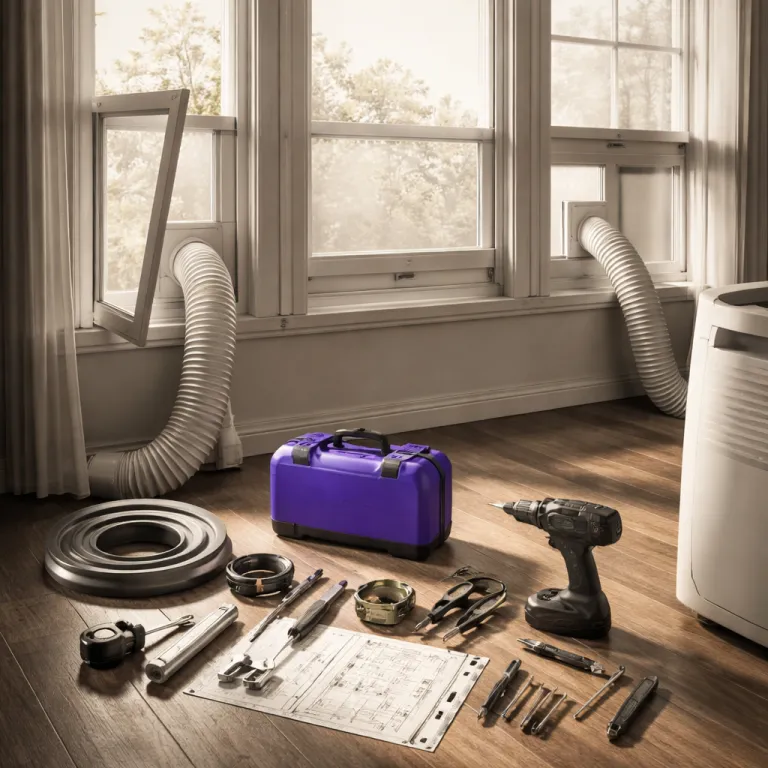
Start with your windows, not the portable air conditioner box
Your apartment window decides which portable air conditioner for apartment actually fits. Before you compare any portable unit or BTU rating, you must map your window type and the exact opening height or width. A well matched air conditioner will cool the room efficiently while staying quiet and easy to move.
Most renters deal with three window families that quietly rule out many portable air conditioners. Narrow sash windows, tall casement crank out windows, and louvred sliders often exceed the standard window kit length that comes with a typical portable air conditioner. When a window kit does not reach at least 60 centimetres for height or width, you end up improvising with cardboard, which leaks hot air and ruins cooling performance.
For a small living room with a narrow sash window, a compact portable unit with a telescoping window kit that extends beyond 150 centimetres is essential. Some smart portable air conditioners include reinforced plastic panels that lock under the sash without drilling, which keeps landlords happy and the installation reversible. If your room has a casement window, you may need a universal window kit plus a custom plexiglass insert, or you should consider whether a portable air conditioner for apartment is the right product at all.
When you read reviews on Amazon or any other retailer, filter by window photos rather than only by star ratings. Many of the best portable air conditioners on paper simply do not seal well in tall European style windows, which wastes cooling capacity and increases noise. In practice, the best portable unit for your apartment is the one whose hose portable window kit actually matches your glass and frame, not the one with the flashiest smart app.
Pay attention to whether the window kit supports both single hose and dual hose layouts, because this affects future upgrades. A dual hose portable air conditioner pulls outside air for condenser cooling instead of stealing already cooled indoor air, which matters in thin walled apartments where infiltration air sneaks in through every gap. If you start with a flexible window kit that can handle two hoses, you can move from basic portable acs to more efficient conditioners later without reworking the whole installation.
Single hose vs dual hose in thin walled apartments
In a typical apartment, the choice between a single hose and a dual hose portable air conditioner for apartment is not academic. Thin walls and leaky doors mean that every cubic metre of air you exhaust must be replaced by hot corridor or street air. That negative pressure penalty is exactly why many single hose portable air conditioners feel weak even when their BTU numbers look impressive.
A single hose portable unit uses the same indoor air for both room cooling and condenser cooling, then pushes that warmed air outside. The resulting suction pulls unconditioned air through gaps under doors and around window frames, which forces the conditioner to work harder and lengthens the time to cool the room. In a small bedroom, you might feel a cool fan blast near the unit while the far corner stubbornly stays warm.
Dual hose portable air conditioners solve this by dedicating one hose portable line to bring in outside air for the condenser and a second hose to exhaust it. This balanced airflow reduces infiltration air and lets the cooling fan focus on sensible cooling, which is the actual temperature drop you feel. In practice, a 10 000 BTU DOE dual hose model can outperform a 12 000 BTU single hose unit in a similar room because less capacity is wasted.
For renters, the Whynter ARC series is a classic example of a dual hose design that works well in a living room or open plan studio. A model like the Whynter ARC 122DS offers around 12 000 BTU DOE, multiple fan modes, and a reasonably quiet sleep mode when you reduce the fan speed. It is not the lightest product, but its balanced airflow makes it one of the best portable conditioners for hot top floor apartments.
If your budget is tighter, a single hose model can still be acceptable when you size it correctly and seal the window kit carefully. A 7 000 BTU portable air conditioner with remote control and a proper drain hose option, such as the type reviewed in this 4 in 1 portable air conditioner test, can handle a small bedroom if the door stays closed. The key is to understand that in an apartment context, dual hose is usually the best portable choice for larger rooms, while single hose works only when the space is modest and well sealed.
Noise, sleep mode and real world quiet performance
For many apartment dwellers, the loudness of a portable air conditioner for apartment matters more than raw cooling power. A unit that keeps you awake with compressor rattles or a harsh fan will end up switched off on the hottest nights. Quiet operation, a gentle sleep mode, and flexible fan modes are what separate a tolerable portable unit from one that feels like a jet engine.
Manufacturers usually quote noise levels in decibels measured at low fan speed, which can be misleading. In a real bedroom, you often need medium fan speed to move enough air across the room, and that is where some conditioners jump from 50 dBA to well over 60 dBA. Any product that exceeds about 55 dBA on its lowest fan setting is likely to intrude on light sleep, especially in a small room with hard surfaces.
Look for a portable air conditioner with a dedicated sleep mode that reduces both fan speed and compressor cycling frequency. In a good design, sleep mode slightly raises the set temperature overnight while keeping the fan quiet, which stabilises your body temperature without constant on off noise. Smart portable models with app control sometimes allow custom night profiles, letting you schedule a cooler early evening and a warmer, quieter early morning.
If you are sensitive to noise, prioritise units that independent tests rank among the quiet portable air conditioners rather than trusting marketing labels alone. A resource such as this guide to top quiet portable air conditioners can help you compare real measurements instead of vague claims. In many cases, a slightly lower BTU DOE rating with better acoustic design will feel more comfortable than a louder, more powerful unit.
Smart features can also help you manage noise indirectly. With app based remote control, you can start cooling the living room or bedroom before you arrive home, so the unit can run on a lower, quieter fan setting once you are inside. In the end, what matters is not the BTU on the box, but the temperature drop at three in the afternoon in August and the sound level you actually hear at three in the morning.
Smart control, remote access and landlord friendly installation
Modern portable air conditioners for apartment increasingly behave like connected appliances rather than simple cooling boxes. Smart portable models with Wi Fi, app control and voice integration let you manage temperature, fan modes and sleep mode from the sofa or the subway. For renters juggling work, commutes and irregular schedules, that level of control can translate directly into comfort and lower energy use.
A good smart portable unit should still include a physical remote control with clear buttons for temperature, fan speed and mode selection. When the app fails or the Wi Fi router reboots, you do not want to lose basic access to cooling or sleep settings. Check that the remote has a readable display and that the air conditioner responds quickly without lag, because sluggish control can be surprisingly frustrating.
Landlord friendly installation is just as important as digital features. Look for a window kit that clamps under the sash without screws, uses foam gaskets instead of permanent sealant, and leaves no adhesive residue on the frame. Tension rods or sash stops can secure the window against forced entry while keeping the setup reversible for a move out inspection.
Some of the best portable air conditioners for renters, such as the Midea Duo MAP12S1TBL, combine efficient dual hose cooling with a compact window kit that works in many sash windows. The Midea Duo design hides the dual hose inside a single outer sleeve, which simplifies the hose portable routing and reduces the visual clutter in a living room. It also offers app control, multiple fan modes and a quiet sleep mode, making it a strong all rounder for medium sized rooms.
If your budget is lower, a simpler portable unit with a standard single hose can still be effective when paired with a well designed window kit. Reviews of models like the SereneLife SLPAC10 or similar 9 000 BTU DOE conditioners often highlight their easy setup and reliable remote control, even if they lack advanced smart features. Whatever you choose, avoid any air conditioners that require drilling into the frame or walls, because those installations can trigger landlord disputes and security deposit deductions.
Size, storage and real model picks by budget
Choosing the right portable air conditioner for apartment also means matching BTU capacity, physical size and storage needs to your actual space. A powerful unit that cools 60 square metres is useless if you cannot wheel it across a narrow hallway or lift it over a threshold. Think about where the air conditioner will live in winter as carefully as where it will cool in summer.
For small bedrooms up to roughly 20 square metres, a 7 000 to 9 000 BTU DOE portable air conditioner is usually sufficient when the room is reasonably insulated. A compact product in this range, such as the SereneLife SLPAC10 or similar models reviewed in this test of a 9 000 BTU 4 in 1 cooling fan and dehumidifier, can cool a bedroom while remaining relatively light and easy to store. Look for built in handles, smooth casters and a depth under 40 centimetres if you plan to tuck the unit into a closet.
For larger living rooms or open plan studios around 30 to 40 square metres, you will need at least 10 000 to 12 000 BTU DOE, and preferably a dual hose design. The Whynter ARC 122DS sits in this middle tier with strong cooling, dual hose efficiency and multiple fan modes, though its weight and bulk make it less friendly for frequent moves. At the higher end, the Midea Duo MAP12S1TBL offers similar capacity with a more compact footprint and quieter operation, making it one of the best portable choices for long, sun exposed rooms.
Some buyers are tempted by very large portable air conditioners that claim to cool up to 65 square metres or more. Models like the Black plus Decker BPACT14WT advertise coverage around 700 square feet, but they weigh close to 36 kilograms and lack top mounted handles, which complicates storage in a small apartment. In many cases, two smaller portable units placed strategically in separate rooms will provide more flexible cooling than one oversized conditioner that is hard to move.
Whatever your budget, avoid any air conditioners without a washable filter, a drain hose option for continuous dehumidification, and a noise rating under roughly 55 dBA on low fan. These basic criteria, combined with a realistic BTU DOE rating and a window kit that fits your frames, will narrow the field to a handful of genuinely good portable acs. From there, you can choose based on whether you value smart app features, ultra quiet sleep performance, or the smallest possible storage footprint.
Frequently asked questions about portable air conditioners for apartments
How many BTU DOE do I need for my apartment room ?
For a typical bedroom up to about 20 square metres, a portable air conditioner rated between 7 000 and 9 000 BTU DOE is usually adequate. Medium living rooms around 30 to 40 square metres often need 10 000 to 12 000 BTU DOE, especially on upper floors or with strong sun exposure. If your apartment has poor insulation or large west facing windows, consider moving one step up in capacity while still checking that the unit remains quiet enough for your needs.
Is a dual hose portable air conditioner always better than a single hose model ?
Dual hose portable air conditioners are generally more efficient in apartments because they reduce negative pressure and limit the amount of hot replacement air drawn from hallways or neighbouring rooms. However, a well sealed single hose portable unit can still perform acceptably in a small, enclosed bedroom with a properly fitted window kit. The choice depends on your room size, insulation quality and willingness to invest slightly more for long term comfort and lower energy use.
Can I install a portable air conditioner without upsetting my landlord ?
Most portable air conditioners for apartment use are designed for landlord friendly installation that does not require drilling or permanent modifications. A standard window kit clamps under the sash and seals with removable foam, while tension rods or sash locks secure the window without screws. As long as you avoid adhesives that damage paint and you remove the kit cleanly at move out, landlords typically treat portable units as temporary furnishings rather than alterations.
How loud is a quiet portable air conditioner in real use ?
A genuinely quiet portable air conditioner on its lowest fan setting usually measures around 50 to 55 dBA at a distance of one to two metres. In practice, that sounds like a steady background hum similar to a bathroom fan or a quiet dishwasher in the next room. If a unit lists noise levels above about 55 dBA on low, or if reviews mention compressor clatter and harsh airflow noise, it may be too intrusive for light sleepers in small apartments.
Do smart app features really matter on a portable air conditioner ?
Smart app control is not essential for cooling, but it can make a portable air conditioner for apartment more convenient and efficient. Being able to start the unit remotely before you arrive home lets you run it on a lower, quieter fan speed once you are inside, which can reduce both noise and energy use. For renters who travel frequently or share a space, app based scheduling, remote control and status alerts can also prevent wasted runtime and help maintain filters and drain systems on schedule.
