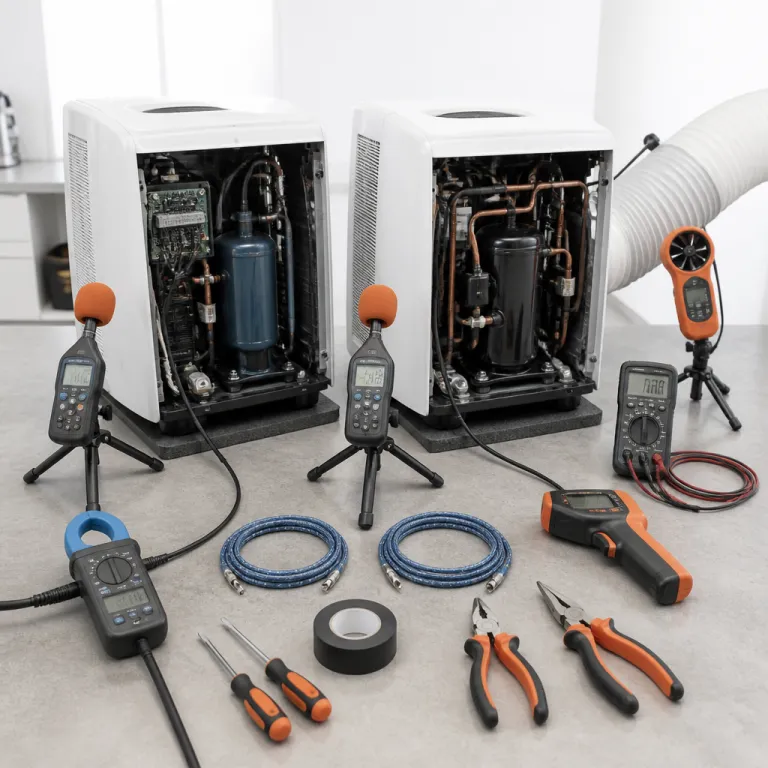
Section 1 – Why inverter vs fixed speed matters for a single hot room
If you work from a small home office, you feel every degree. A west facing room with a laptop, a monitor and a human body can climb from 24 °C to 30 °C in under an hour, and a basic portable air conditioner with a fixed speed compressor often turns that office into a noisy wind tunnel. The core question behind any buying decision is simple yet rarely framed clearly as inverter portable air conditioner vs fixed speed for one specific room.
Traditional air conditioners in this category use a single speed compressor that runs at full power, then shuts off completely once the thermostat hits the target temperature. That on off cycling means the air temperature in the room constantly drifts a few degrees up and down, and every restart of the compressor sends noise levels spiking just as your video call begins. In contrast, an inverter air system in a portable air conditioner uses electronics to vary compressor speed, so it can cool hard at first then glide at a lower speed to maintain a stable temperature with far less drama.
For a remote worker, that difference inverter in behaviour is not academic. A fixed speed portable air conditioner might roar at 55 dB on high, drop to silence when the compressor cuts, then slam back to 58 dB every ten minutes as the room warms, which makes concentration difficult. An inverter portable air conditioner can ramp down to a low hum around 44 dB once the room is cool, and that steady sound profile matters more than any marketing claim about peak BTU or smart features.
Section 2 – How fixed speed compressors waste energy and create noise spikes
To understand inverter portable air conditioner vs fixed speed, start with how a conventional compressor behaves. In fixed speed models, the compressor is either drawing near its rated wattage or it is off, so the air conditioning system repeatedly slams from zero to full load. Each start up can pull three to five times the running watts for a brief moment, which is why lights sometimes dim when old window air conditioners or older portable acs kick on.
That electrical surge translates into both higher energy use and more noise. When the compressor starts, refrigerant pressure jumps, the fan ramps up to move more air, and the whole portable air conditioner cabinet vibrates, which is what you hear as a harsh buzz rather than a smooth whoosh. Over a long afternoon, this cycling can happen dozens of times, and the repeated peaks in noise levels are what make fixed speed conditioners feel louder than their spec sheet suggests.
From a cost perspective, those start stop cycles add up on your bill. Independent testing of portable air conditioners running eight hours a day shows that inefficient cycling can add several kilowatt hours per week compared with smoother operation, and that is before you factor in infiltration air losses from single hose designs. If you want a deeper breakdown of how schedule and runtime affect real electricity use, a detailed analysis of the real kWh cost of running a portable AC eight hours a day and the smart schedule cuts is available in this energy cost guide for portable units.
Section 3 – How inverter compressors smooth temperature, sound and bills
An inverter compressor works differently, and that difference inverter in control strategy is the heart of the inverter portable air conditioner vs fixed speed debate. Instead of a simple on off relay, an inverter air conditioner uses power electronics to vary the frequency supplied to the compressor motor, which lets it run at many speeds. At the start of a hot afternoon, the compressor can spin fast to pull the room temperature down quickly, then slow to a gentle pace once the setpoint is reached.
This variable speed compressor behaviour has three direct benefits for a home office. First, the air temperature in the room stays within about one degree of the target, so you avoid the sweaty ten minutes before a fixed speed unit restarts and the chilly blast right after it does. Second, because the compressor rarely stops completely, the noise levels stay almost flat, which your brain quickly tunes out as a background hum rather than a series of intrusive bursts.
Third, the energy profile becomes smoother and lower. Instead of drawing a big spike of power every cycle, the inverter models settle into a lower energy plateau once the room is cool, and manufacturers commonly report 30 to 35 percent lower consumption in that steady state. If you are comparing refrigerants and long term efficiency in portable air conditioners more broadly, it is worth reading a technical overview of R410A in portable units and what informed buyers need to know in this portable AC refrigerant explainer.
Section 4 – Real world models: which portable ACs use true inverter compressors
Marketing copy around inverter portable air conditioner vs fixed speed can be confusing, because many air conditioners use words like smart or eco without actually including an inverter compressor. A true inverter air design will explicitly mention variable speed compressor control, and the most reliable way to confirm is to check the technical specifications or independent lab tests. In the current portable air conditioning market, only a handful of models combine a genuine inverter compressor with a portable form factor suitable for a single room office.
The Midea Duo MAP14HS1TBL is one of the best known inverter models, pairing a dual hose layout with an inverter compressor to reduce infiltration air and keep noise levels down. Whynter’s NEX ARC 1230WN is another inverter air conditioner that has been measured at around 44 dB on low fan speed at a distance of a few metres, which is significantly quieter than many fixed speed conditioners rated at 52 dB or more. Hisense offers the HAP0824TWD, a compact portable air conditioner that uses inverter technology to serve smaller rooms where a mini split is not practical.
These inverter models typically cost 100 to 200 dollars more than comparable fixed speed acs in the same cooling capacity range. However, when you factor in lower energy use and the reduced wear on components from gentler operation, the payback period often falls between one and two summers for someone running the unit six to eight hours a day. If you want a curated list of portable air conditioners, including both inverter acs and efficient fixed speed units, focused on bedroom and office use, you can consult this expert guide to top portable air conditioners for bedrooms.
Section 5 – Noise, efficiency and the home office: what actually matters
For a home office worker, the inverter portable air conditioner vs fixed speed choice is really about how the unit behaves between 13:00 and 17:00 when meetings stack up. A fixed speed portable air conditioner might cool the room adequately, but every time the compressor restarts, the sudden jump in sound can cut through headphones and microphones. Inverter air conditioners, by contrast, tend to hold a steady acoustic profile, which is why a 44 dB inverter unit often feels quieter than a 50 dB fixed speed model on paper.
Energy efficiency follows a similar pattern. Once the room temperature reaches your target, an inverter compressor can drop to a lower speed and maintain comfort with less power, while a fixed speed compressor has no choice but to cycle fully on and off, wasting energy at each start. Over a long cooling season, that lower energy plateau can translate into meaningful savings, especially in regions where electricity tariffs spike during peak afternoon hours.
Other details still matter, such as whether the portable air conditioner is a single hose or dual hose design, how well the window kit seals, and whether the unit’s air filters are easy to clean. However, if you are comparing two otherwise similar air conditioners, the presence of an inverter compressor is often the single biggest predictor of both real world noise levels and long term running costs. In practical terms, it is not the BTU rating on the box that defines comfort, but the temperature stability and sound profile you experience at 15:00 on a sweltering workday.
Section 6 – Cost, payback and when a fixed speed unit still makes sense
The price premium for inverter portable air conditioner vs fixed speed models can look steep when you are scanning online listings. In many regions, a 12 000 BTU class fixed speed portable air conditioner might sell for around 400 dollars, while an inverter air model with similar nominal capacity sits closer to 520 or 550 dollars. That 100 to 150 dollar gap is real, but it does not tell the whole story for someone running the unit daily in a home office.
If you operate a portable air conditioner for six to eight hours a day through the hottest months, the lower energy use of an inverter compressor can save roughly 40 to 60 dollars per season, depending on local electricity prices. Spread over two summers, those savings can offset the initial premium, and you still benefit from lower noise levels and smoother temperature control throughout the unit’s life. In that sense, the inverter models function more like modern dual inverter washing machines, which cost more upfront but pay back through reduced energy and gentler operation.
There are still scenarios where a fixed speed portable air conditioner is a rational choice. If you only need to cool a guest room for a few weekends a year, or you are renting a short term flat where you cannot install a mini split or window air conditioner, the lower purchase price of a fixed speed unit may outweigh its higher running costs. For a dedicated home office where you care about both quiet and efficiency, though, a conditioner inverter design is usually the more energy efficient and less stressful companion for long workdays.
Key figures on inverter vs fixed speed portable AC performance
- Independent lab tests of inverter portable air conditioners show noise levels as low as 44 dB on low fan speed at a few metres, compared with typical fixed speed units that often measure 52 dB or higher under similar conditions, which represents roughly a halving of perceived loudness for the listener.
- Manufacturers of inverter compressor portable air conditioners commonly report 30 to 35 percent lower energy consumption once the room reaches the set temperature, which aligns with field measurements showing smoother, lower power draw during steady state operation compared with fixed speed compressors.
- Price comparisons between similar capacity portable air conditioners indicate that inverter models usually cost 100 to 200 dollars more upfront than fixed speed models, but the reduced electricity use can recoup this premium within one to two cooling seasons for users running their units six to eight hours daily.
- Noise measurements of portable air conditioners reveal that on off cycling in fixed speed compressors can create sound spikes of up to 10 dB above the baseline fan noise, whereas inverter compressors maintain a nearly constant sound level, which is less disruptive during calls and focused work.
- Energy audits of households using portable air conditioners as primary cooling in one or two rooms show that upgrading from an older fixed speed unit to a modern inverter portable model can reduce annual cooling electricity consumption by several hundred kilowatt hours, depending on climate and usage patterns.
FAQ
How do I tell if a portable AC really has an inverter compressor ?
To confirm whether a portable air conditioner uses an inverter compressor, check the technical specifications for terms like variable speed compressor or inverter technology rather than just eco or smart mode. Genuine inverter models usually highlight their ability to modulate compressor speed and may list a wider range of operating capacities instead of a single fixed BTU figure. When in doubt, look for independent reviews or lab tests that explicitly mention inverter control rather than relying solely on marketing language.
Is an inverter portable AC always more energy efficient than a fixed speed model ?
In most real world scenarios, an inverter portable air conditioner is more energy efficient than a fixed speed model because it avoids repeated high power start ups and runs at lower speeds once the room is cool. However, the actual savings depend on how many hours per day you use the unit, your local electricity rates and how well the room is sealed and insulated. For very occasional use, the efficiency advantage may not fully offset the higher purchase price, but for daily home office cooling it usually does.
Will an inverter portable AC be quiet enough for video calls ?
Inverter portable air conditioners are generally better suited to video calls than fixed speed units because they maintain a steady, lower noise level instead of cycling loudly on and off. A well designed inverter model running on low or medium fan speed can stay in the mid 40 dB range, which is similar to a quiet office and often masked by normal conversation. Positioning the unit a few metres away and using the lowest fan speed that still maintains temperature will further reduce microphone pickup.
When should I choose a fixed speed portable AC instead of an inverter model ?
A fixed speed portable air conditioner can still be a sensible choice if your usage is very occasional, your budget is tight or you need a temporary solution for a short term rental. In those cases, the lower upfront cost may matter more than long term energy savings or reduced noise levels. For a primary home office or bedroom where you run the unit many hours per week, an inverter model usually offers better comfort and lower total cost of ownership.
Does inverter technology change how I size a portable AC for my room ?
Inverter technology does not radically change the basic sizing rules, so you still match the portable air conditioner’s capacity to your room’s floor area, insulation and solar exposure. However, because inverter compressors can modulate output, they handle partial load conditions more gracefully and are less likely to short cycle if slightly oversized. That flexibility means an inverter unit can often provide more stable temperature control across a wider range of weather conditions than a comparable fixed speed model.