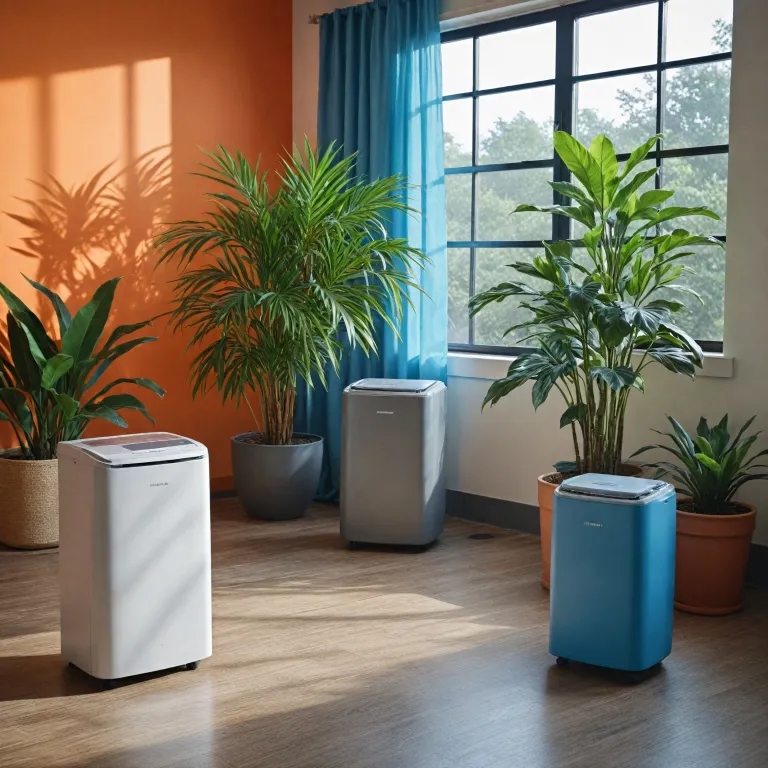
Understanding how a spot cooler works in real rooms
A modern spot cooler is designed to send focused cold air exactly where people feel the most heat. In practice, this portable air technology captures warm room air, passes it over a refrigeration circuit, then exhausts the unwanted heat outside through a flexible duct. The result is a compact air conditioner unit that targets a workstation, a bed, or a machine rather than wasting energy on the entire building.
Engineers describe this as spot cooling because the cooler concentrates its cooling solution on a limited area instead of the whole volume. Compared with traditional room air conditioners, these mobile spot products often reach the desired temperature faster, especially in small or partitioned spaces. This focused air flow also helps people stay cool while allowing the rest of the cooler room to operate at a slightly higher temperature, which can reduce energy use.
Most spot coolers use a sealed refrigeration product circuit similar to that of larger air conditioners. A compressor, an evaporator coil, and a condenser coil work together to transform refrigerant and move heat from the occupied spot to the exterior. Because the unit is portable, users can roll the conditioner between rooms, connect the exhaust hose, and regain control over their indoor climate with minimal installation work.
Leading brands such as MovinCool have refined this industrial spot concept for factories, server rooms, and offices. Their Climate Pro and Pro Series lines show how a single mobile spot unit can protect sensitive equipment while keeping technicians comfortable. For residential users, smaller portable air conditioners and compact fan assisted spot coolers offer similar benefits in bedrooms, home offices, and rental apartments.
Comparing spot coolers with other portable air conditioners
People often compare a spot cooler with a standard portable air conditioner when choosing a cooling solution for a hot flat or office. Both products use refrigerant and blow cold air, yet their design priorities differ in important ways. A conventional portable air conditioner aims to cool the entire room air volume, while spot coolers focus their air flow on a specific workstation, machine, or queue area.
This difference in strategy affects efficiency portable performance and comfort. When only one or two people occupy a large space, spot cooling can reduce wasted energy because the cooler does not need to push cold air into unused corners. In contrast, portable air conditioners that treat the whole room may cycle longer, especially in poorly insulated buildings or rooms with large windows.
Consumers also weigh brands, features, and long term operating costs before buying these conditioners. Some brands emphasize smart control, offering Wi Fi connectivity and app based interfaces that make it easy to adjust fan speed or temperature. Others highlight rugged construction for industrial spot environments, where dust, vibration, and continuous operation challenge every unit.
When comparing products, it helps to read detailed tests of portable air conditioners and spot coolers. For example, this in depth review of a Whynter portable AC unit explains how exhaust design, hose quality, and control logic influence real world cooling. Similar principles apply to any spot cooler, whether it serves a small bedroom, a server rack, or a temporary event tent. By examining both singular product specifications and broader product ranges, buyers can find a balanced solution.
Key components that define a high performing spot cooler
Behind every efficient spot cooler lies a set of carefully matched components. The compressor, evaporator, condenser, and expansion device must work in harmony to move heat from the occupied spot to the outside air. If any part is undersized or poorly controlled, the portable air conditioner will struggle to maintain stable cold air output.
The fan system deserves particular attention because it shapes air flow and noise. A well designed fan can push conditioned air several metres across a cooler room without creating disruptive drafts or excessive sound. In industrial spot applications, engineers often specify higher static pressure fans to overcome duct resistance and deliver reliable spot cooling to machinery or process lines.
Control electronics also influence how these conditioners behave in daily use. Simple models rely on mechanical thermostats and basic switches, which keep costs low but limit fine tuning. More advanced brands integrate digital control, programmable timers, and sometimes remote monitoring, giving facility managers precise control over multiple spot coolers across a site.
Many Climate Pro and Pro Series units from MovinCool illustrate how robust construction extends product life in demanding environments. Heavy duty casings, washable filters, and service friendly layouts make it easy to maintain these products and keep their cooling solution efficient. For smaller flats or home offices, compact portable air conditioners with intuitive control panels and clear status lights help non specialists operate the unit confidently.
Choosing the right capacity and configuration for your space
Selecting a spot cooler begins with understanding the heat load in the target room air. Factors such as floor area, ceiling height, insulation quality, and solar gain all influence how much cold air the unit must deliver. In industrial spot settings, additional heat from machinery, lighting, and occupants further increases the required cooling capacity.
Manufacturers express capacity in watts or BTU per hour, and matching this figure to real conditions is essential for efficiency portable performance. An undersized portable air conditioner will run continuously yet never fully cool the spot, while an oversized unit may short cycle and fail to control humidity. Many brands provide sizing charts or online calculators to help users find an appropriate product for their specific cooler room or workstation.
Configuration also matters, especially when routing exhaust and managing condensate. Single duct spot coolers pull some air from the room to cool the condenser, while dual duct designs separate intake and exhaust for more stable spot cooling. In both cases, installers must ensure that the unit can reject heat effectively and that any condensate drains safely, whether to a tank, a pump, or a floor drain.
For users comparing multiple products, it can be helpful to read detailed equipment tests such as this Leto Series mini split air conditioner and heat pump review. Although a mini split is not a portable air conditioner, the discussion of inverter technology, control logic, and installation constraints offers useful context. By comparing fixed systems, mobile spot units, and traditional air conditioners, readers can stay cool while balancing flexibility, cost, and long term comfort.
Practical usage tips for portable spot coolers in daily life
Once a spot cooler is in place, small habits can significantly improve its performance. Positioning the unit so that its cold air stream reaches people or equipment directly will enhance perceived cooling without increasing power. Users should avoid placing the conditioner behind furniture or in tight corners, where restricted air flow can reduce efficiency portable benefits.
Regular maintenance keeps these products reliable and safe. Cleaning or replacing air filters prevents dust from clogging the cooler coils and fan blades, which would otherwise reduce spot cooling capacity. Inspecting the exhaust duct, checking for kinks, and ensuring a tight window or ceiling seal help maintain proper room air balance and prevent hot air from leaking back inside.
In shared offices or workshops, clear communication about control settings can avoid conflicts and wasted energy. Agreeing on a reasonable temperature setpoint, fan speed, and operating schedule allows everyone to stay cool without overworking the portable air conditioner. Some advanced brands offer lockable control panels or remote control options, which facility managers can use to standardize operation across several spot coolers.
For households, a small mobile spot unit can supplement central air conditioners during heat waves or serve as the primary cooling solution in rented flats. Placing the conditioner in the bedroom before bedtime, then moving the unit to a home office during the day, maximizes the value of a single product. With thoughtful placement and routine care, both singular cooler units and larger fleets of conditioners can provide reliable comfort.
When industrial spot coolers become a strategic investment
In commercial and industrial environments, a spot cooler is more than a comfort accessory. Targeted cold air can protect electronics, stabilize production processes, and safeguard worker health in hot zones. When a single failed server or overheated machine can halt operations, investing in robust industrial spot coolers becomes a risk management decision.
Brands such as MovinCool have built their reputation on mobile spot systems that withstand demanding conditions. Their Climate Pro and Pro Series ranges are engineered to deliver consistent air flow, even in high ambient temperatures and dusty workshops. Facility managers often deploy multiple units to create a flexible cooling solution that can move with changing production lines or temporary projects.
These conditioners also support energy strategies that go beyond simple comfort. By using spot cooling to treat only the hottest workstations, companies can raise the setpoint of central air conditioners and reduce overall energy consumption. This approach aligns with broader sustainability goals while helping staff stay cool and productive during peak heat.
From a financial perspective, the cost of several portable air conditioners or spot coolers may be modest compared with downtime or damaged products. Decision makers evaluate not only purchase price but also maintenance, expected service life, and the ability to redeploy each unit as needs evolve. In this context, a well chosen spot cooler becomes a versatile asset rather than a temporary fix.
Navigating brands, features, and online resources before you buy
People researching a spot cooler today face a crowded marketplace with many overlapping claims. To cut through the noise, it helps to focus on a few core criteria such as capacity, efficiency portable performance, noise level, and build quality. Comparing several products side by side, including both compact portable air conditioners and larger industrial spot units, reveals meaningful differences.
Reputable brands usually provide clear technical data, honest performance ratings, and transparent warranty terms. Shoppers should pay attention to how each conditioner handles air flow, condensate management, and control options, rather than relying solely on marketing language. Reading detailed tests of air conditioners and spot coolers can highlight strengths and weaknesses that are not obvious from brochures.
Online resources can support this evaluation process when used critically. Manufacturer websites, independent testing labs, and specialized blogs often offer main content sections where readers can skip main promotional claims and go directly to technical analysis. Many sites also provide view resources links, allowing users to find installation guides, maintenance tips, and troubleshooting information for specific cooler models.
When comparing singular product reviews and broader product roundups, readers should look for consistent patterns rather than isolated opinions. If multiple sources praise a unit’s cold air delivery, quiet fan operation, and robust construction, that conditioner likely merits consideration. By combining careful research with a clear understanding of their own room air challenges, buyers can select spot coolers that help them stay cool efficiently and reliably.
Key statistics about spot coolers and portable air conditioners
- Up to 60 % of a building’s cooling energy can be focused on only 20 % of its floor area, which makes targeted spot cooling a powerful efficiency lever.
- Portable air conditioners and spot coolers can reduce perceived temperature at a workstation by 3 to 5 °C without lowering the overall room air temperature as much.
- In industrial environments, mobile spot units are often specified to operate reliably at ambient temperatures above 40 °C, protecting equipment and staff in extreme heat.
- Regular maintenance, especially filter cleaning, can improve a spot cooler’s effective cooling capacity by 10 to 15 % compared with neglected units.
- Well planned deployment of industrial spot coolers can cut central HVAC runtime by up to 25 % in large facilities with localized heat sources.
Questions people often ask about spot coolers
Are spot coolers more efficient than traditional portable air conditioners ?
Spot coolers can be more efficient when only a limited area needs cooling, because they direct cold air to that specific spot instead of treating the entire room. This targeted approach reduces wasted energy in unoccupied zones. However, for uniformly occupied spaces, a conventional portable air conditioner or central system may be more appropriate.
Can a spot cooler replace a fixed air conditioning system ?
A spot cooler can sometimes replace a fixed system in small or temporary spaces, especially where installation of ductwork or outdoor units is impractical. In larger buildings, it usually serves as a supplement, providing extra cooling to hot spots that central air conditioners cannot handle effectively. The decision depends on room size, heat load, and long term occupancy patterns.
Do spot coolers require professional installation ?
Most portable spot coolers are designed for easy user installation, requiring only a suitable exhaust path for hot air and a power outlet. Industrial models may need more careful planning for condensate drainage and electrical supply, which can justify professional assistance. In all cases, following the manufacturer’s instructions is essential for safety and performance.
How noisy are spot coolers in offices or bedrooms ?
Noise levels vary widely between models, with some small portable air conditioners suitable for bedrooms and others better suited to workshops. Buyers should check the specified sound level in decibels and consider fan speed settings that balance cooling with acoustic comfort. Placement in the room and use of flexible ducts can also influence perceived noise.
What maintenance do spot coolers need over time ?
Routine maintenance typically includes cleaning or replacing air filters, inspecting exhaust ducts, and checking for leaks or unusual noises. Some units require periodic condensate tank emptying or pump inspection, especially in humid climates. Regular attention helps maintain cooling capacity, extend product life, and preserve energy efficiency.