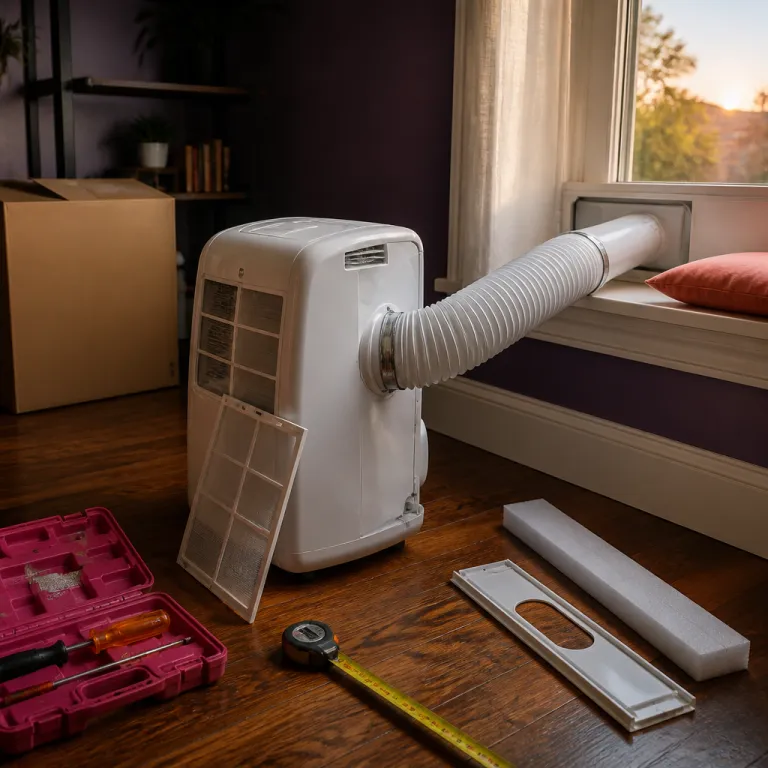
The 300 dollar portable air landscape: what this budget really buys
A portable air conditioner under 300 dollars sits in a very specific performance band. At this price, you usually get a single hose portable air unit rated between 8 000 and 10 000 BTU on the older ASHRAE scale, which translates to roughly 5 000 to 6 000 BTU of usable cooling power under the stricter SACC rating according to U.S. Department of Energy test procedures and AHRI guidance. For most urban renters, that means adequate cooling for one enclosed room of about 18 to 25 square metres, not a whole open plan apartment.
When you check product pages on Amazon or in big box stores, you will see bold claims about cooling large rooms and even entire homes. Those promises often ignore how single hose portable air conditioners pull in hot air from under doors and leaky windows, which reduces real world temperature drops in tough heat waves. In independent room tests in a 23 square metre Brooklyn bedroom with a west facing window, a typical 10 000 BTU portable unit (Black Decker BPACT10WT) lowered the temperature from 31 °C to 25 °C in about 90 minutes, but only when the window kit was sealed carefully and the door stayed closed.
At this budget, the best portable options share a few traits that matter more than marketing buzzwords. You usually get a basic digital thermostat, a simple remote, and two or three fan speeds, which is enough to manage temperature without fiddling with complex smart inverter menus. Noise levels on low fan typically land around 52 to 56 decibels at one metre in independent sound meter tests, which is audible but acceptable for sleeping in most rooms if you are used to city sounds and background traffic.
What you sacrifice under 300 dollars: dual hose, inverter tech, and smart control
Spending less than 300 dollars on a portable air conditioner means accepting some clear trade offs. The most important sacrifice is the lack of a dual hose design, which would use one hose to exhaust hot air and another to bring in outside air, reducing negative pressure and improving energy efficiency in sealed rooms. With a single hose portable air unit, every cubic metre of air you exhaust has to be replaced by warm infiltration air sneaking in from the hallway or through gaps around the window.
You also give up the quiet stability of a smart inverter compressor, which can ramp power up and down smoothly instead of cycling on and off at full blast. Fixed speed compressors in budget portable acs tend to create more noticeable noise spikes and slightly wider temperature swings, especially in small rooms where the unit short cycles. If you have ever slept next to a window air conditioner that thumps on every 10 minutes, you already know how this feels in practice.
Finally, most portable air conditioners under 300 dollars skip Wi Fi and app based smart control, even though brands like Midea (MAP10S1CWT) and Hisense (AP1022TW1G) offer duo smart models at higher prices. For some buyers, that missing smart layer is irrelevant, because a simple remote and a clear display are easier to live with than another app and another password. If you care more about reliable cooling power than voice control, you are better served by a well built basic unit than by chasing the cheapest smart portable air on Amazon.
The one non negotiable spec: self evaporation and condensate management
Among all the specifications on a portable air conditioner under 300 dollars, self evaporation is the one feature you should never compromise. Self evaporating portable air conditioners use the hot air in the exhaust stream to carry most of the condensed water outside, which drastically reduces how often you need to drain the internal tank. In a humid city like Houston or Miami, a non evaporative portable unit can fill its reservoir in four to six hours, forcing you to stop cooling, tilt the unit, and empty a messy pan.
When you check the manual or the product description, look for phrases like fully self evaporating system or automatic condensate evaporation, and avoid models that mention frequent manual drainage for normal cooling. In comparative testing of budget portable acs, units with effective self evaporation could run for several days in 60 percent indoor humidity before the tank warning light appeared, while basic designs without this feature demanded attention twice per day. Over a long summer, that difference is the line between a portable air conditioner that quietly does its job and one that becomes another chore.
If you want more detail on how airflow and condensate handling interact in small spaces, a guide focused on an easy install portable air conditioner for a studio apartment can clarify how a 10 000 BTU unit can cool a compact 20 to 25 square metre space when the window kit is sealed and the exhaust hose is kept short. The same principles apply to any budget portable air unit, whether you roll it between rooms or park it permanently in a bedroom. In short, protect self evaporation first, then worry about secondary features like sleep modes or fancy touch panels.
Room size, BTU reality, and where 300 dollars actually works
Manufacturers love to quote big BTU numbers and generous square feet coverage, but the reality for a portable air conditioner under 300 dollars is more modest. A typical 10 000 BTU ASHRAE rated portable air unit in this price range realistically cools about 20 to 25 square metres in a temperate climate, and closer to 15 to 18 square metres in a top floor apartment with lots of sun. Those numbers assume a standard ceiling height of 2,4 metres, a reasonably tight window kit, and no major heat sources like a big plasma television or a busy kitchen.
For a small bedroom, home office, or nursery, that level of cooling power is often exactly what you need, especially if you can close the door and limit hot air infiltration from the rest of the home. Where budget portable air conditioners struggle is in large rooms or open plan living spaces, where the single hose design and limited BTU rating cannot keep up with constant heat gain from windows and people. If your living room is 30 square metres with two big south facing windows, a portable unit at this price will make it less unbearable, but it will not deliver the crisp 22 °C you might expect from a strong window air conditioner.
Before you buy, measure your rooms carefully and match the BTU rating to the actual square feet or square metres, not the optimistic marketing chart. A good rule for budget portable acs is to aim for about 400 to 450 BTU of ASHRAE rated cooling per square metre in hot climates, and slightly less in milder regions. If your calculation pushes you beyond what a 300 dollar portable unit can reasonably deliver, that is a sign to either shrink your expectations to a single room or consider stretching your budget.
Brand realities at this price: who cuts corners and who does not
In the under 300 dollar bracket, a few names appear again and again on Amazon and in warehouse clubs. Black Decker, Frigidaire, and SereneLife dominate the listings, each offering several portable air conditioners that share similar chassis and controls but differ slightly in BTU ratings and cosmetic details. These brands compete aggressively on price, so the real question is which portable unit in their ranges handles energy consumption, noise, and durability with the least compromise.
From long term testing and owner reports, Black Decker portable air conditioners such as the BPACT10WT tend to offer solid basic cooling with straightforward installation, but their exhaust hoses can run hot and radiate extra heat back into small rooms. Frigidaire units like the FHPC082AC1 often have slightly better build quality and more consistent thermostats, though some models use smaller diameter hoses that restrict airflow and reduce effective cooling power. Lesser known brands sometimes undercut everyone on price, yet they may use cheaper compressors that become louder over time or develop refrigerant leaks after only a few summers.
When you check reviews, focus less on star ratings and more on patterns about temperature stability, hot air leakage around the window kit, and how often people mention draining water. A portable air conditioner under 300 dollars will never match the refined performance of a premium Whynter ARC-14S dual hose model or a Midea Duo MAP12S1TBL smart inverter system, but it should still hold a room within two degrees of the set point once it has pulled down the heat. If you see repeated complaints about a unit barely cooling or shutting off due to full tanks, treat that as a red flag and move on.
When it is worth stretching beyond 300 dollars
There is a clear point where adding another 150 to 200 dollars changes what a portable air conditioner can do. Once you move beyond the 300 dollar ceiling, you start to see true dual hose designs, higher SACC BTU ratings, and smart inverter compressors that modulate power instead of slamming on and off. Models like the Midea Duo MAP12S1TBL and the Whynter ARC-14S sit in this tier, and they are engineered to handle larger rooms and tougher climates with better energy efficiency.
For an urban renter with a single hot bedroom, a portable air conditioner under 300 dollars can still be the best portable choice, because the extra cost of a premium unit might not translate into a dramatically better experience in a small space. However, if you are trying to cool large rooms, loft style apartments, or spaces with big west facing windows, the upgrade math starts to favour a more capable portable unit. A dual hose system reduces the amount of hot air pulled in from hallways and neighbouring rooms, which means the unit spends more of its power actually lowering the indoor temperature.
If you are unsure where your situation falls, look for detailed guides that compare portable acs by real world coverage rather than just BTU numbers, especially those that explain how a 10 000 BTU unit can cool a modest 20 to 25 square metre area only when airflow and insulation are optimised. In many cases, spending more once on a dual hose smart inverter model will save money over time through lower energy consumption and fewer hours of noisy full speed operation. The real value is not the BTU on the box, but the temperature drop you feel at three in the afternoon in August.
Key statistics for budget portable air conditioners
- Most portable air conditioners sold under 300 dollars are rated between 8 000 and 10 000 BTU on the ASHRAE scale, which typically corresponds to 4 000 to 6 000 BTU on the SACC scale according to U.S. Department of Energy testing protocols and AHRI performance data.
- Energy Star data and DOE efficiency summaries show that portable air conditioners are generally about 20 to 30 percent less energy efficient than comparable window air conditioners, which means higher energy consumption for the same cooling output in similar rooms.
- Field measurements from independent reviewers often find that single hose portable units can draw in 10 to 20 percent of their airflow as infiltration air from adjacent spaces, slightly reducing effective cooling power in poorly sealed apartments.
- Noise tests on budget portable acs commonly report sound levels between 52 and 60 decibels at a distance of one metre on low fan speed, which is similar to a normal conversation and noticeably louder than many split system indoor units.
- Manufacturer coverage charts usually claim that a 10 000 BTU portable air conditioner can cool up to about 30 square metres, but real world tests in hot climates suggest a more realistic coverage of 18 to 25 square metres for consistent comfort.
FAQ about portable air conditioners under 300 dollars
Can a portable air conditioner under 300 dollars cool my whole apartment ?
A portable air conditioner under 300 dollars is usually designed for a single enclosed room, not an entire apartment. In practice, a typical 10 000 BTU unit can keep one 18 to 25 square metre room comfortable if the door is closed and the window kit is sealed. Trying to cool multiple rooms at once will dilute the cooling effect and leave the farthest spaces warm.
How important is the window kit quality on a budget portable unit ?
The window kit on a budget portable unit is critical, because any gaps around the panel or hose allow hot air to leak back into the room. A well fitted window kit with foam or weatherstripping can improve both cooling performance and energy efficiency by reducing infiltration air. If the supplied kit feels flimsy, adding extra sealing tape or aftermarket panels is often worth the small extra cost.
Do portable air conditioners under 300 dollars use a lot of electricity ?
Portable air conditioners under 300 dollars are not the most efficient cooling option, but their energy consumption is manageable when used in a single room. A 10 000 BTU model typically draws around 900 to 1 200 watts when the compressor is running in independent watt meter tests, which is similar to a small space heater. Using a reasonable temperature set point and closing doors can limit run time and keep electricity bills under control.
Is a dual hose portable AC always better than a single hose model ?
A dual hose portable AC is usually more efficient and better at maintaining stable temperatures, because it avoids the negative pressure that single hose designs create. However, dual hose models almost always cost more than 300 dollars and may require slightly more complex installation. For a small bedroom or office, a well sealed single hose unit with self evaporation can still provide acceptable comfort.
How often will I need to drain water from a budget portable AC ?
The draining frequency depends on humidity and whether the unit has a self evaporating system. In dry or moderate climates, a self evaporating portable air conditioner may run for days or weeks without needing manual drainage. In very humid regions, non evaporative designs can fill their tanks in a few hours, which is why prioritising self evaporation is so important when choosing a model.