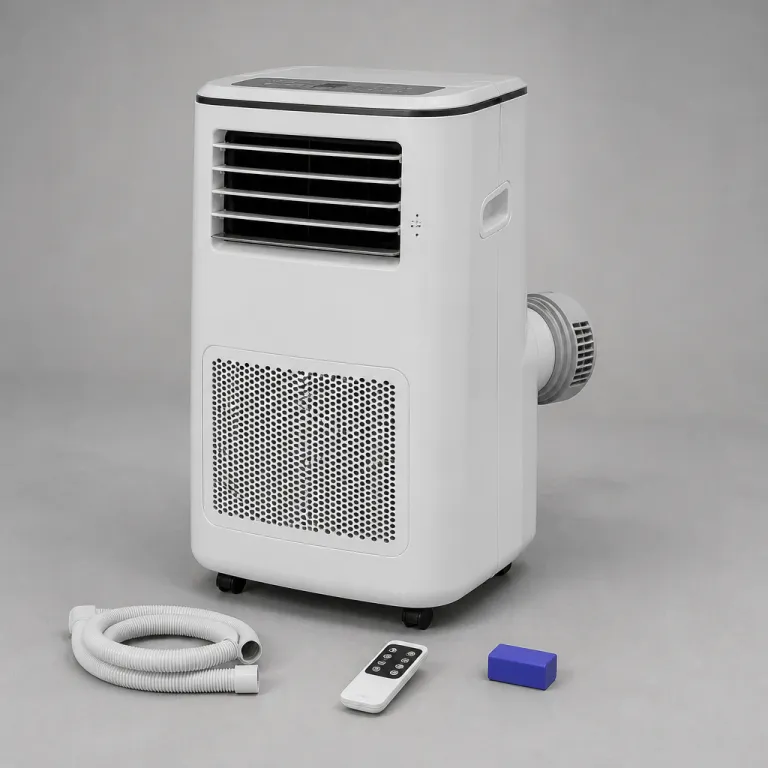
Why the best portable air conditioner under 500 dollars 2026 lives in three tiers
The market for any portable air conditioner under 500 dollars quietly splits into three tiers. That split is exactly where the real best portable air conditioner under 500 dollars 2026 emerges, because each tier trades raw cooling power, noise and durability in very different ways. If you understand what each portable unit tier actually delivers in your room, you stop comparing random air conditioners and start matching a specific conditioner to your square feet and budget.
Tier one portable air units sit roughly between 150 and 250 dollars. They are almost always a single hose design, with fixed speed compressors and headline BTU ratings around 6,000 to 8,000 BTU SACC, which is the modern standard that reflects real world cooling instead of inflated marketing numbers. In practice, these portable air conditioners work best in a small room under about 18 square metres, and they struggle badly if you try to cool a larger space or an open plan area.
Tier two portable units run from about 250 to 400 dollars. You still mostly get a single hose portable air conditioner, but the build quality, fan motors and airflow improve, and some conditioners add smart control through a WiFi app alongside a basic remote control. Tier three is where the best portable air conditioner under 500 dollars 2026 really lives, because dual hose or inverter based portable acs finally deliver stable cold air without constantly dragging hot infiltration air through leaky window frames.
Think of these three tiers as different tools rather than better or worse versions of the same unit. A tier one portable unit is a stopgap for a guest room, while a tier three dual hose portable air conditioner can be a permanent cooling solution for a main bedroom or home office. The key is to match the conditioner tier, the BTU rating and the hose design to your actual room size, your window situation and how often you will run the fan on the hottest days.
Tier one: 150–250 dollars and what a budget portable unit really cools
Tier one is where most people start when they search for the best portable air conditioner under 500 dollars 2026 during a heat wave. These portable units usually promise big BTU numbers on the box, but when you look for the SACC rating you will often see only 6,000 to 8,000 BTU, which is barely enough cooling for a 14 to 18 square metre bedroom. In a real apartment, that means a single hose portable air conditioner in this tier can keep one closed room reasonably cool, but it will not push cold air down a hallway or into a second room.
Every tier one portable air unit we have tested has a single hose design that exhausts hot air through a plastic panel in a window. That single hose setup pulls replacement air from under the door and through wall cracks, which means warm outside air constantly sneaks back in and forces the conditioner to work harder. You feel this as a fan that never cycles off, a compressor that roars at night and air conditioners that still leave the room a few degrees warmer than you hoped.
Noise is the other big trade off in this price band. Budget portable acs often hit 55 to 60 decibels at one metre on high fan, which is loud enough to mask conversation and make sleep difficult for light sleepers. You still get a basic remote, a few fan speeds and maybe a simple timer, but you rarely see smart app control or any serious attempt to manage condensate beyond a small internal tank that needs manual draining.
For a renter with a small bedroom and a strict budget, a tier one portable air conditioner can still be the best portable choice if you accept its limits. Keep the room door closed, block light leaks around the window kit and do not expect this conditioner to cool more than about 18 square metres. If you want a sense of how a compact 9,000 BTU class portable unit behaves in a real room, a detailed hands on review of a 4 in 1 9,000 BTU air conditioning unit for rooms up to about 42 square metres offers a useful benchmark for this whole tier.
Tier two: 250–400 dollars, the popular single hose middle ground
Move up to tier two and the best portable air conditioner under 500 dollars 2026 starts to look more serious. These portable units usually advertise 10,000 to 12,000 BTU on the box, but the honest SACC numbers land closer to 8,000 to 10,000 BTU, which is enough cooling for roughly 23 to 28 square metres if your insulation is average. In a typical American living room with one large window and a hallway attached, that means the conditioner can keep the main room comfortable while the far corners stay a little warmer.
Most tier two portable air conditioners still rely on a single hose design, yet the hardware improves. You see sturdier casters, thicker plastic on the window kit, better fan motors and more thoughtful airflow paths that push cold air higher into the room instead of straight at your shins. Many conditioners in this band add smart control through a WiFi app, so you can start the portable unit from work, tweak fan speed remotely and avoid coming home to a stuffy room.
Remote control layouts also become less frustrating. Buttons are clearer, temperature set points are more accurate and the fan modes actually change noise levels instead of just renaming the same airflow. You still have to live with the physics of a single hose portable air conditioner, which means some warm infiltration air will always sneak back in around the window units and under doors, but the better sealing and higher SACC ratings make the compromise easier to live with.
For shoppers who can wait, timing matters as much as tier choice. A detailed guide to a Prime Day portable AC strategy shows how list prices on portable acs in this band often inflate before big sales, then drop to genuinely fair levels for a few days. If you are patient, that strategy can turn a 380 dollar portable air conditioner into a 320 dollar buy, which suddenly makes a higher tier unit feel like the best portable option for a tight budget.
Tier three: 400–500 dollars, where dual hose and inverter tech change the game
Tier three is where the best portable air conditioner under 500 dollars 2026 stops feeling like a compromise and starts behaving like a small split system on wheels. In this band you finally see dual hose designs and inverter compressors, which together change how efficiently the unit moves heat out of your room. Instead of one hose dumping hot air and sucking unconditioned air back through gaps, a dual hose portable air conditioner uses one hose to pull outside air across the condenser and a second hose to exhaust it, so your room air stays inside and actually gets cooler.
The clearest example is the Midea Duo line, often referred to as the Midea Duo MAP series. The flagship Midea Duo MAP14S1TBL, sometimes shortened to the Midea Duo MAP TBL in spec sheets, delivers 12,000 BTU SACC with a dual hose inverter design and noise levels as low as 42 decibels on its quietest fan setting. That combination of high SACC, efficient hose design and variable speed compressor makes this portable air conditioner feel more powerful than many louder single hose portable units that claim higher BTU numbers but move less real heat.
Another benchmark in this tier is the Whynter ARC 14S, often simply called the Whynter ARC in buying guides. It is a dual hose portable air conditioner rated at 14,000 BTU with coverage up to about 46 square metres, and it has been tested in many real apartments where it kept a 42 square metre open plan living room and kitchen comfortably cool during peak afternoon sun. Both of these air conditioners show why dual hose portable acs with inverter style control sit at the top of any best portable list under this price ceiling.
Tier three units also tend to offer better smart control, more precise thermostats and quieter fan modes that matter at three in the morning. You still get a physical remote control, but the companion app usually lets you schedule cooling, adjust fan speed and monitor energy use in a way that cheaper conditioners cannot match. If you want a deeper dive into how a portable unit can become a long term alternative to window units or a fixed split system, a detailed analysis of when a portable AC becomes the smarter permanent cooling solution is worth reading.
Why the jump from tier two to tier three pays you back
On paper, the difference between a 380 dollar single hose portable air conditioner and a 480 dollar dual hose inverter model looks like a painful 100 dollar jump. In a real apartment, that extra money often buys you 30 to 40 percent lower energy use, faster pull down from 30 degrees Celsius to 24 degrees and a fan that you can actually sleep next to. When you run the numbers over two or three summers, the best portable air conditioner under 500 dollars 2026 is usually the one that costs less to run, not the one that was cheapest on day one.
Inverter compressors in portable acs work like cruise control in a car. Instead of slamming on full power until the room overshoots the set temperature and then shutting off, an inverter based portable air conditioner ramps up quickly, then settles into a low, steady speed that maintains your target temperature with less noise and less wasted electricity. Independent testing has shown that inverter models can save roughly 30 to 40 percent on energy compared with fixed speed portable units, which means a tier three conditioner can pay back its price premium in one or two hot seasons if you run it for several hours a day.
Dual hose designs add another layer of savings and comfort. Because the portable unit no longer pulls conditioned room air across the condenser and dumps it outside, you avoid the negative pressure that drags hot, humid air back through cracks around the window and under doors. That means your air conditioner spends more of its BTU capacity on sensible cooling, actually lowering the room temperature, instead of constantly drying and reheating infiltration air that never quite lets the space feel cool.
There is also a durability angle that rarely shows up in spec sheets. Tier three portable air conditioners like the Midea Duo MAP series or the Whynter ARC family tend to use better compressors, thicker hoses and more robust window units, so they are less likely to leak condensate or lose efficiency after two summers of hard use. When you spread the total cost over five or six years instead of replacing a cheaper portable unit after only two, the best portable choice for both your wallet and your comfort usually sits firmly in tier three.
The hidden costs of cheap portable units and how to avoid them
Cheap portable air conditioners often look like bargains because the price tag is low and the BTU number is high. The hidden story is that many of these portable units rely on optimistic ASHRAE BTU ratings, thin plastic window kits and undersized fans that struggle to push cold air across more than a few square metres. When you factor in higher electricity bills, earlier failures and the cost of buying a second conditioner after the first one dies, the best portable air conditioner under 500 dollars 2026 is rarely the cheapest one on the shelf.
One of the most common failure points in budget portable acs is the condensate management system. Single hose portable air conditioners in tier one often rely on a small internal tank that fills quickly in humid climates, forcing you to empty the unit every few hours or risk an overflow. Over time, that constant moisture can stress the fan motor, corrode internal components and leave you with a portable unit that rattles, smells musty and moves less air than when it was new.
Hose design and window sealing also matter more than most marketing copy admits. A flimsy window panel that flexes in the frame lets hot outside air leak around the edges, which means your air conditioner has to run longer to achieve the same cooling effect, driving up both noise and energy use. Dual hose portable acs with sturdier window units and better gaskets reduce this infiltration, so the BTU capacity you pay for actually goes into lowering the temperature of the room instead of fighting a constant stream of warm air.
Even mid tier models like the SereneLife SLPAC series show how thoughtful design can stretch your money. A SereneLife SLPAC portable air conditioner will not match the raw SACC numbers of a Midea Duo or a Whynter ARC, but its compact portable unit footprint, usable remote control and decent fan modes make it a realistic choice for a small bedroom if you cannot reach tier three. The key is to treat any portable air conditioner as a long term appliance, not a disposable gadget, and to weigh the total cost over several summers rather than just the sticker price.
How to match BTU, room size and features to your actual life
Choosing the best portable air conditioner under 500 dollars 2026 starts with your room, not with a product list. Measure the floor area in square feet or square metres, note how many exterior walls and sun facing windows you have and think honestly about how often you will run the unit. A 14 square metre bedroom with one shaded window needs far less cooling than a 28 square metre living room with two large south facing window units and a constantly opening balcony door.
As a rule of thumb, look for about 6,000 to 8,000 BTU SACC for rooms up to 18 square metres, 8,000 to 10,000 BTU SACC for rooms up to 26 square metres and 10,000 to 12,000 BTU SACC for larger spaces up to around 37 square metres, assuming average insulation. If your room sits under a flat roof, has big west facing glass or shares open space with a kitchen, treat it as one size larger and lean toward a more powerful portable air conditioner. In those tougher scenarios, a dual hose portable unit like a Midea Duo or a Whynter ARC model will usually feel more effective than a single hose conditioner with the same nominal BTU rating.
Features matter too, but only after you have nailed the basics of BTU, hose design and room size. Smart control through an app is genuinely useful if you have variable work hours and want to pre cool the room before you get home, while a good physical remote control is essential if the portable air conditioner will sit across the room from your bed. Look for fan modes that publish real decibel levels, not vague terms like "sleep" or "quiet", and pay attention to how the unit handles condensate, because a self evaporating system that rarely needs manual draining can save you a lot of midnight trips with a bucket.
In the end, the best portable air conditioner under 500 dollars 2026 for most first time buyers is a tier three dual hose inverter model sized correctly for their square feet, installed with a tightly sealed window kit and run on a sensible schedule. What matters is not the BTU number on the box, but the temperature drop in your room at three in the afternoon in August when the sun is brutal and the fan has already been humming for hours. Choose the right tier, respect the physics of air and hose design, and your portable unit will feel less like an emergency fix and more like a quiet, reliable part of your summer life.
Key figures for portable air conditioners under 500 dollars
- Midea Duo MAP14S1TBL delivers 12,000 BTU SACC with a dual hose inverter design and can operate as quietly as 42 dB on low fan, which makes it suitable for bedrooms where typical conversation sits around 60 dB.
- Whynter ARC 14S is rated at 14,000 BTU with coverage up to about 46 square metres, giving it enough capacity to cool a medium sized open plan living room and kitchen in a typical American apartment.
- Independent testing of inverter based portable air conditioners shows energy savings of roughly 30 to 40 percent compared with fixed speed portable units, which can translate into dozens of dollars saved per month during peak summer use.
- Entry level single hose portable units with 6,000 to 8,000 BTU SACC are realistically suited to rooms under about 18 square metres, even though marketing often claims coverage for spaces nearly twice that size.
- Noise levels for budget portable air conditioners frequently reach 55 to 60 dB at one metre on high fan, while better tier three models can maintain effective cooling at around 42 to 48 dB, which is closer to a quiet library than to street traffic.
FAQ about choosing a portable air conditioner under 500 dollars
Is a dual hose portable air conditioner always better than a single hose model ?
A dual hose portable air conditioner is usually more efficient because it uses one hose to bring in outside air for the condenser and another hose to exhaust it, which avoids pulling conditioned room air out of the space. That design reduces negative pressure and limits the warm infiltration air that sneaks in through gaps, so more of the BTU capacity goes into actual cooling. Single hose portable units can still work in small rooms, but for larger spaces or heavy daily use, a dual hose design is generally the better choice.
How many BTU do I really need for my room size ?
For most homes, 6,000 to 8,000 BTU SACC is enough for a bedroom up to about 18 square metres, while 8,000 to 10,000 BTU SACC suits living rooms up to around 26 square metres. Larger or more sun exposed spaces may need 10,000 to 12,000 BTU SACC, especially if they have big south or west facing windows or share open space with a kitchen. Always prioritise the SACC rating over the older ASHRAE BTU number, because SACC better reflects real world portable air conditioner performance.
Are smart app controls on portable air conditioners worth paying for ?
Smart control through a phone app is valuable if you want to pre cool a room before you arrive home or adjust settings without getting out of bed. It also helps you monitor energy use and set more precise schedules than a basic remote control usually allows. If you only plan to run the portable unit occasionally, smart features are a nice extra, but for daily use they can make the conditioner feel much easier to live with.
Can a portable air conditioner replace window units or a split system ?
A well chosen tier three portable air conditioner with a dual hose inverter design can serve as a long term alternative to window units in many apartments, especially where building rules forbid permanent installations. It will not match the efficiency or quiet operation of a high quality split system, but it can deliver reliable cooling for a bedroom or living room without major installation work. The key is to size the unit correctly, seal the window kit carefully and accept that portable acs are a compromise between flexibility and absolute performance.
How long should a good portable air conditioner last under regular use ?
A quality portable air conditioner from the upper end of the market should last at least five to seven summers with regular maintenance, such as cleaning filters, checking hoses and keeping the window kit sealed. Cheaper units in the lowest tier often show wear after only two or three seasons, especially if they run for many hours a day in humid climates. Spending a little more upfront on a better built portable unit usually lowers your cost per summer and reduces the risk of mid season failures.