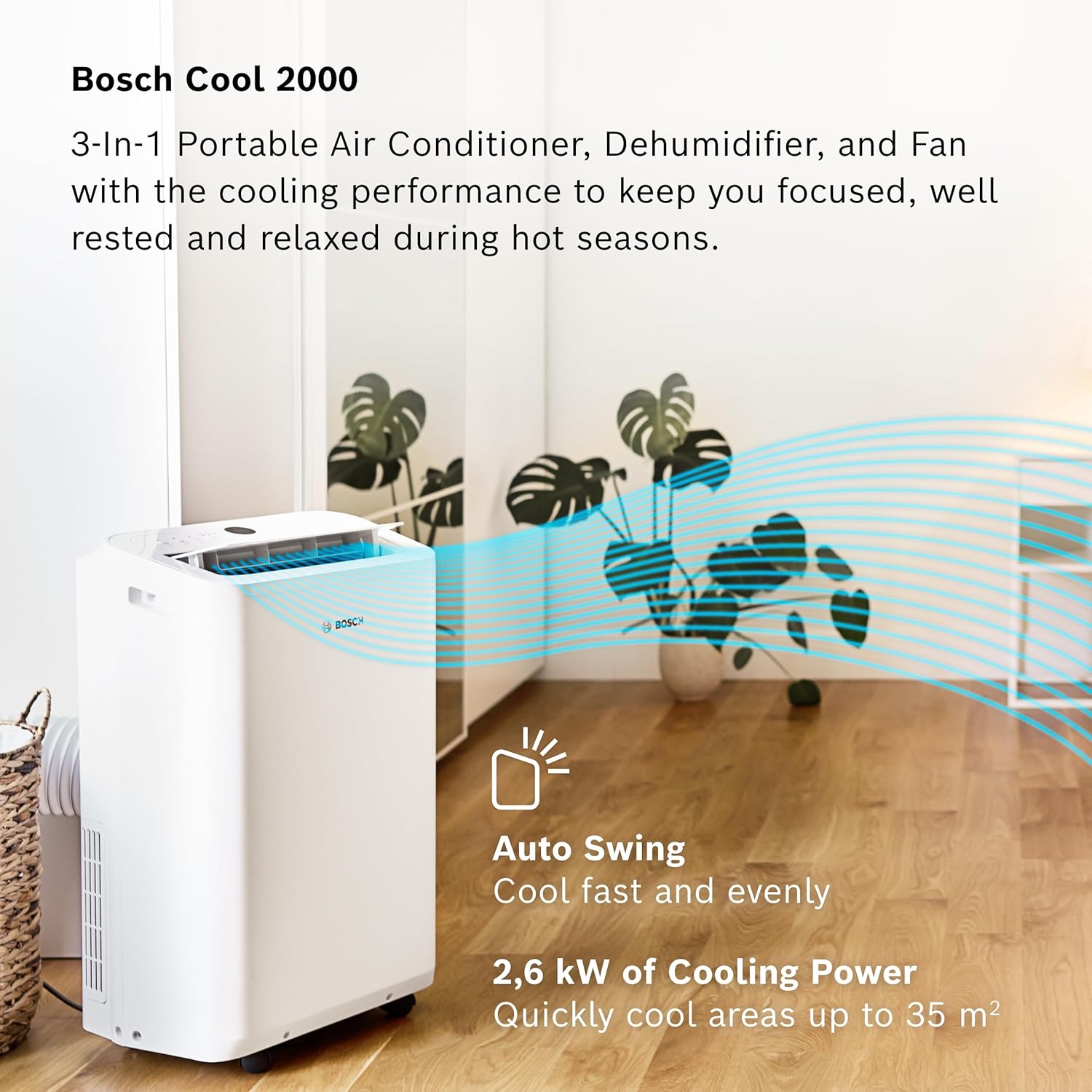
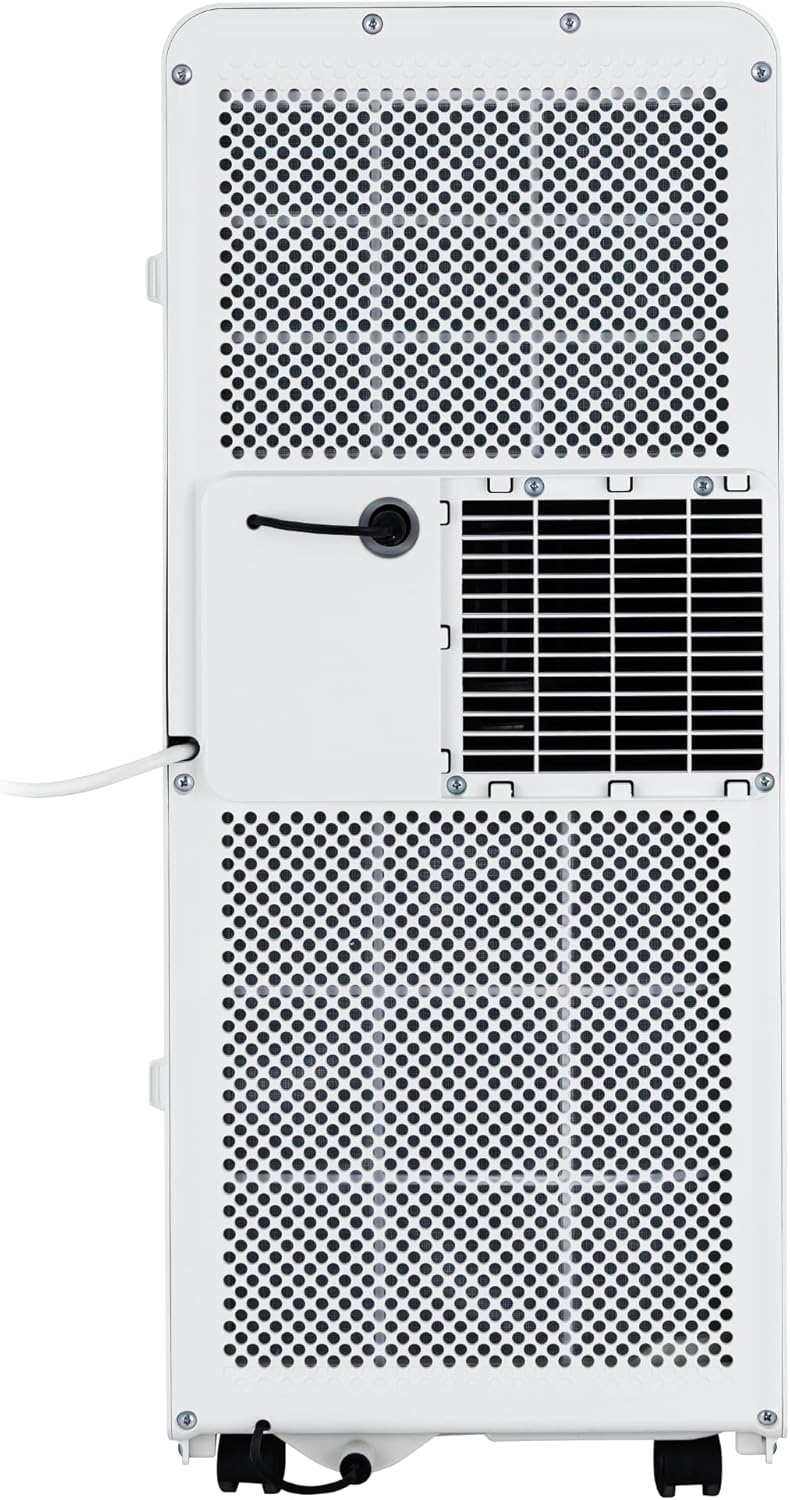
Key buying criteria for the best portable air conditioners with fan only mode
Choosing the best portable air conditioners with fan only mode starts with matching cooling capacity to your room size. As a rule of thumb, a 12,000 BTU portable air conditioner suits a room of about 35 to 40 square metres, but you should reduce that estimate if the room has poor insulation or large west facing windows that trap hot air. When you compare portable air conditioners on Amazon or in local stores, always check both the BTU rating and any newer efficiency ratings based on updated U.S. Department of Energy test procedures, because those figures reflect real world performance in portable acs more accurately than older labels.
Hose design is another critical factor, because it determines how efficiently the portable air conditioner expels hot air outside. Single hose portable air conditioners draw some replacement air from the room, which slightly reduces cooling efficiency, while dual hose designs use one hose for intake and one hose for exhaust, which keeps indoor air pressure more stable. Premium models such as the Midea Duo and the Whynter ARC series use an advanced dual hose or hybrid hose layout that improves cooling while keeping noise level relatively low for a high output portable unit.
Controls and smart features matter just as much as raw power when you live with a portable unit every day. A unit with Wi Fi connectivity, a responsive remote control, and a clear display lets you switch from cooling to fan mode without leaving your bed, which is especially helpful in bedrooms. If you care about automation, look at specialist rankings of top portable air conditioners with auto mode, because those same models often include well tuned fan only settings that maintain comfort while reducing energy costs when the weather is changeable.
Single hose versus dual hose and hybrid designs
The choice between single hose and dual hose portable air conditioners has a direct impact on how well fan only mode performs. A single hose portable air conditioner uses one flexible hose through the window to exhaust hot air, which can create slight negative pressure and draw warm air from adjacent rooms. When you switch such a unit to fan mode, it usually recirculates indoor air without using the hose, so the effect is similar to a standard fan but with more directional airflow that you can aim where you sit or sleep.
Dual hose portable air conditioners, including many Whynter ARC models and the Midea Duo series, use one hose to pull in outdoor air and another to expel hot air, which stabilises room pressure and improves cooling efficiency. In fan only mode, some dual hose designs still move air through the hoses, which can help equalise temperatures between the room and the outside when conditions are mild, while others recirculate indoor air only. Hybrid systems such as the EcoFlow Wave portable air conditioner combine battery operation, variable speed compressors, and flexible hose design to balance cooling power, noise level, and energy use for people who move the unit between rooms or take it on trips.
For bedrooms, the best portable air conditioners with fan only mode are usually dual hose or hybrid models that can run quietly on low fan speed while still circulating enough air. Guides to top portable air conditioners for bedrooms often highlight units with a night mode, dimmable displays, and fan mode options that keep airflow gentle but continuous. When you evaluate different portable air conditioners, ask whether the fan mode can operate with the window kit removed, because that flexibility matters if you want simple ventilation during cooler seasons without a hose in the window.
Real world performance of leading portable air conditioner models
Several specific portable air conditioner models stand out for strong cooling performance combined with a practical fan only mode. The Midea Duo series, for example, uses an integrated hose in hose arrangement that encloses both intake and exhaust in a single compact assembly, which simplifies window setup while preserving the benefits of dual hose airflow. In everyday use, the Midea Duo portable air conditioner can cool a room of around 30 to 35 square metres quickly in many homes, then maintain comfort in fan mode with a lower noise level than many traditional portable air conditioners of similar capacity.
The Whynter ARC family of portable air conditioners has long been popular among people who need robust cooling in challenging spaces such as lofts or server rooms. Many Whynter ARC conditioners use a dual hose configuration and offer a dedicated fan mode that circulates air without running the compressor, which helps protect equipment from hot air pockets without wasting energy. When you compare these portable acs to more basic portable air conditioners, you will often notice that the fan mode airflow feels stronger and more evenly distributed across the room, especially on medium and high fan settings.
Newer entrants such as the EcoFlow Wave portable air conditioner focus on mobility and off grid operation, pairing a compact portable unit with optional battery packs. In fan only mode, the EcoFlow Wave can extend runtime significantly compared with full cooling because the compressor remains off, which is valuable during power outages or camping trips where every watt hour counts. Whether you choose a Midea Duo, a Whynter ARC, or an EcoFlow Wave, always test how the fan mode feels at different distances in your own room, because airflow patterns on paper rarely match real life comfort and furniture layouts.
To make comparisons easier, the table below summarises typical manufacturer specifications for representative models in each range. Always confirm exact figures on the current spec sheet for the specific version you are buying.
| Model (example) |
Cooling capacity (BTU) |
Airflow on fan (approx. CFM) |
Noise on low (dB) |
Hose layout |
Rated power draw on cool (W) |
Best for room size* |
| Midea Duo 12,000 BTU class |
~12,000 BTU (ASHRAE) |
~250–280 CFM |
~50–53 dB |
Integrated dual hose |
~1,200 W |
Up to ~35 m² |
| Whynter ARC 12,000 BTU class |
~12,000 BTU (ASHRAE) |
~220–260 CFM |
~52–56 dB |
Dual hose |
~1,100–1,300 W |
~30–35 m² |
| EcoFlow Wave 4,000–5,000 BTU class |
~4,000–5,000 BTU (approx.) |
~150–200 CFM |
~50–55 dB |
Hybrid / flexible hoses |
~400–600 W |
Small rooms or tents |
*Room size estimates assume average ceiling height and insulation; hot attics or sunrooms may need more capacity for the same floor area.
Installation, window setup, and everyday usability
Even the best portable air conditioners with fan only mode will disappoint if the window setup is awkward or leaky. A good window kit should seal tightly around the hose, prevent hot air from leaking back into the room, and allow you to close the window securely when the portable air conditioner is not in use. Poorly fitted window panels can increase noise level, reduce cooling efficiency, and make fan mode less effective because outside air seeps in uncontrolled and creates drafts.
Before buying any portable air conditioner, measure your window opening carefully and compare it with the dimensions of the supplied window kit. Sliding windows, casement windows, and sash windows all require slightly different approaches, and some portable air conditioners include only basic panels that may not suit every frame. If you rent your home, look for a portable unit with a reversible or non invasive window setup, because landlords often restrict permanent modifications such as drilled brackets or sealed vents that leave marks.
Daily operation should feel simple, whether you use cooling mode or fan only mode. A clear control panel, a responsive remote control, and labelled buttons for each mode reduce the chance of mistakes, especially at night when you adjust settings half asleep. For people working from home, it is worth reading detailed analyses of portable air conditioner running costs, because using fan mode strategically during milder hours can cut electricity bills without sacrificing comfort, as illustrated by many remote workers who run portable air conditioners all day and rely on circulation rather than constant full cooling.
Sizing, energy use, and cost considerations for informed buyers
Correct sizing is essential when you choose the best portable air conditioners with fan only mode for your home. A unit that is too small will struggle to cool the room, run its compressor constantly, and leave you relying on fan mode just to feel a slight breeze. An oversized portable air conditioner may cool the air quickly but cycle on and off frequently, which can create uneven temperatures and reduce dehumidification, especially in humid climates.
Manufacturers usually specify the recommended room size in square feet or square metres, along with BTU and sometimes updated seasonal efficiency ratings that reflect tested performance. When you convert those numbers to your own space, consider ceiling height, insulation quality, and internal heat sources such as computers or cooking appliances that add hot air. For example, a 14,000 BTU portable air conditioner might be rated for 45 square metres under standard conditions, but in a poorly insulated attic you may need that same capacity for only 30 square metres to achieve similar comfort.
Energy efficiency matters because portable air conditioners can be among the more expensive appliances to run during long heat waves. Using fan only mode during cooler mornings and evenings allows you to maintain airflow while the compressor rests, which can reduce daily energy consumption substantially over a season, though exact savings depend on your local climate and usage patterns. When you compare price tags on Amazon or in shops, factor in not only the purchase price of the portable unit but also the long term cost of electricity, filters, and potential accessories such as upgraded window kits or extended hoses that improve performance.
Key statistics about portable air conditioners and fan only mode
- Analyses from organisations such as the International Energy Agency indicate that air conditioners and electric fans already account for a significant share of global electricity consumption, so using fan only mode strategically can have a measurable impact on household demand over time.
- Engineering studies and manufacturer data suggest that dual hose portable air conditioners can be noticeably more efficient than comparable single hose models, especially in hot climates where pressure imbalances draw in extra warm air through gaps and doorways.
- Independent consumer testing has found that the actual cooling capacity of many portable air conditioners can be lower than their labelled BTU rating under real world conditions, which is why newer test based ratings provide a more realistic guide to room coverage.
- Field measurements in typical homes show that running a portable air conditioner in fan only mode uses far less electricity than running the same unit in full cooling mode, often cutting power draw by well over half depending on fan speed and compressor design.
- Noise surveys of popular portable air conditioner models report average sound levels between about 50 and 60 dB on low fan settings, which is comparable to a quiet conversation and generally acceptable for bedrooms when fan mode is used overnight.