When to repair or replace a portable air conditioner after a hard summer
Your portable air conditioner just limped through August, and now you face a choice. You can either repair or replace the portable air conditioner before storage, or roll the same tired portable unit into a closet and hope the air will still feel cool next June. That decision is less about emotion and more about a simple cost, performance, and risk calculation.
Start with the money question, because it frames everything. When the price of repair on a portable air conditioner crosses roughly half the cost of a comparable new unit, replacement usually wins, and off season discounts push that threshold even lower over time. If a technician quotes 250 dollars to replace a compressor on a 450 dollar air conditioner, you are paying top dollar to keep an older circuit and aging components working for maybe one or two more summers.
That 50 percent rule of thumb assumes the rest of the portable air conditioner is healthy. If the vents are cracked, the control panel buttons fail to start reliably, or the plastic shell is brittle and dirty, the real value of repair drops further. A portable unit with multiple issues is not just complex to service, it is also more likely to fail again when the room is hottest and the air feels heaviest.
Age matters almost as much as cost. A fixed speed portable air conditioner that is four or five seasons old is already a generation behind newer inverter based portable air designs, which modulate compressor speed to match the room load and keep the air cool more efficiently. When you repair or replace a portable air conditioner at that age, you are choosing between nursing an outdated circuit or stepping into quieter, more stable cooling.
Think about how the unit behaved in late summer, not in May. If the compressor needed several tries to start, or the air from the vents went from cool to lukewarm within an hour, you are seeing signs of deeper stress rather than a simple dirty filter issue. A portable unit that repeatedly trips the breaker or flashes error codes is telling you that repairing only one part may not solve the underlying problem.
There is also the storage cost that rarely gets discussed. Keeping a portable air conditioner you do not trust means giving up valuable closet space, buying covers, and spending time winterizing a unit that might not be working when the next heat wave hits. When you repair or replace a portable air conditioner, factor in that hidden cost of storing dead weight for eight months.
Off season timing tilts the math toward replacement more often than people expect. Retailers clear last season’s portable air inventory in autumn, so a new dual hose inverter unit that would be expensive in June can drop sharply in price once the cooling rush ends. That means the same repair quote that felt reasonable in July can look complex and wasteful when a better portable air conditioner is on sale for only a little more.
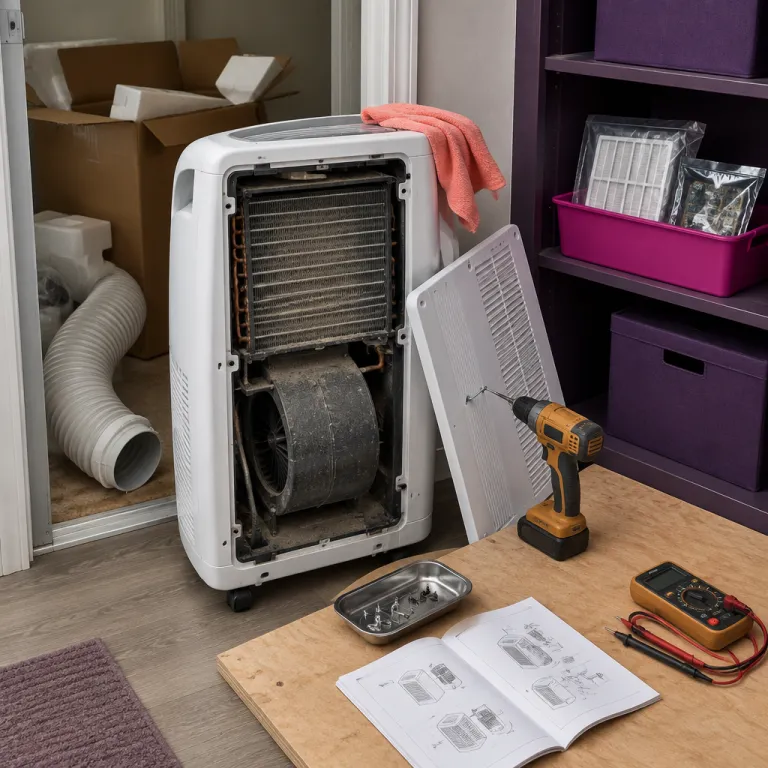
For the DIY maintainer, the temptation is always to keep repairing. You know how to open the portable unit, clean the dirty coils, and test a simple capacitor or relay with a multimeter, so paying for a new air conditioner feels premature. The risk is that you pour hours into a failing compressor or damaged circuit board that no amount of careful repairing can bring back to reliable life.
How to tell if your portable AC is dying or just dirty
Before you repair or replace a portable air conditioner, you need a clear diagnosis. Many portable air complaints sound like major failures, but the root cause is often a dirty filter, clogged vents, or a blocked drain that keeps the unit from moving air properly. Sorting simple maintenance from complex failure is the difference between a ten dollar fix and a full replacement.
Start with airflow, because weak air from the vents is the top symptom owners notice. Remove and wash the intake filter on the portable unit, then gently vacuum the evaporator coil fins behind it to clear dust that chokes the air conditioner over time. If the room suddenly feels cool again and the compressor cycles normally, you were dealing with a simple airflow issue rather than a dying machine.
Next, look for ice or water where it should not be. A portable air conditioner that ices up on the front coil or leaves a puddle under the unit often has a dirty coil, a blocked condensate channel, or a fan that is not working at full speed. When those problems clear after cleaning and a careful check of the drain circuit, you can confidently keep the portable air unit for another season.
Noise tells a different story. A healthy compressor in a portable air conditioner makes a steady hum, while a failing one rattles, buzzes, or struggles to start each time the room thermostat calls for cool air. If you hear repeated clicking, hard starts, or the compressor shutting off within seconds, you are likely facing a complex repair that pushes you toward replacement.
Smell is another underrated diagnostic tool. A faint musty odor from a portable unit usually points to dirty condensate pans or mold on the plastic, which a thorough cleaning and disinfecting can fix over time. A sharp chemical or refrigerant like smell, especially with an oily sheen near fittings, suggests a leak in the sealed circuit that is not economical to repair on most consumer air conditioners.
Pay attention to electrical behavior as well. If the portable air conditioner repeatedly trips a dedicated circuit breaker, dims lights when the compressor starts, or shows scorch marks near the plug, you are dealing with safety issues that go beyond simple cleaning. In those cases, repairing the wiring or control board can be both complex and costly, making a new portable air unit the safer choice.
Error codes can be your ally rather than a nuisance. Many modern portable air conditioners flash specific codes for sensor faults, fan failures, or over temperature conditions, and some of those are simple to address with a new thermistor or fan motor. When the same issue returns after repairing those parts, though, it signals deeper control circuit problems that rarely justify another round of work.
If you want a deeper sense of how real world failures play out, long term owner feedback can help. Detailed portable air conditioner cooling and maintenance reviews from repair focused communities often show patterns, such as certain models that develop compressor issues after only a few summers. Studying that kind of portable AC repair review analysis can keep you from sinking more time into a unit with a known weak point.
Why off season is the smartest moment to replace a weak portable unit
Once you know whether your portable air conditioner is truly failing, timing becomes your next lever. Choosing to repair or replace a portable air conditioner in the off season gives you better prices, more models in stock, and the luxury of time to compare features. Waiting until the first heat wave turns your room into a sauna leaves you grabbing whatever portable unit is left on the shelf.
Retail data show that demand for portable air drops sharply once summer ends. Retailers respond by clearing out last season’s air conditioner inventory, especially older single hose units that sit below the new inverter and dual hose portable air designs. That means a replacement that would have felt like a top shelf splurge in June can be priced only slightly above a major repair by October.
Technology shifts also favor replacing earlier rather than later. Inverter driven portable air conditioners adjust compressor speed to match the room load, which cuts noise, reduces power spikes on your circuit, and keeps the air cool more steadily over time. Dual hose designs pull in outside air for the condenser and exhaust it back out, instead of using conditioned room air and creating negative pressure that drags hot air through every crack.
If your current portable unit is a fixed speed, single hose air conditioner that already struggles, you are not just repairing a machine, you are repairing an outdated concept. Replacing now moves you into a class of portable air units that can hold a 20 square meter room at a stable temperature without the constant compressor start stop cycle that wears parts prematurely. That shift alone can delay your next repair decision by several summers.
There is also the psychological cost of uncertainty. Storing a portable air conditioner with a suspect compressor means you will spend the first hot week of next year wondering whether the unit will start or fail when the room hits 30 degrees. Replacing in the off season trades that anxiety for the quiet confidence of a tested portable unit that you know will be working when you need cool air most.
Think about your electrical panel and wiring as part of this decision. Older portable air conditioners often draw higher peak current when the compressor kicks on, which can stress marginal circuits and cause nuisance trips over time. Newer inverter based portable air designs ramp up more gently, so they are kinder to both your breaker and any other devices sharing that room circuit.
Off season also gives you time to set up better venting. You can choose a portable air conditioner with a window kit that actually seals the opening, upgrade to insulated vents, and test for hot air recirculation without sweating through the process. That kind of careful setup, combined with a mid season maintenance routine, can keep your new portable unit performing like new for years.
Finally, remember that a dying compressor stored all winter is just deferred disappointment. A focused stress test during the last hot week of the season, such as running the portable air conditioner on maximum cool for several hours while monitoring temperature drop and compressor behavior, will tell you whether the unit deserves another year. If it fails that test, off season replacement is the most rational move.
The ten minute checklist before you store, sell, repair, or replace
With the season winding down, you need a fast, honest verdict. This ten minute checklist turns the vague question of whether to repair or replace a portable air conditioner into a structured decision about your specific portable unit. Work through it once, and you will know whether the air conditioner earns closet space, a repair appointment, or a one way trip to recycling.
Step one is performance under load. Close doors and windows in the room, set the portable air conditioner to its lowest temperature and highest fan speed, and let it run for twenty minutes while you measure the air temperature at the vents and in the middle of the space. If the vent air is at least 8 to 10 degrees Celsius cooler than the room and stays that way over time, the compressor and refrigerant circuit are probably still healthy.
Step two is airflow and noise. Stand beside the portable unit and listen as the compressor cycles on and off, noting any grinding, squealing, or repeated failed start attempts that suggest complex mechanical wear. Weak airflow from the vents after a full filter and coil clean, or a compressor that sounds like it is struggling every time, points you toward replacement rather than repairing around the edges.
Step three is a visual and smell inspection. Look for cracked plastic around the vents, damaged power cords, or signs of overheating on the plug or outlet, then sniff for musty or chemical odors when the air conditioner is working. Cosmetic flaws and a slightly dirty smell are simple to address, but oil stains, melted plastic, or a sharp refrigerant like odor are red flags that make repair risky.
Step four is the cost comparison. Check current prices for a similar or slightly better portable air conditioner, ideally a dual hose inverter model sized correctly for your room, then compare that to any repair quotes or the cost of parts you would need for DIY repairing. If the repair or parts cost is more than half the price of a new portable unit, especially in the off season, replacing is usually the smarter long term move.
Step five is storage value. Ask yourself whether you would trust this portable air conditioner to handle the first major heat wave next year without babysitting, circuit resets, or emergency calls for repair. If the honest answer is no, the time and space required to store and winterize the unit are not worth it, and selling or recycling now is the cleaner choice.
Once you decide to keep a working portable air conditioner, lock in a maintenance routine. A quick mid season check that includes cleaning filters, vacuuming coils, clearing drains, and inspecting vents can keep the air cool and the compressor stress low for many summers. Treat that routine as non negotiable, and your next repair or replace portable air conditioner decision will arrive much later.
In the end, the smartest move is the one that respects both your time and your room comfort. A portable air conditioner that passes this checklist, responds well to simple cleaning, and runs quietly deserves another season of service. A unit that fails on cost, performance, or trust is better replaced now, before it steals another summer and another square meter of closet space.
Key figures that shape the repair or replace decision
- Portable air conditioners typically last 5 to 10 years in normal home use, and units that run near continuously in hot climates often reach the lower end of that range, which makes a major repair on a seven year old portable unit hard to justify compared with replacement.
- Energy efficient inverter based portable air conditioners can use around 20 to 40 percent less electricity than comparable fixed speed models, so replacing an older air conditioner can cut both your cooling costs and the stress on your electrical circuit over several summers.
- Dual hose portable air conditioners can cool a room up to 30 percent faster than similar single hose units in independent tests, because they avoid pulling hot infiltration air into the room, which means a replacement can deliver stronger and more stable cool air without increasing unit size.
- Consumer surveys consistently show that more than half of portable air conditioner failures trace back to dirty filters, blocked vents, or neglected drains, so a thorough cleaning can often restore performance and delay the need to repair or replace a portable air conditioner.
- Retail pricing data indicate that portable air conditioner models often drop by 15 to 25 percent in the off season compared with peak summer prices, which significantly lowers the cost threshold at which replacement becomes more attractive than repairing an older portable unit.