Summary
Editor's rating
Value for money: decent buy if your setup is compatible
Design: practical layout with a few annoyances
Noise, day-to-day use, and how it feels to live with it
Build quality, long-term feel, and potential issues
Cooling performance: solid power, but sleeve and room matter a lot
Installation: heavy, picky about sleeves, and the manual is weak
What you actually get with this LG wall unit
Pros
- Cools medium rooms (up to ~400 sq ft) effectively with strong airflow and decent dehumidifying
- Quieter than many older or cheaper wall units, with usable fan and Energy Saver modes
- Comes with remote, timer, auto-restart, and washable filter for practical day-to-day use
Cons
- Very sensitive to wall sleeve size and ventilation, can overheat (CH34) in bad setups
- Plastic front and grille feel cheap and can rattle if not perfectly seated
- Installation instructions are vague, making odd or older sleeves a bit of a headache

Specifications
View full product page →| Brand | LG |
| Manufacturer | LG |
| Part Number | LT1016CER |
| Item Weight | 77 pounds |
| Product Dimensions | 24 x 20.1 x 14.4 inches |
| Item model number | LT1016CER |
| Batteries | 2 AAA batteries required. (included) |
| Is Discontinued By Manufacturer | No |
A wall AC that’s more “practical tool” than “fancy gadget”
I’ve been using this LG 10,000 BTU through-the-wall air conditioner (model LT1016CER) as the main cooling unit for a mid‑size room, roughly 350–400 sq ft. I’m not an installer or HVAC pro, just a regular person who got tired of a noisy old unit and wanted something that cools reliably without sounding like a jet engine. I put it in an existing wall sleeve, which is how most people will use this kind of unit.
Right away, I’d say this is a practical, no-frills wall AC. It cools well, the remote is handy, and it’s quieter than a lot of older units I’ve heard. At the same time, it’s not perfect. Some design choices are a bit annoying, and you absolutely need to pay attention to sleeve size, ventilation, and electrical setup or you can run into problems like overheating or bad fit.
What pushed me to this model is the combo of brand (LG usually does decent ACs), 10,000 BTU power, and the fact it runs on 115V instead of needing a special 230–240V line in most versions. The specs say it can handle up to 440 sq ft, which in practice means it’s comfortable for a bedroom, living room, or small apartment if your insulation isn’t terrible and you’re not in direct blazing sun all day.
Overall, after living with it, my take is simple: it gets the job done, but it’s not some miracle machine. If you install it right and don’t expect it to cool a sauna-level hot space instantly, you’ll probably be pretty happy. If your sleeve is odd-sized or you want something dead quiet and idiot-proof, you might want to think twice or be ready to tinker a bit during installation.
Value for money: decent buy if your setup is compatible
In terms of value, this LG sits in that middle bracket: not the cheapest wall AC, not the priciest either. It has a 3.8/5 average rating from a lot of buyers, which matches how it feels in real life – pretty solid but with some clear flaws. You’re paying for a known brand, decent efficiency, and a good balance of power and features, but you’re not getting premium materials or super-smart features.
What you do get for the money is:
- Enough power (10,000 BTU) to handle a medium room or a small apartment if you’re realistic.
- Energy Saver and Dry modes, which help keep bills and humidity under control.
- A remote, timer, auto-restart, and basic digital controls – all the standard quality-of-life stuff.
- A unit that, when installed correctly, is quieter than a lot of older or cheaper wall units.
On the downside, you have to factor in installation hassles and the risk that your existing sleeve or wall setup might not be ideal. If you end up needing a new sleeve, more foam, or even a pro installer, the total cost goes up quickly. And if you’re unlucky and hit the CH34 overheating issue in a sleeve that traps hot air, you might end up regretting not choosing a brand that handles those conditions better.
So for value, I’d say: if your sleeve and wall are compatible, it’s good value. It cools well, runs reasonably quiet, and should last several seasons if treated right. If you know you have an odd or very old sleeve, or you’re not willing to tinker with foam and sealing, the value drops and a Frigidaire or Friedrich might be a safer bet, even if they cost a bit more upfront. This LG makes sense for people who want a practical, mid-range wall AC and are willing to spend a bit of effort on proper installation.
Design: practical layout with a few annoyances
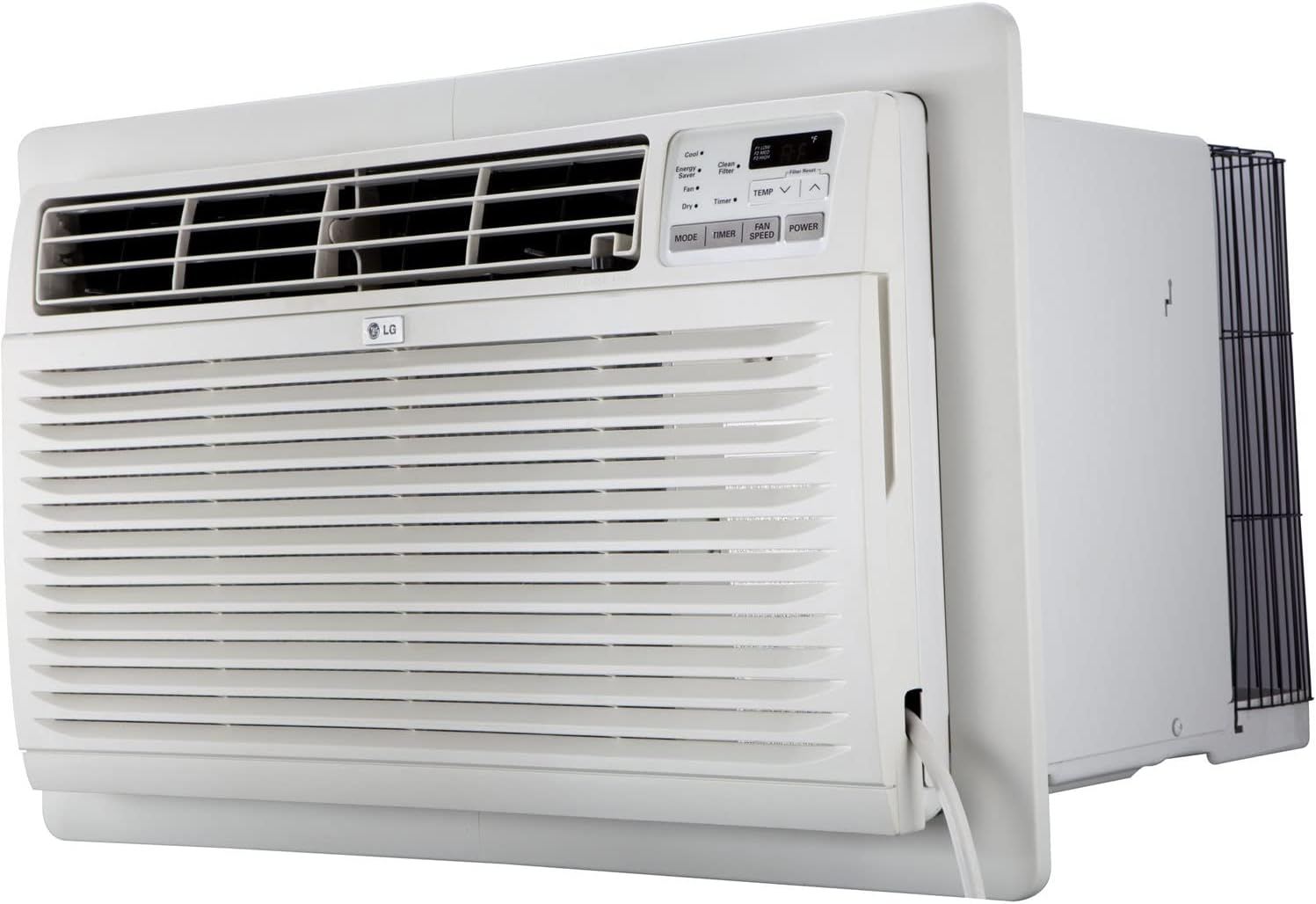
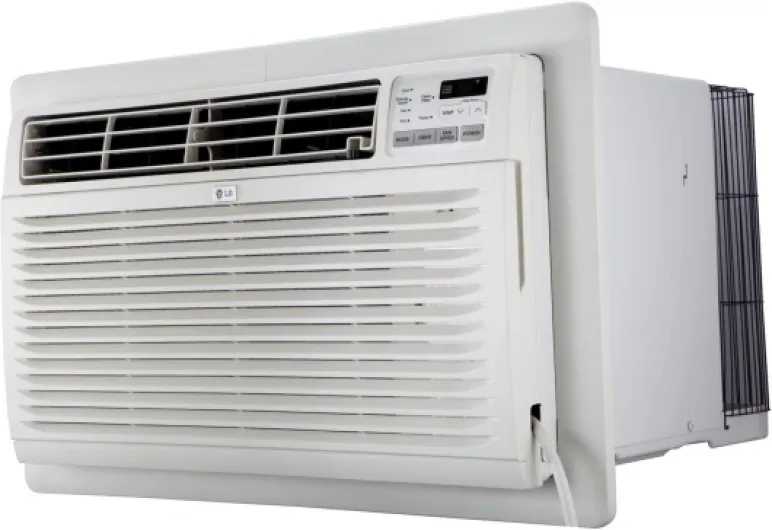
Design-wise, LG kept it pretty standard: a white rectangular front, horizontal vents, digital display, and a row of buttons on the top front panel. It’s not ugly, but it’s not stylish either – it just looks like an AC, which is fine. The front grille pops off for cleaning the filter, and the 4‑way louvers let you send air left/right and up/down, which helps avoid blasting cold air right in your face if the unit is near a bed or couch.
One detail that’s a bit annoying if your unit is mounted high on the wall: the control panel is angled upward, clearly designed for someone looking down at it. If your sleeve is higher, you end up having to stand and kind of lean over or rely mostly on the remote. The display can be partially hidden from below, which is just poor thinking for a product that often sits above eye level. It’s not a deal-breaker, but it shows they didn’t think through every real-life scenario.
The plastic front panel and grille feel a bit on the cheap side. They’re not falling apart or anything, but there can be some rattling if everything isn’t aligned perfectly, especially on the highest fan speed. One reviewer mentioned the front grate rattling and I’ve had a similar thing happen – usually solved by pressing it back in firmly or adding a bit of felt or tape at contact points. Again, this is the kind of stuff you don’t see in the spec sheet but matters in everyday use.
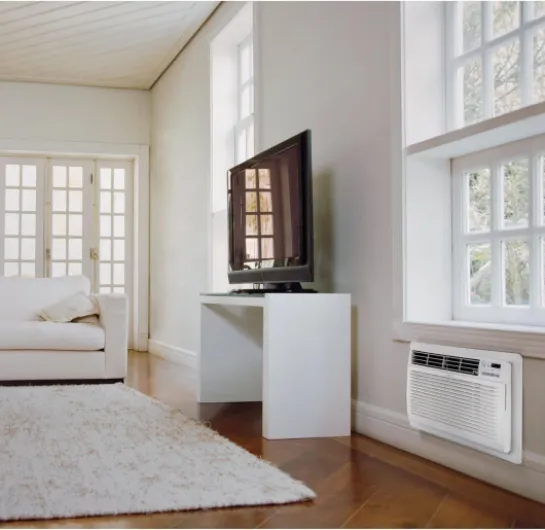
The back and sides are standard metal AC guts – coils, fan, etc. This unit is made for through‑the‑wall use only, not a window. The airflow on the back is designed assuming a wall sleeve and enough room for hot air to escape. If your sleeve is tight or old and too large, like some 30+ year-old sleeves, you’ll need to improvise with foam and maybe extra material to close gaps and keep it from shifting or recirculating its own hot air. So the design is functional but picky: it behaves best when the sleeve size and ventilation are within modern standards.
Noise, day-to-day use, and how it feels to live with it
Comfort-wise, this LG sits in that middle ground: it’s not whisper-quiet, but it’s quieter than a lot of older wall units I’ve heard. The official noise level is around 60 dB, which in real life is a steady fan and compressor hum. On fan speed 3 (high), you’ll definitely hear it – it’s more like strong white noise. On medium or low, it’s much more manageable, especially for sleeping, as long as you’re okay with some background sound.
One thing to know: when the compressor turns on or off, there’s a noticeable “thud”. You get used to it, but the first few days it’s slightly jarring, especially at night. Also, if the front panel or grille isn’t seated perfectly, you can get a rattle that comes and goes. That’s not constant, but when it happens it’s annoying. Pushing the panel firmly into place or adding a bit of padding where plastic meets plastic usually calms it down.
The Energy Saver mode is a mixed bag for comfort. It saves power by turning the compressor off once the set temp is reached and then only kicking the fan on briefly every ~3 minutes to check the room temperature. On the plus side, this is efficient and keeps the room from dropping too cold. On the downside, at night you’re very aware that the fan keeps cycling on for a few seconds, then off, then on again. If you’re a light sleeper and sensitive to changing noise, that can drive you a bit nuts. Running it on a constant fan mode is smoother noise-wise but uses more electricity.
Overall, for sleeping and daily living, I’d rate the comfort as pretty solid if you’re okay with normal AC noise. It’s clearly quieter than some cheap or older wall units, but it’s not silent. If you want near-silence, you’re looking at a different category (like mini-splits). If you’re fine with a consistent hum and the occasional compressor thud, this one is acceptable and actually better than many budget wall ACs.
Build quality, long-term feel, and potential issues
On durability, I can’t pretend I’ve had it for 10 years, but between my use and digging through a lot of other user feedback, I’d call the build average to slightly above average for this price range. The compressor and core cooling parts seem reliable when the unit isn’t being cooked in a bad sleeve. The fact that LG has been selling this model (or close versions of it) since around 2016 and it’s still in the lineup says something: it’s not top of the line, but it’s not a disaster either.
The weak spot is more the plastic and the interaction with old sleeves than the actual cooling hardware. The front panel feels a bit flimsy and can rattle. The trim kit is basic plastic that does the job but doesn’t inspire a ton of confidence. If you slide this into an old, oversized metal sleeve, you’ll almost certainly need extra foam or shims to keep it tight and stable. If it’s allowed to vibrate or if hot exhaust air gets trapped in the sleeve, you’re stressing the unit, which can shorten its life.
There are some worrying reports about the CH34 overheating error happening repeatedly. In those cases, it’s often a combination of an old sleeve, poor ventilation, and the LG design not handling trapped heat well. A repair tech even told one user that LG is aware this design doesn’t love sleeves and that other brands like Frigidaire or Friedrich handle that situation better. The problem is, from a customer point of view, that still means you’re stuck with a unit that’s sensitive to installation conditions – not something you want to discover after the return window closes.
If you install it properly with a compatible sleeve and decent airflow, I don’t see any obvious reason it would fail early. LG gives 1 year parts and labor, which is pretty standard but not generous. I’d say durability is okay but heavily tied to installation quality. Treat it like a plug-and-play box and ignore the sleeve and ventilation details, and you increase your chances of issues. Take the time to fit it right and secure it well, and it feels like it should hold up several seasons without drama.
Cooling performance: solid power, but sleeve and room matter a lot
On the performance side, this LG does cool well when it’s installed correctly and used in the kind of room it’s meant for. In my case, in a ~350–400 sq ft space, it can bring the room from around 78°F down to 72°F in a few hours and then just maintain it without much trouble. One user even reported cooling a 700 sq ft apartment from 78°F to 72°F in 3–5 hours, which is stretching its rated area but shows the unit has decent punch if your insulation isn’t terrible.
The airflow (about 250 CFM) is enough to push cool air across a normal room, especially if you use the 4‑way louvers smartly. Set on high fan, you definitely feel the air moving. On medium or low, it’s more gentle but still effective. The Dry mode can pull out up to 2.9 pints of moisture per hour, which helps a lot on humid days – the room feels less sticky even if the temperature doesn’t drop as dramatically.
Where some people run into trouble is overheating and error code CH34, especially when the unit is inside an older or mismatched wall sleeve. There are reports (and a tech even told one customer) that LG units can overheat more easily in certain sleeves because the hot air can’t escape well enough, and the internal fan doesn’t push it out strongly. If the hot air just recirculates in the sleeve, the unit protects itself and shuts down. So performance can go from “pretty solid” to “frustrating” depending on how well the sleeve is vented and sized.
In day-to-day use, if your sleeve is compatible and you’re not pushing it in a giant, sun-baked open-plan area, the temperature control is decent. In Energy Saver mode set to 69°F, people report room temps floating around 72–74°F, which is fine for most. It definitely pumps out cold air when the compressor kicks in. I’d say performance is good but very installation-dependent: do it right and it’s strong; do it sloppy or with a bad sleeve and you may fight with overheating or weak cooling.
Installation: heavy, picky about sleeves, and the manual is weak
Let’s be blunt: this thing is heavy. At about 77 pounds, you don’t want to be muscling it into a wall sleeve alone unless you enjoy back pain. Realistically, you want two people to install it safely. Getting it from the doorstep, up stairs, and into the wall is the hardest physical part. Once it’s near the sleeve, it’s mostly about sliding it in and sealing it properly.
The biggest headache is compatibility with existing wall sleeves. A lot of older buildings have sleeves that are taller or deeper than what modern units assume. One user mentioned their sleeve was over 4 inches taller than the LG, which meant they had to mess around with foam and adjustments. The LG instructions do include some foam placement diagrams, but they’re poorly written, tiny, and don’t explain the logic – they just show where to stick pieces without saying why. If you’re mechanically inclined you can figure it out, but it’s still annoying and takes extra time.
There’s also the issue that this unit is made only for through-the-wall, not for windows. The back venting expects a sleeve and wall thickness, not a wide-open window gap. If the sleeve is old or restricts hot air flow, that’s where the overheating (CH34) complaints come from. In other words, installation isn’t just about physically getting it in the hole – you also have to make sure there’s enough space for hot air to escape behind the sleeve, and that the louvers on the back aren’t blocked.
On the electrical side, this specific model is 115V, which is easier for most homes than a 240V unit, but you still want it on a properly rated outlet (dedicated circuit if possible). The power cord is reasonably long, so reaching a nearby outlet usually isn’t a problem. Once it’s in and powered, setup is simple: set your mode, temp, and fan speed, and you’re done. Overall, installation is doable for a handy person with a helper, but the manual is unhelpful, and odd-sized sleeves can turn this into a bit of a project.
What you actually get with this LG wall unit
Out of the box, the package is fairly standard for a through‑the‑wall AC. You get the unit itself (about 77 lbs), a basic remote with batteries, a mesh filter already in place, a plastic trim kit for the inside, some insulation foam, and the usual manuals and warranty papers. No wall sleeve included – this is meant to slide into an existing one, so if you don’t already have a sleeve, that’s another purchase and bit of work right there.
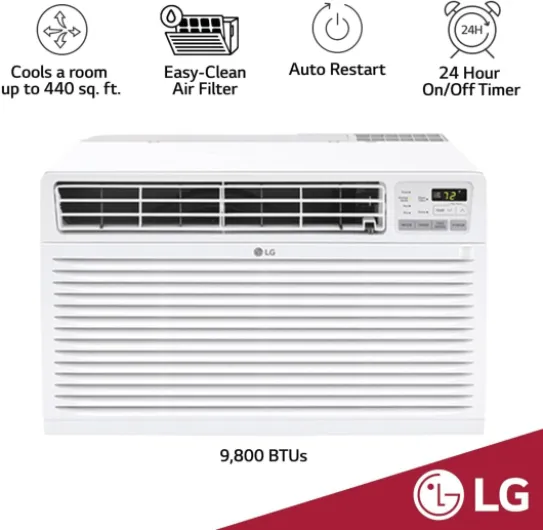
The specs say 9,800 BTU cooling (sold as 10,000 BTU), up to 440 sq ft coverage, with 3 fan/cool speeds, Energy Saver mode, Dry (dehumidify) mode, and 4‑way air deflection. It pulls about 920 watts and uses R-32 refrigerant, with an EER of 10.7, which is decent but not top-tier. Noise is rated around 60 dB, which in real life means you’ll hear it, but it’s more of a steady hum and fan noise than a clattering mess if everything is installed tight.
Controls are simple: digital display on the front, physical buttons, and the remote basically mirrors those controls. You get a 24‑hour on/off timer, an auto‑restart feature (handy after power outages), and a filter light that comes on after around 250 hours of use to remind you to clean the filter. That light is just a timer, not a sensor, so sometimes it comes on even when the filter doesn’t look dirty.
In practice, the whole package feels like a straightforward, mid‑range wall AC. Nothing flashy, not super smart-home connected, but it covers the basics: cool air, some control over direction and fan speed, and a few energy-saving options. If you want Wi‑Fi, app control, or heating in the same unit, this isn’t it. If you just want a wall AC that plugs in and cools, this is more the “tool” type product – functional, not exciting.
Pros
- Cools medium rooms (up to ~400 sq ft) effectively with strong airflow and decent dehumidifying
- Quieter than many older or cheaper wall units, with usable fan and Energy Saver modes
- Comes with remote, timer, auto-restart, and washable filter for practical day-to-day use
Cons
- Very sensitive to wall sleeve size and ventilation, can overheat (CH34) in bad setups
- Plastic front and grille feel cheap and can rattle if not perfectly seated
- Installation instructions are vague, making odd or older sleeves a bit of a headache
Conclusion
Editor's rating
Overall, the LG 10,000 BTU Through-the-Wall Air Conditioner is a practical, mid-range unit that does its main job: it cools a medium-sized room reliably when it’s installed correctly. The cooling power is solid for bedrooms, living rooms, and small apartments up to around 400 sq ft, and the noise level is reasonable for a wall unit – not silent, but quieter than many older machines. Features like the remote, timer, Energy Saver, and Dry mode make day-to-day use fairly comfortable and flexible.
Where this unit stumbles is mostly around installation and design details. It’s heavy, the manual is weak, and it’s picky about wall sleeves and ventilation. If your sleeve is old, oversized, or restrictive, you can run into overheating errors and frustration. The plastic front feels a bit cheap and can rattle, and the angled control panel is awkward if your unit sits high on the wall. None of these kill the product, but they keep it from being a standout.
I’d recommend this LG to someone who: already has a modern or compatible wall sleeve, is okay with normal AC noise, and wants a straightforward cooling unit without fancy smart features. It’s also a decent choice if you’re replacing another through-the-wall unit and know your wall setup is sound. On the other hand, if your sleeve is 20–30+ years old, you’re very sensitive to noise changes at night, or you want the most robust design for tricky installs, I’d look at competitors like Frigidaire or Friedrich, even if they cost a bit more. In short: good, not perfect, and worth it if your installation conditions are on its side.
![10000 BTU Window Air Conditioners [2023] Remote Control WiFi App Ultra-Quiet Washable Filter Cools 450Sq.Ft for Medium & Large Room AC Unit air conditioner Easy Install White LW1017ERSM1 10000 BTU Wi-Fi Bright White](https://www.portable-air-conditioner-guru.com/storage/656419/conversions/616cF6zSYmL._AC_SL1500_-medium.webp)